
My Crochet Universe · Pastel Lamb Series
Crochet Lamb: 7 Smart Ways to Create a Fluffy Sheep Texture
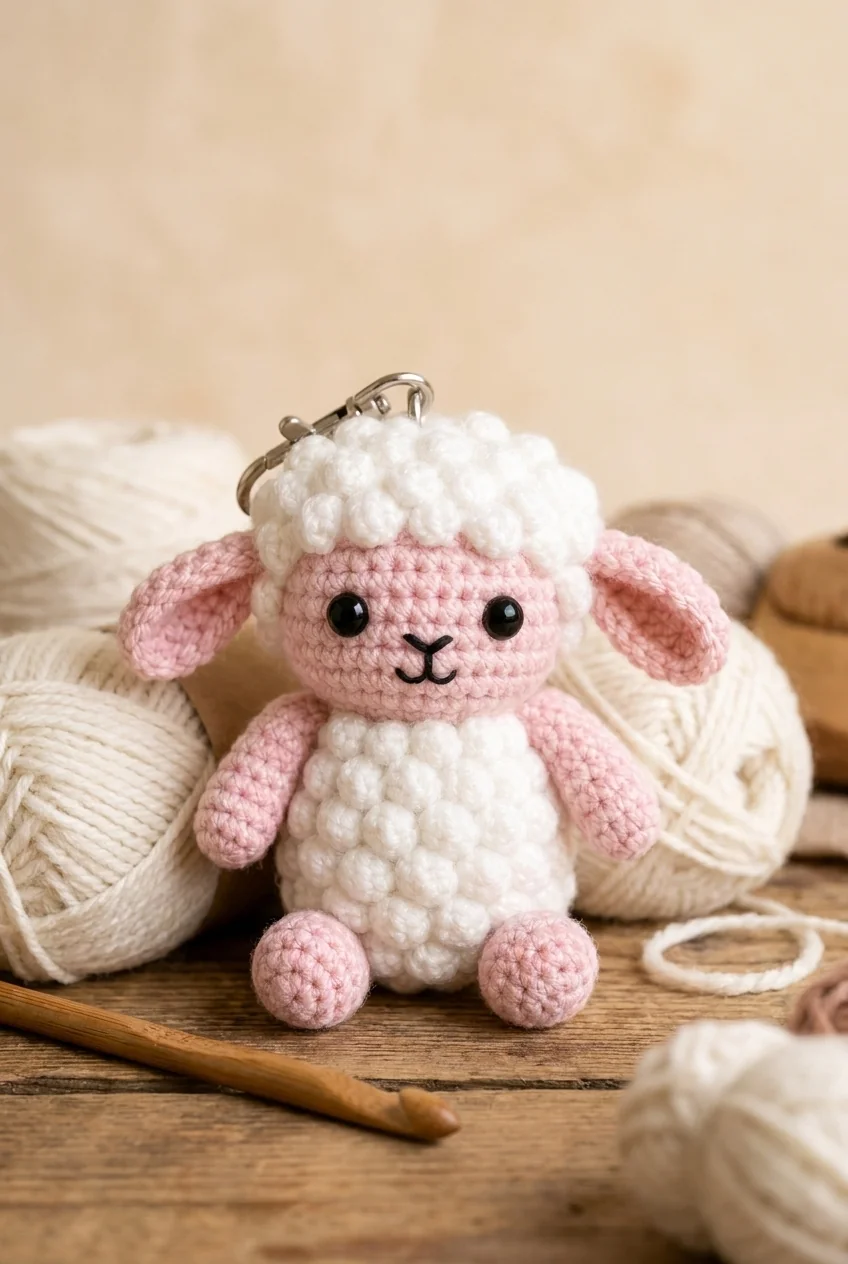
A small crochet lamb needs texture to feel like a lamb
The sweetest part of a crochet lamb is not the pink face, the tiny ears, or even the little keychain clasp. It is the wool.
That soft, raised texture is what turns a simple amigurumi animal into a recognisable little sheep. When the curls sit against a smoother face and body shape, the contrast makes the finished lamb feel extra cuddly and full of personality.
If you are making a crochet lamb keychain, these seven choices can help you create a fluffy sheep texture that still looks neat, secure, and intentional.
1. Create contrast between the face and the wool
A lamb’s face is naturally smoother than its fleece. Repeating that contrast in crochet makes the character easier to read at a glance.
Use a smooth stitch texture for the pink face, ears, arms, and feet. Then reserve the raised, curly, or bobble-like stitches for the white wool. The change in surface gives the lamb a clear silhouette, even when it is small enough to hang from keys or a bag.
2. Keep the fluffy stitches close together
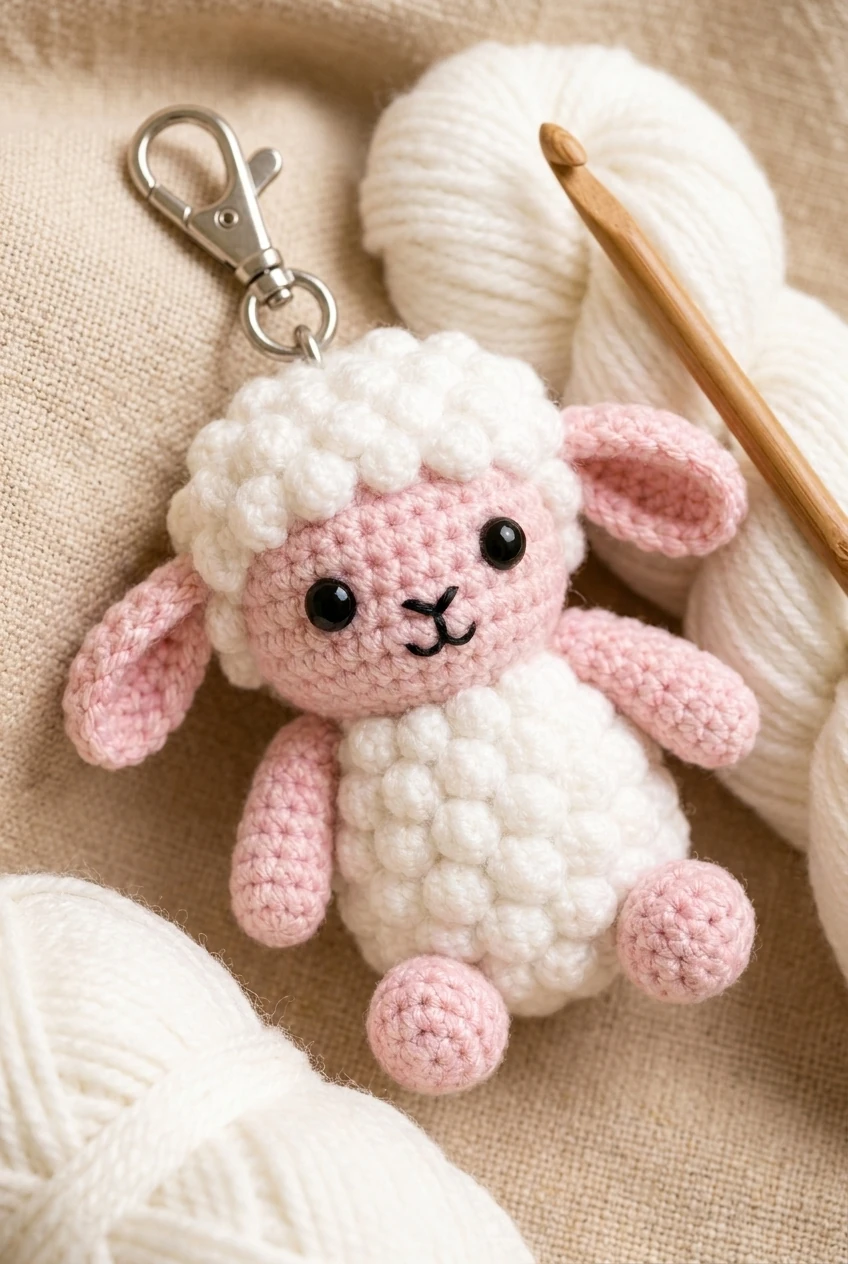
Loose spacing can make textured wool look patchy. A denser arrangement creates the rounded, cloud-like effect that makes crochet sheep so charming.
As you work the fleece areas, pause occasionally and look at the piece from the front. You want the wool to look full without hiding the shape underneath. Small, even clusters usually create a more polished finish than a few oversized textured stitches.
3. Let the wool frame the face
The white curls around the top of the head do more than add texture. They frame the eyes and make the facial expression stand out.
Place the fluffy wool like a soft fringe around the forehead and sides of the face. This creates a gentle lamb-like look and keeps the pink face as the visual focus. For a keychain-sized amigurumi, this framing detail can make a huge difference in photos.
4. Shape the fleece instead of making it flat
A sheep’s wool looks best when it has a little dimension. Rather than treating the fleece as a flat decorative layer, allow the textured stitches to follow the rounded form of the head and body.
The goal is a plump, soft appearance. Check that the wool is distributed evenly so one side does not look heavier or more crowded than the other.
5. Use the same texture in more than one area
Repeating the fluffy stitch pattern on both the head and body brings the design together. It makes the lamb look like one character rather than a smooth doll wearing a separate woolly outfit.
You can still vary the amount of texture: a fuller body and a lighter wool cap around the face often create a lovely balance.
6. Brush and arrange the stitches gently
Textured stitches can shift while you stuff, sew, or attach the keychain hardware. Before calling the project finished, gently arrange the wool with your fingers.
Look for areas where a curl is trapped behind another stitch, where a cluster points in an odd direction, or where the face is partially covered. A minute of careful tidying gives the crochet lamb a softer, more photo-ready finish.
7. Make durability part of the design
A crochet lamb keychain will be handled more often than a shelf amigurumi. The texture should be cute, but it should also stay secure.
Use firm tension where the clasp connects, weave in ends thoroughly, and check that the wool details are not likely to snag during everyday use. The best fluffy crochet sheep is one that still looks adorable after travelling on a backpack, purse, or set of keys.
The finished look
A good crochet lamb texture feels playful and soft without becoming messy. Smooth pink details give the eye somewhere to rest, while the white wool creates the unmistakable sheep effect.
The complete pattern shows how the curly fleece, rounded body, sweet face, and keychain attachment come together into one finished crochet lamb.
Ready to make your own fluffy little sheep? Get the complete Pastel Lamb Keychain Pattern PDF here: PATTERN_URL.*
Choose a texture system before the first round
A polished lamb looks intentional because every surface has a job. The smooth pastel yarn describes the face, ears, arms and feet, while the white bobble wool describes fleece. Write that plan beside the pattern before beginning. It prevents accidental colour changes and helps you evaluate whether every piece belongs to the same character.
Make a small bobble sample with the exact hook and yarn. Check it from the front, side and under soft light. The loops should look full without exposing stuffing. If they collapse, loosen only the bobble loops; if the base fabric gaps, tighten the supporting single crochet. This small test is faster than rebuilding the body.
Stuffing changes how the wool reads
Add fiberfill in small amounts and rotate the piece as you work. A firm oval supports the bobbles from underneath, but overstuffing stretches the base stitches and creates visible white gaps. The finished fleece should feel rounded rather than rigid. Use the blunt end of a hook to move stuffing into corners without flattening the raised texture.
When the head and body are closed, roll them gently between your palms. Arrange each bobble with a fingertip instead of brushing aggressively. The pattern is designed for durable keychain use, so neat placement and secure tails matter more than an artificially fuzzy surface.
Frequently asked questions
How do I make the wool look fuller?
Keep bobbles even, support them with firm stuffing and arrange them gently after assembly.
Should I brush the bobbles?
Use fingers first. Aggressive brushing can fuzz cotton and weaken a keychain surface.
Why are my bobbles uneven?
Loop height and tension changed. Practise the full sequence on a swatch.
Can I add more wool rows?
Yes, add a bobble-and-recovery pair before the lower-body decreases.
How do I stop stuffing from showing?
Use tight base stitches, a suitable hook and small amounts of evenly placed stuffing.
This crochet lamb detail supports a neat, durable and recognisable finished charm.