My Crochet Universe · Structured handbag series
Crochet Bag Yarn: 5 Essential Tests for a Structured Shape
A polished, image-rich guide for a modern handmade bag.
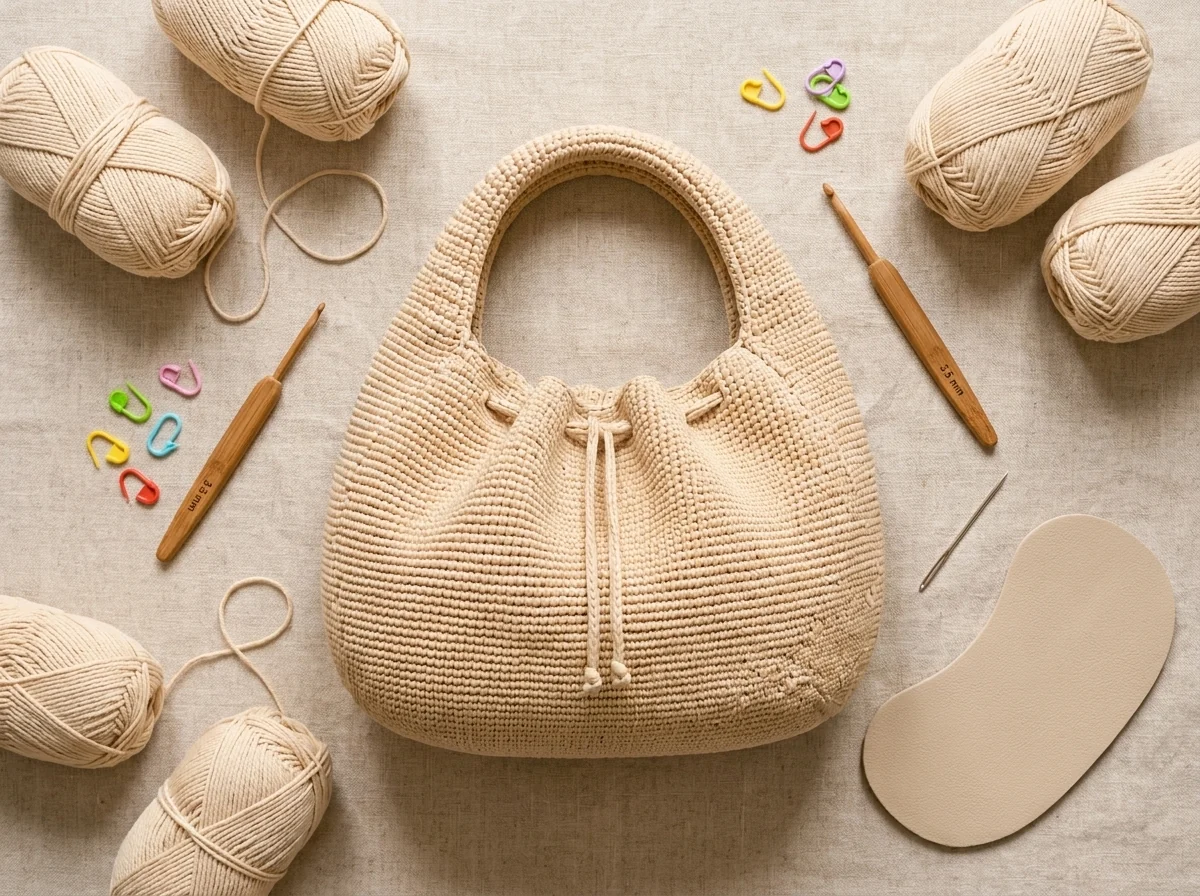
Yarn shopping is the cheapest part of the mistake
Good crochet bag yarn must create dense fabric without feeling harsh in the hand.
The yarn aisle makes every bag idea look possible. A soft cotton blend? Lovely. A fuzzy recycled yarn? Interesting. A bargain acrylic in the perfect color? Tempting.
Then you crochet half a bag and discover that the fabric stretches, the base curls, the handle sags, or the stitches look nothing like the photo in your head.
This is not because you chose “bad” yarn. It is because crochet bag yarn needs to do a different job from sweater yarn. A handbag needs structure, stitch definition, and enough strength to carry real things. Softness is nice, but it is not the first requirement.
Before you commit to 350–450 g of yarn for a structured crescent bag, run these five tests. A small swatch can save you from a very large frog pile.
- What structured bag yarn needs to do
- Test 1: The squeeze test
- Test 2: The stretch test
- Test 3: The light test
- Test 4: The weight test
- Test 5: The color and texture test
- What worked for this crescent shape
- FAQ
What structured bag yarn needs to do
The crochet bag yarn squeeze test reveals whether the fabric springs back.
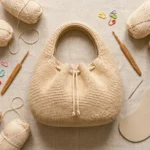
The crescent handbag pattern uses category 3/DK-weight 100% cotton with a 3.5 mm hook. That combination supports dense single crochet, clear stitch texture, and a body that can stand when shaped properly.
You can experiment with other fibers, but do it knowingly. The yarn has to form a firm fabric, survive friction, and behave under the weight of a wallet and phone. It also needs to look good after the bag has been picked up, put down, and slightly overfilled by real life.
Test 1: The squeeze test
Stretch testing crochet bag yarn helps predict handle growth.
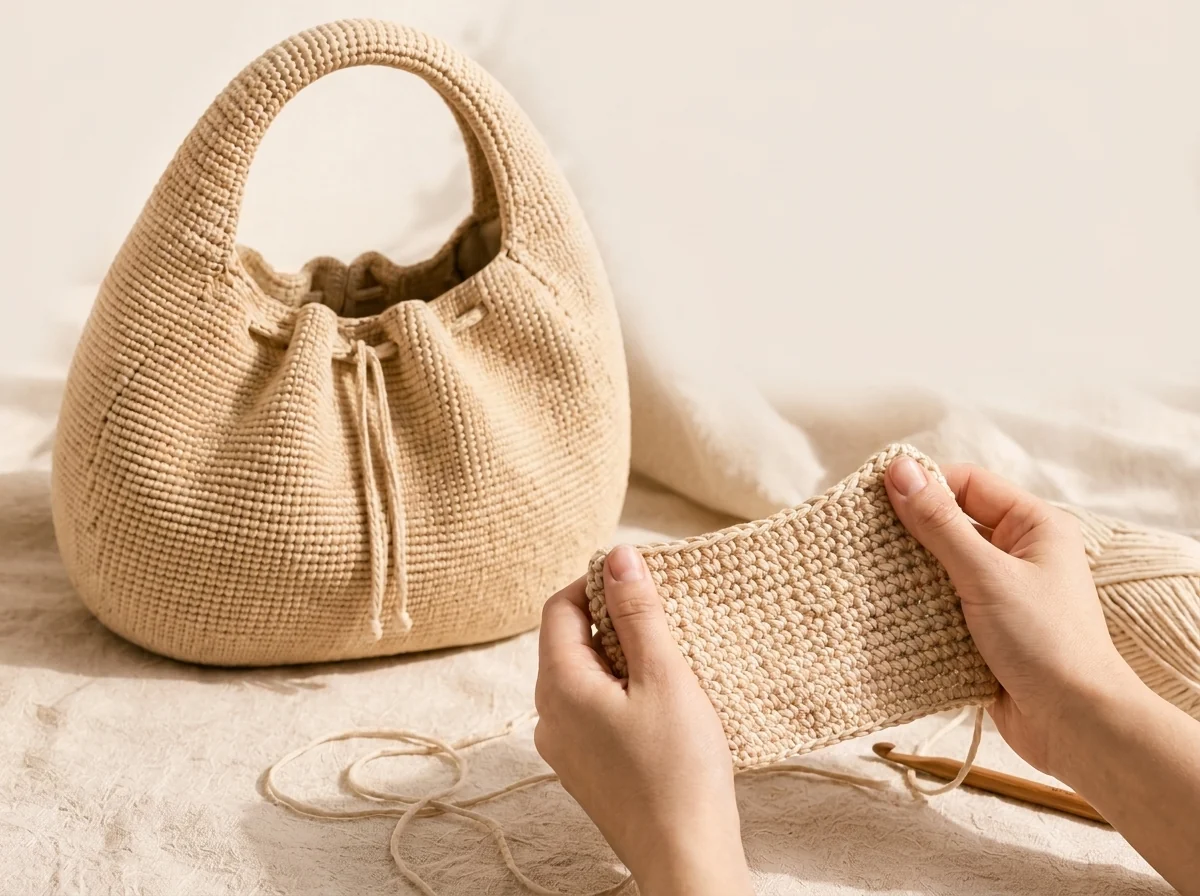
Crochet a small square in the stitch you plan to use. Hold it in your hand and squeeze it. When you release it, does it spring back into a flat, firm shape? Or does it stay soft and folded?
For a structured bag, you want resistance. Not cardboard stiffness, but a fabric that remembers its shape.
Cotton usually performs well here because it has body and stitch definition. Some very soft cotton blends can still be too drapey, so do not assume the fiber content alone answers the question.
Test 2: The stretch test
Hold crochet bag yarn to the light to check whether a lining may be useful.
Hold the swatch at opposite edges and pull gently. Then pull a little more firmly, as if the swatch were a bag handle carrying keys and a phone.
Does it stretch and return? Does it stretch and stay stretched? Does the stitch shape distort?
A small amount of give is normal. Permanent stretch is a warning, especially for the handle and upper edge. If your yarn relaxes too much, use a smaller hook for a denser fabric or choose a firmer yarn.
Test 3: The light test
The best crochet bag yarn balances structure, weight, stitch definition, and comfort.
Hold the swatch toward a window or lamp. Can you see large gaps between stitches?
A bag does not need to be completely opaque, but obvious holes are a sign that small items may poke through or the fabric may lose structure. For dense single crochet, adjust your hook size until the stitches sit closely without hurting your hands.
This test is simple, fast, and strangely honest. Light reveals what optimism hides.
Test 4: The weight test
Swatching crochet bag yarn is faster than rebuilding a finished handbag.
Put a few coins, a phone, or a small book on top of the swatch while it rests over the edge of a table. Watch what happens to the fabric.
Does it curl? Pull out of shape? Sag immediately? The swatch will not behave exactly like a finished bag, but it gives you a useful clue about what the handle and base might do under load.
For extra support, the crescent design can use a base insert made from firm felt, plastic mesh, or a purpose-made bag base. That reinforces the bottom, but it will not fix a yarn that stretches badly everywhere else.
Test 5: The color and texture test
Good crochet bag yarn must create dense fabric without feeling harsh in the hand.
Now take the swatch away from the table and look at it in normal room light. Does the color make the stitches look clear? Does the surface look polished or fuzzy? Do you like touching it?
Natural cotton, cream, oatmeal, taupe, and muted colors work especially well for this bag because the silhouette is the main event. A heavily textured or highly variegated yarn can make the construction harder to see.
There is nothing wrong with colorful yarn. It simply tells a different story. If you want the quiet, sculptural look of this crescent shape, let the stitches stay visible.
What worked for this crescent shape
The crochet bag yarn squeeze test reveals whether the fabric springs back.
For the structured crescent handbag, DK/category 3 cotton and a 3.5 mm hook are a sensible starting point. The pattern relies on dense single crochet, a flat oval base, a turning ridge, and a shaped handle. Cotton helps those elements stay crisp.
But your hands matter too. If you crochet loosely, you may need to go down a hook size. If your fabric becomes painfully stiff, check whether you are pulling too hard. The best result is firm enough to hold shape, not so rigid that it feels like a basket.
Once your yarn passes the tests, do not skip the finishing work. Read the crochet bag finishing checklist for a store-bought look before you begin the final rounds. And when you are ready to see how the yarn becomes the actual bag, follow the crescent bag construction stages from base to handle.
Helpful answers
Frequently asked questions
Is 100% cotton always best for crochet bags?
Not always, but it is a strong choice for structured bags because it offers stitch definition and less bounce than many soft fibers.
Can I use bulky yarn to make the bag faster?
You can, but it will change the size, weight, and proportions. A bulky yarn may also make the handle too thick or the base too heavy.
What if my cotton bag feels too floppy?
Try a smaller hook, firmer tension, or a base insert. If the swatch is very drapey from the start, consider changing yarn before continuing.
Is recycled cotton good for bags?
It can be, but test it. Some recycled cotton is soft and stretchy, while other versions are firm and excellent for accessories.
Should I line the bag if I use cotton?
A lining is optional. It can help with small items and add extra structure, but dense crochet and a supported base may be enough for everyday use.
Your swatch is trying to tell you something
Stretch testing crochet bag yarn helps predict handle growth.
Listen before you spend the rest of the yarn.
If you want the exact yarn amount, base construction, eyelet placement, padded-handle shaping, and finishing measurements for the crescent bag, the complete PDF pattern is available in my Etsy shop. Get the complete digital pattern.
Test small. Crochet confidently.
Choose crochet bag yarn only after the swatch passes your structure tests. Reliable crochet bag yarn keeps the finished silhouette crisp through regular use.