
My Crochet Universe · Pastel Lamb Series
Amigurumi Texture: 7 Essential Tricks to Mix Smooth and Fluffy Stitches
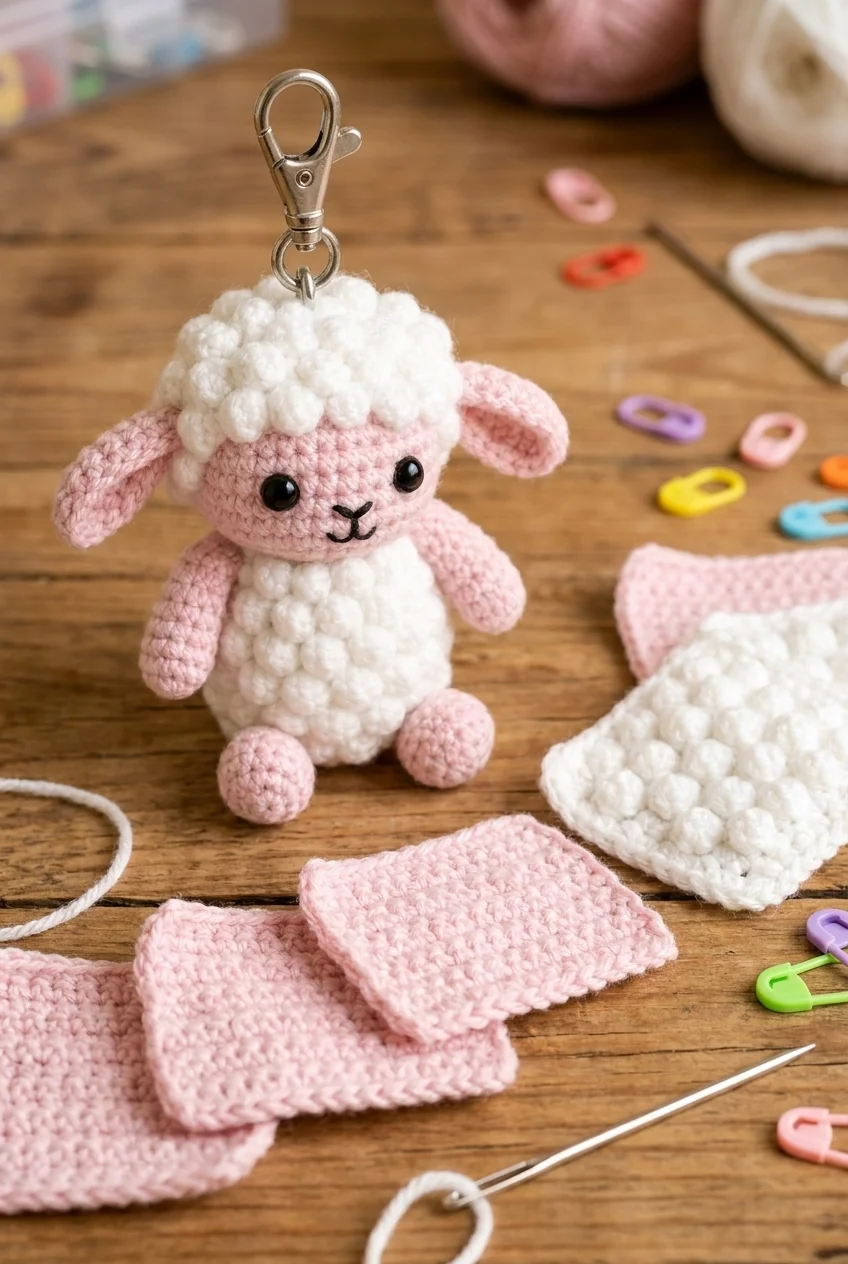
Texture is what gives a small crochet animal depth
When every part of an amigurumi uses the same stitch texture, the result can still be cute—but it may not feel especially memorable. Mixing smooth areas with fluffy, raised stitches adds contrast, depth, and a more tactile handmade finish.
This crochet lamb is a lovely example: the pink face, ears, arms, and feet are smooth, while the white head and body use a more cloud-like texture. The combination helps the lamb look soft and woolly without making the design visually busy.
1. Start with the character, not the stitch
Choose textures based on what the animal should look like. A lamb needs wool, so fluffy clusters make sense. A bear may need a smoother plush look. A turtle may need a textured shell.
When the texture reflects the character, the design feels intentional. You are not decorating a crochet shape; you are building a recognisable creature.
2. Assign each texture a clear job
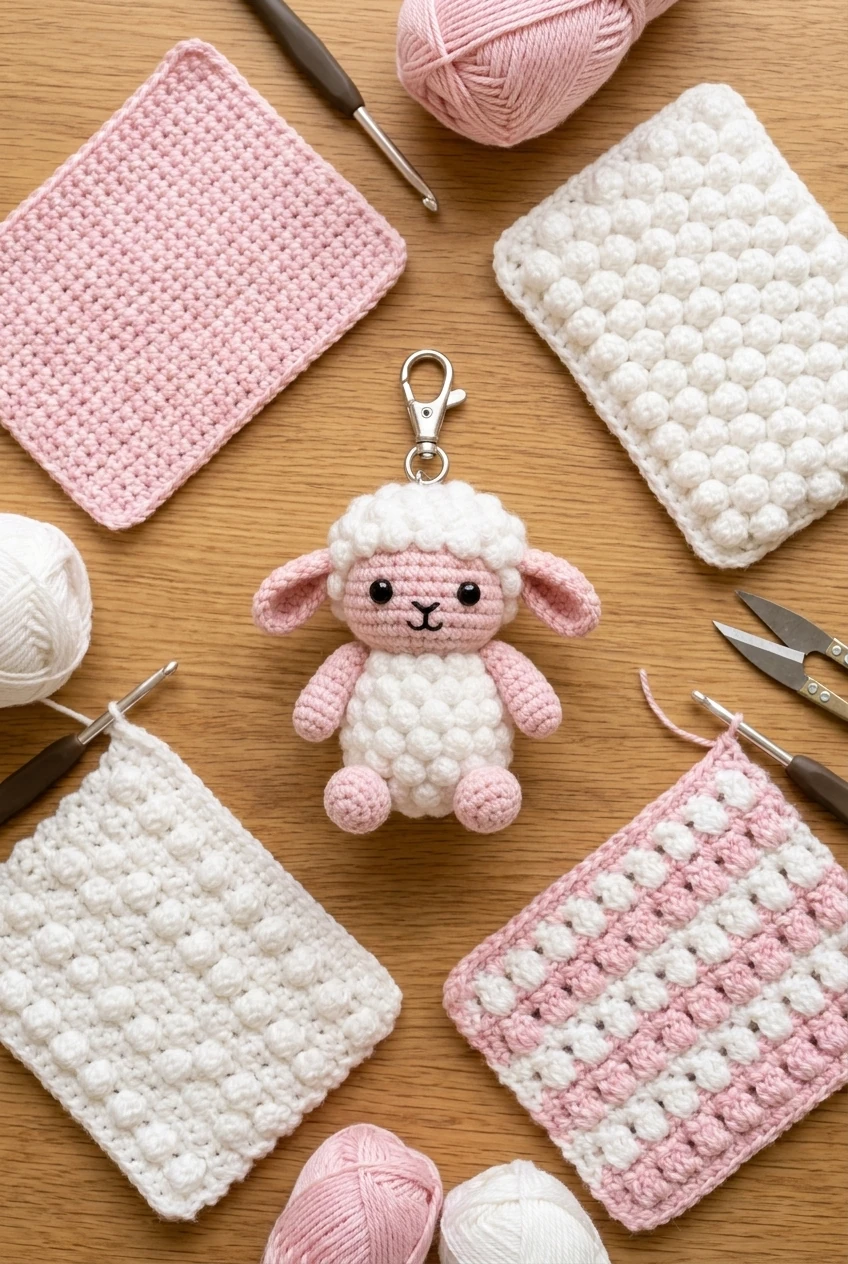
Smooth stitches are excellent for faces, limbs, and areas where you need details to stay visible. Fluffy stitches are ideal for fur, wool, manes, and decorative surface interest.
Giving each texture a role makes the finished piece easier to read. On a crochet lamb, smooth pink stitches show off the eyes and mouth, while white textured stitches communicate fleece immediately.
3. Keep colour changes clean
Texture already adds visual activity, so clean colour transitions matter. Make sure the pink face and white wool meet in a way that looks tidy from the front, side, and back.
When assembling separate pieces, take time to align them before sewing. A clean seam lets the contrast look like a design feature rather than an afterthought.
4. Use the smooth sections to define the shape
A textured surface can make small forms look larger and rounder. That is useful for fleece, but it can blur the outline of a face or limb.
Use smooth crocheted sections to preserve the lamb’s structure. The face stays clear, the ears remain readable, and the legs can stand out against the woolly body.
5. Avoid crowding delicate features
Eyes, embroidery, and small facial accents need visual breathing room. Do not let thick texture creep too closely around them.
Leave a smooth zone where the face features sit. This makes the expression easy to see and prevents the lamb from looking overwhelmed by its own fleece.
6. Repeat texture to create unity
The head and body do not need identical shapes, but repeating the same woolly texture across both areas links them visually. It tells the viewer that this is one character with one coat of fleece.
That repeated texture is especially effective in keychain photography, where a small design must communicate quickly on a phone screen.
7. Finish each surface deliberately
After sewing, stuffing, and attaching hardware, look at the lamb as a whole. Smooth pieces should lie neatly; fluffy pieces should feel full but not tangled.
Gently adjust the wool clusters, tidy any visible joins, and make sure the facial features are still centred. Texture looks its best when the final finishing is just as careful as the crochet itself.
The magic is in the contrast
The appeal of a textured amigurumi comes from balance. The smooth stitches make the lamb’s features clear; the fluffy stitches give it warmth, softness, and a distinct sheep-like look.
The complete Pastel Lamb Keychain Pattern PDF brings these surfaces together in a guided project, from the first crochet pieces to the final clasp-ready charm.
Use contrast to explain the construction
Smooth single crochet gives the head and limbs clear edges. Raised bobbles add volume to the body and cap. The design succeeds because those textures alternate in deliberate zones instead of competing everywhere. Keep the colour break clean and hide tails inside the nearest smooth section.
The bobble body begins with five plain rounds to create a stable base. Textured Round 6 alternates a bobble, chain one and skipped stitch fifteen times. Round 7 recovers the working count. Round 8 repeats the texture and Round 9 repeats the recovery. Those flat recovery rows prevent the fleece from becoming one uncontrolled mass.
Finish each surface according to its role
Shape smooth pieces with even stuffing and invisible decreases. Shape textured pieces from underneath so the bobbles stay proud. Flatten ears and limb openings before sewing, but do not flatten the wool cap. During final assembly, alternate between front and side views so depth remains consistent.
Texture also changes durability. Reinforce the neck seam, weave every tail through several stitches, and inspect the keychain loop regularly. A charm that moves every day needs more structural care than a shelf decoration.
Frequently asked questions
Why mix smooth and fluffy stitches?
The contrast separates the face and limbs from the fleece.
What is a recovery round?
A flat round worked into bobble tops and skipped stitches to restore the count.
Should the wool cap be stuffed?
No; flatten it slightly and sew it securely to the head.
Can I use one texture everywhere?
You can, but the lamb silhouette and face will be less readable.
How do I finish textured fabric?
Shape from underneath and avoid pressing the bobbles flat.
This amigurumi texture detail supports a neat, durable and recognisable finished charm. This amigurumi texture detail supports a neat, durable and recognisable finished charm. This amigurumi texture detail supports a neat, durable and recognisable finished charm.
This amigurumi texture detail supports a neat, durable and recognisable finished charm. This amigurumi texture detail supports a neat, durable and recognisable finished charm.
This amigurumi texture detail supports a neat, durable and recognisable finished charm. This amigurumi texture detail supports a neat, durable and recognisable finished charm. This amigurumi texture detail supports a neat, durable and recognisable finished charm.