
My Crochet Universe · Pastel Lamb Series
Crochet Sheep Face: 6 Sweet Details That Make a Lamb Look Alive
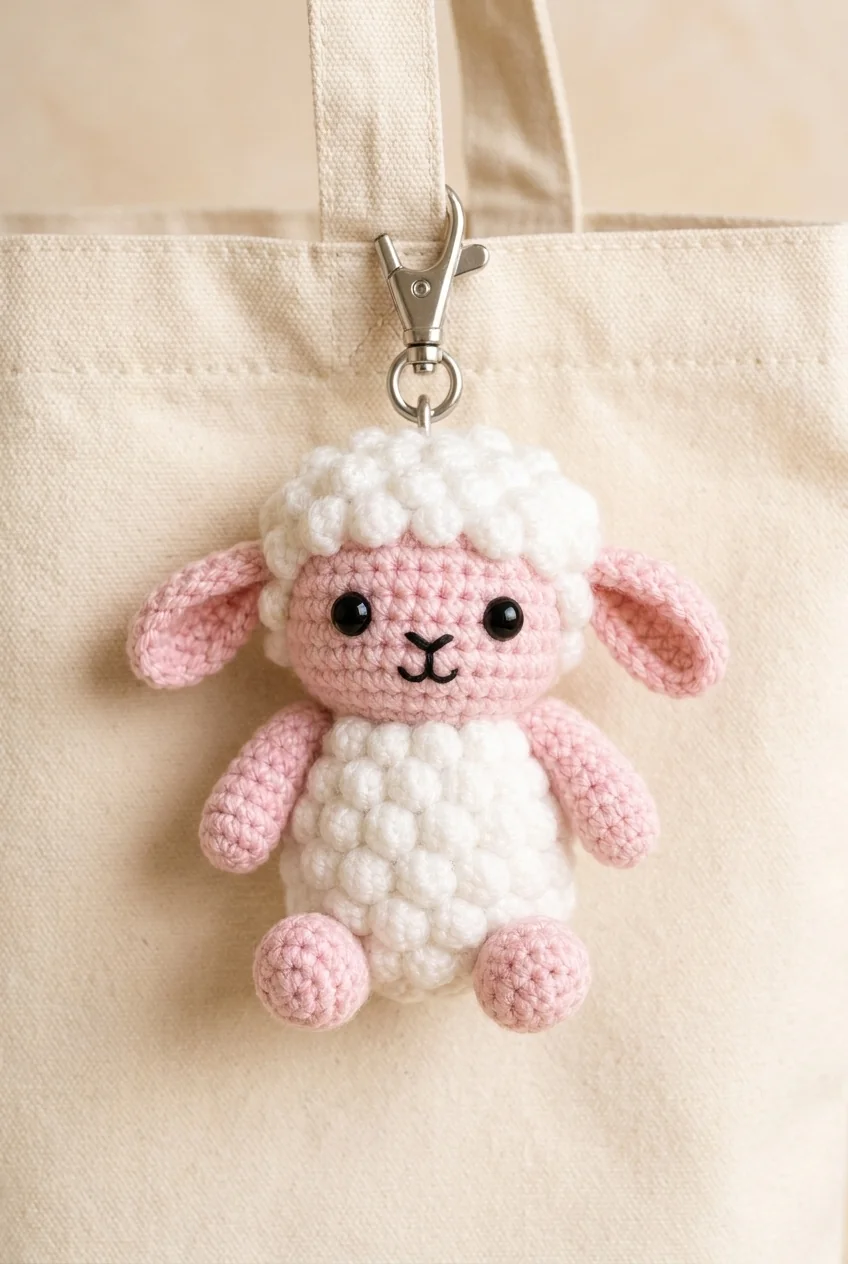
The face is where a crochet lamb gets its personality
Fluffy wool makes a lamb adorable, but the face is what makes someone smile at it.
A few small decisions—eye placement, ear angle, muzzle embroidery, and how much pink is visible beneath the wool—can make the difference between a generic plushie and a crochet sheep with a real personality. For a tiny keychain, those details matter even more because the face is often the first thing people notice.
1. Leave enough open space around the eyes
Safety eyes look best when they have room to shine. Place them where the smooth pink face remains visible, rather than pushing them too close to the white wool or the muzzle.
Balanced spacing makes the face feel calm and sweet. Before permanently securing the eyes, view the lamb from the front and slightly above—the angle people will most often see when the keychain is hanging.
2. Keep both eyes level
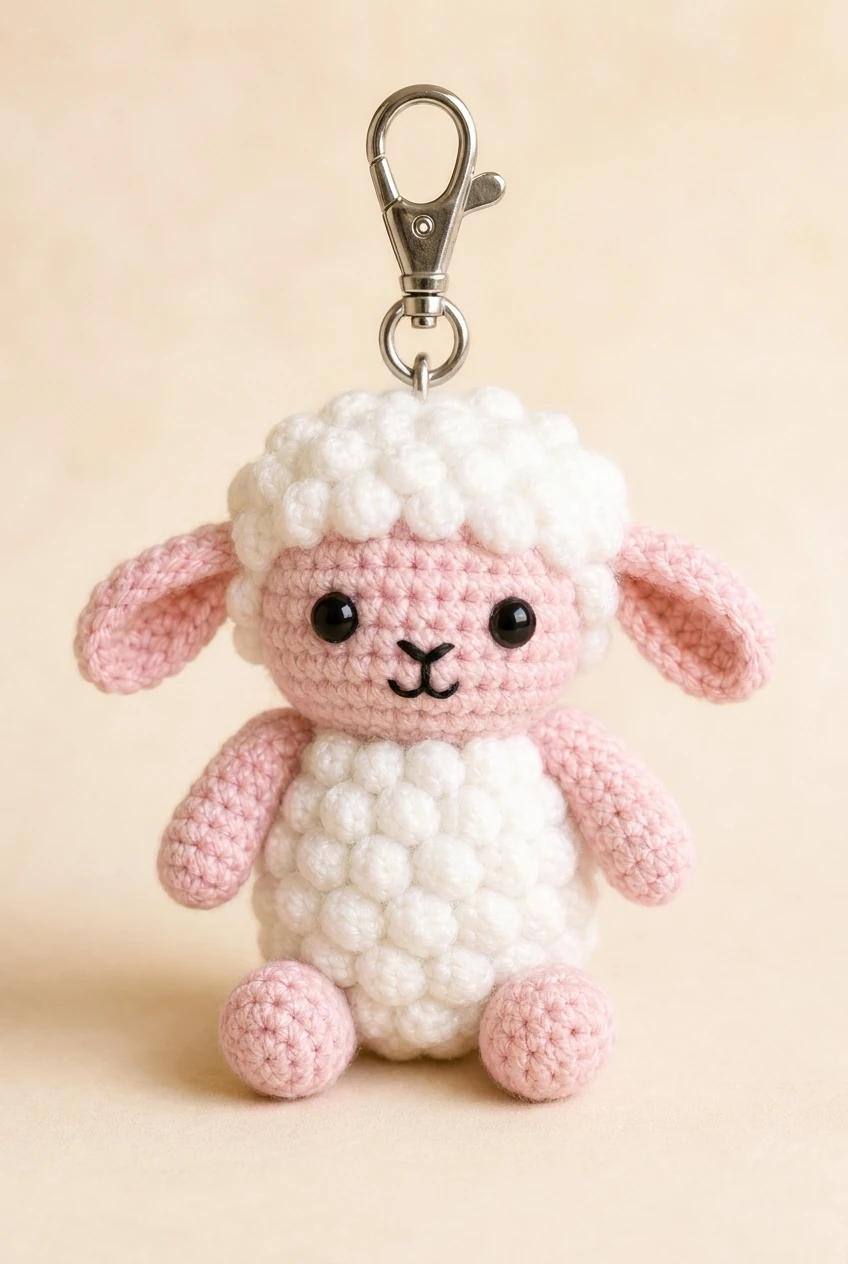
Even a tiny difference in eye height can change the expression. A slightly tilted eye placement may make a lamb look playful, sleepy, or surprised, but it can also look unintentional if the rest of the face is symmetrical.
Use a removable marker, pins, or stitch markers to test placement first. Take a quick photo before locking the eyes in place; photographs often reveal unevenness more clearly than your eyes do while crocheting.
3. Give the muzzle a simple shape
Small amigurumi faces do not need complicated embroidery. A simple nose and mouth can be enough to make the lamb feel warm and friendly.
Keep the lines clean and centred. Thick or crowded facial embroidery can overpower the soft expression, especially against a pale pink face. The goal is a tiny detail that reads clearly without competing with the textured wool.
4. Angle the ears for softness
Long, rounded ears are a key part of the lamb silhouette. Their placement affects the whole mood of the character.
Ears attached straight out to the sides create a cheerful, open look. Ears tilted slightly downward can feel softer and more shy. Test both positions with pins before sewing so you can choose the expression you love most.
5. Frame the face with the wool cap
The wool around the head should enhance the face, not cover it. Arrange the fluffy clusters so they create a soft border around the forehead and cheeks.
If the wool sits too low, the eyes can disappear into texture. If it sits too high, the lamb may lose its woolly identity. A gentle frame makes the smooth face and white fleece feel naturally connected.
6. Check the expression after assembly
The face may shift once the ears, arms, body, and keychain clasp are attached. Before weaving in your final ends, hang the lamb upright and review it as a finished charm.
Check that the eyes face forward, the embroidered mouth is centred, and the ears sit at a matching height. Those last small adjustments are what make the design look thoughtfully handmade.
A little face with a lot of charm
A crochet sheep face does not require many details, but every one counts. Glossy eyes, a neat stitched muzzle, gentle pink ears, and a woolly white frame give this lamb its cuddly personality.
The complete Pastel Lamb Keychain Pattern PDF includes the full construction sequence for turning individual crochet pieces into one sweet finished lamb keychain.
Make your own tiny sheep companion with the complete pattern: PATTERN_URL.*
Plan the face before locking the eyes
The PDF places 5–6 mm safety eyes between Rounds 7 and 8, approximately five stitches apart. Insert both posts first, photograph the face straight on, and compare the space from each eye to the nearest ear position. Only attach the washers when the placement looks level and calm.
A small horizontal or triangular nose can sit below the eyes. Add the tiny curved mouth with black embroidery thread after the head is stuffed enough to hold its shape. Use separate short stitches instead of one loose strand; short stitches remain tidy when the charm moves.
Let the ears support the expression
The ears are made twice, flattened and sewn closed rather than heavily stuffed. Pin them to opposite sides of the head around Rounds 5–9 and angle them slightly outward and downward. Compare the front and side views before sewing. Matching attachment height makes the face feel balanced even when the handmade ears are not mathematically identical.
After the cap is attached, check that the lower bobble edge frames rather than covers the eyes. The white cap should be centred, its bobbles visible, and the seam secure without pulling the pink head into a ridge.
Frequently asked questions
Where do the eyes go?
Between Rounds 7 and 8, about five stitches apart.
When should I embroider the mouth?
After the head is stuffed enough to hold its final shape.
How are the ears angled?
Slightly outward and downward for a soft expression.
Can I embroider eyes instead?
Yes, and embroidery is safer for items intended for very young children.
How do I centre the wool cap?
Pin it from front and side views before sewing the lower edge.
This crochet sheep face detail supports a neat, durable and recognisable finished charm. This crochet sheep face detail supports a neat, durable and recognisable finished charm. This crochet sheep face detail supports a neat, durable and recognisable finished charm. This crochet sheep face detail supports a neat, durable and recognisable finished charm. This crochet sheep face detail supports a neat, durable and recognisable finished charm. This crochet sheep face detail supports a neat, durable and recognisable finished charm. This crochet sheep face detail supports a neat, durable and recognisable finished charm.