
My Crochet Universe · Pastel Lamb Series
Bobble Stitch Amigurumi: 5 Proven Tips for a Soft Woolly Look
Why texture changes an amigurumi animal completely
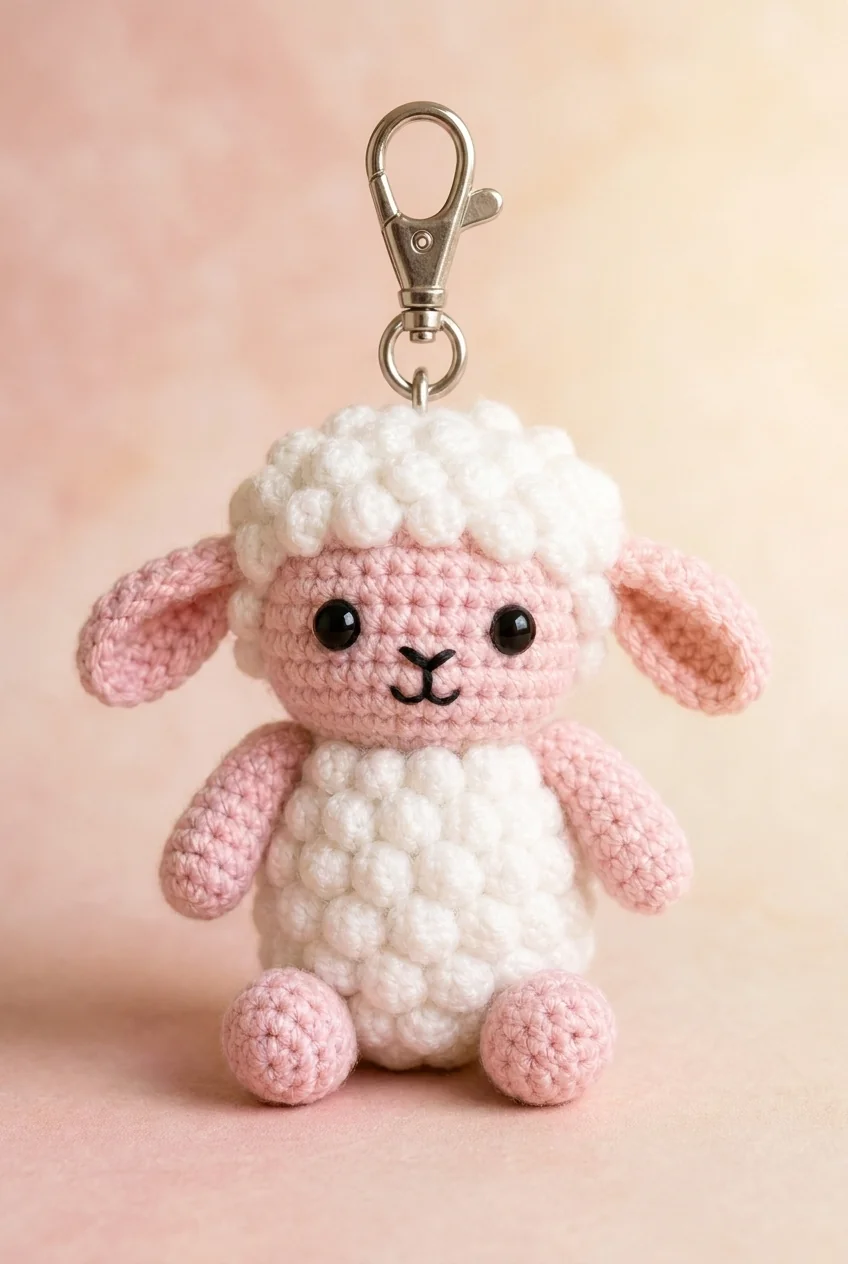
A smooth crochet ball can become almost any animal. Add little raised clusters, however, and it can suddenly look like wool, curls, fur, or a fluffy cloud.
That is why bobble-style texture works so beautifully for a crochet lamb. The small raised stitches catch the light, add dimension in photographs, and give the finished character a cosy handmade feel that plain stitches cannot create on their own.
Here are five practical tips for getting a soft woolly look without losing the clean shape of your amigurumi.
1. Decide where the texture belongs first
Do not add bobble stitches everywhere simply because they are cute. Texture has more impact when it is placed with purpose.
For a lamb, the woolly areas belong on the top of the head and across the body, while the face, ears, limbs, and feet stay smoother. This lets viewers immediately recognise the animal and makes the facial features easier to see.
2. Keep your tension consistent
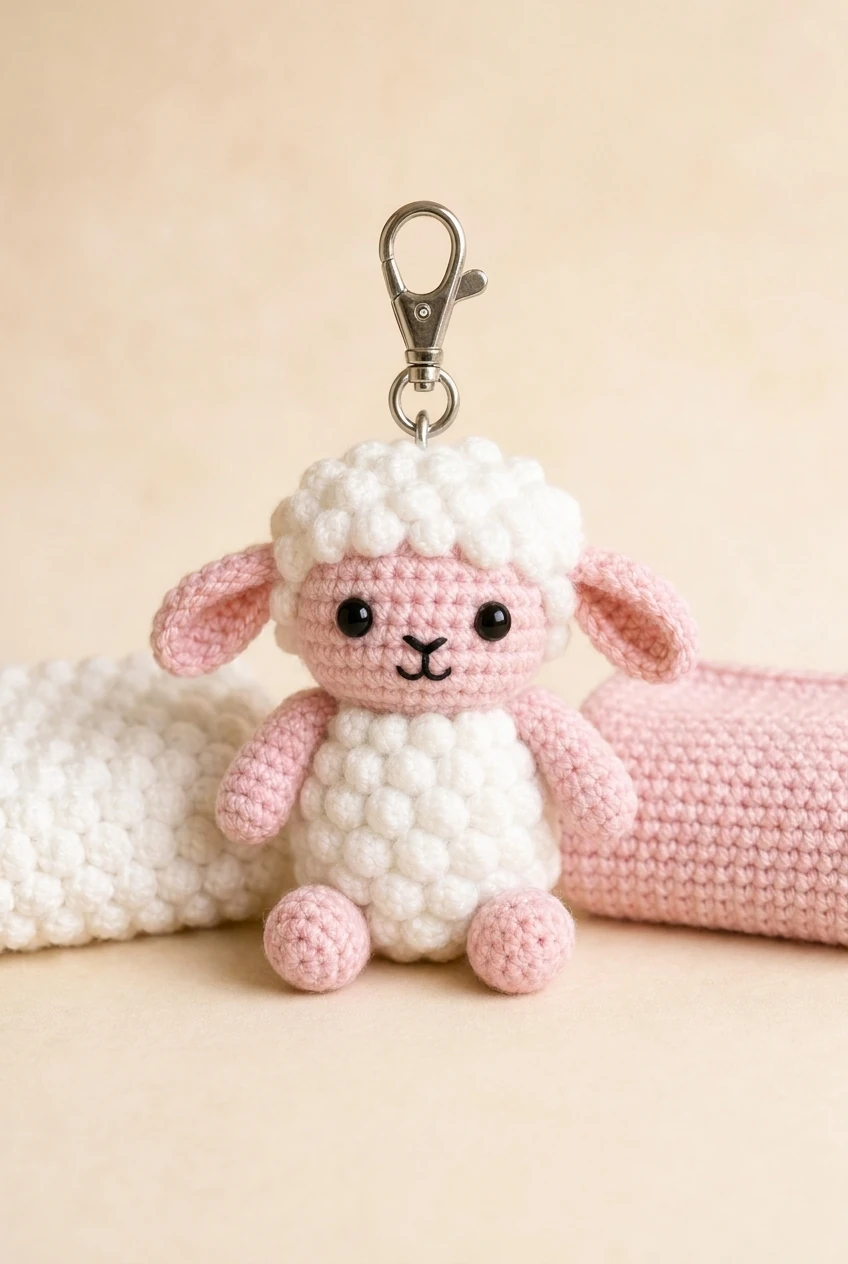
Bobble-style stitches can vary in size when your tension changes. If some clusters are very tight and others are loose, the fleece may look uneven.
Try to keep each textured stitch at a similar height and fullness. You do not need perfection, but regularity helps the finished wool look soft and deliberate instead of accidental.
3. Watch the right side of the work
Textured crochet can look different depending on which side faces outward. Before you sew or assemble the pieces, confirm that the raised woolly side is visible on the outside.
This small check prevents a common disappointment: finishing the body and realising the flatter side is showing. It is especially useful when making a small crochet animal where every texture detail matters.
4. Balance fullness with shape
A lamb should look fluffy, but it should still have a rounded head and body. Too much bulk in one area can make the piece lean, look lopsided, or hide the face.
Stuff the smooth base evenly and let the textured stitches sit on top as fleece. The structure comes from the underlying shape; the bobbles supply the soft, woolly personality.
5. Photograph the texture in soft light
The textured stitches are one of the product’s biggest selling points, so make sure they show up in your photos. Soft, indirect daylight helps the raised wool look dimensional without creating harsh shadows.
For a close-up product photo, angle the lamb slightly instead of photographing it completely flat from the front. The side light will reveal the curls and make the handmade stitchwork easier to appreciate.
A soft, woolly finish worth showing off
Bobble stitch amigurumi is memorable because it invites people to look closer. On this crochet lamb, the fluffy white wool contrasts with the smooth pink face and gives the character its gentle, cosy charm.
The full Pastel Lamb Keychain Pattern PDF guides you through the complete construction so you can create the same textured sheep look with confidence.
Find the complete crochet lamb pattern here: PATTERN_URL.*
Practice the complete bobble sequence slowly
The pattern’s bobble is built by drawing up loops repeatedly, then pulling through all loops, chaining one and skipping the next stitch. That skipped stitch is not lost: the following recovery round works into the top of each bobble and the previously skipped stitch. Understanding this rhythm makes the wool rows much easier to count.
Place a marker at the beginning of the round and count the bobbles before moving on. Fifteen evenly spaced bobbles should sit over the thirty-stitch body. The recovery round restores thirty working stitches and creates a calm, flat band between textured rows. Never guess where a skipped stitch belongs; turn the fabric slightly and identify both openings.
Control height, spacing and direction
Draw every loop to a similar height. Short loops create tight little knots, while very tall loops can snag on keys or a backpack. Keep the bobbles facing outward and use the recovery round to settle them. If one bobble twists inward, ease it forward before stuffing makes the position permanent.
For clean photographs, place the finished lamb near a window and turn the body about thirty degrees. Side light shows the difference between the smooth pastel sections and the raised white fleece without washing out the colour.
Frequently asked questions
What does the skipped stitch do?
It creates room for the bobble and is recovered in the following flat round.
How many body bobbles are in a textured round?
The PDF uses fifteen bobbles over thirty base stitches.
Which side should face out?
Keep the raised bobbles on the exterior before stuffing and closing.
Can beginners make this texture?
Yes, after practising the bobble and recovery sequence on a swatch.
How do I prevent snagging?
Keep loop height controlled, weave tails securely and inspect the charm regularly.
This bobble stitch amigurumi detail supports a neat, durable and recognisable finished charm. This bobble stitch amigurumi detail supports a neat, durable and recognisable finished charm. This bobble stitch amigurumi detail supports a neat, durable and recognisable finished charm. This bobble stitch amigurumi detail supports a neat, durable and recognisable finished charm. This bobble stitch amigurumi detail supports a neat, durable and recognisable finished charm. This bobble stitch amigurumi detail supports a neat, durable and recognisable finished charm.