Best Yarn for a Crochet Tote Bag: How to Choose the Right Material
A practical guide to choosing cotton yarn for a light, durable openwork tote with clear mesh stitches.
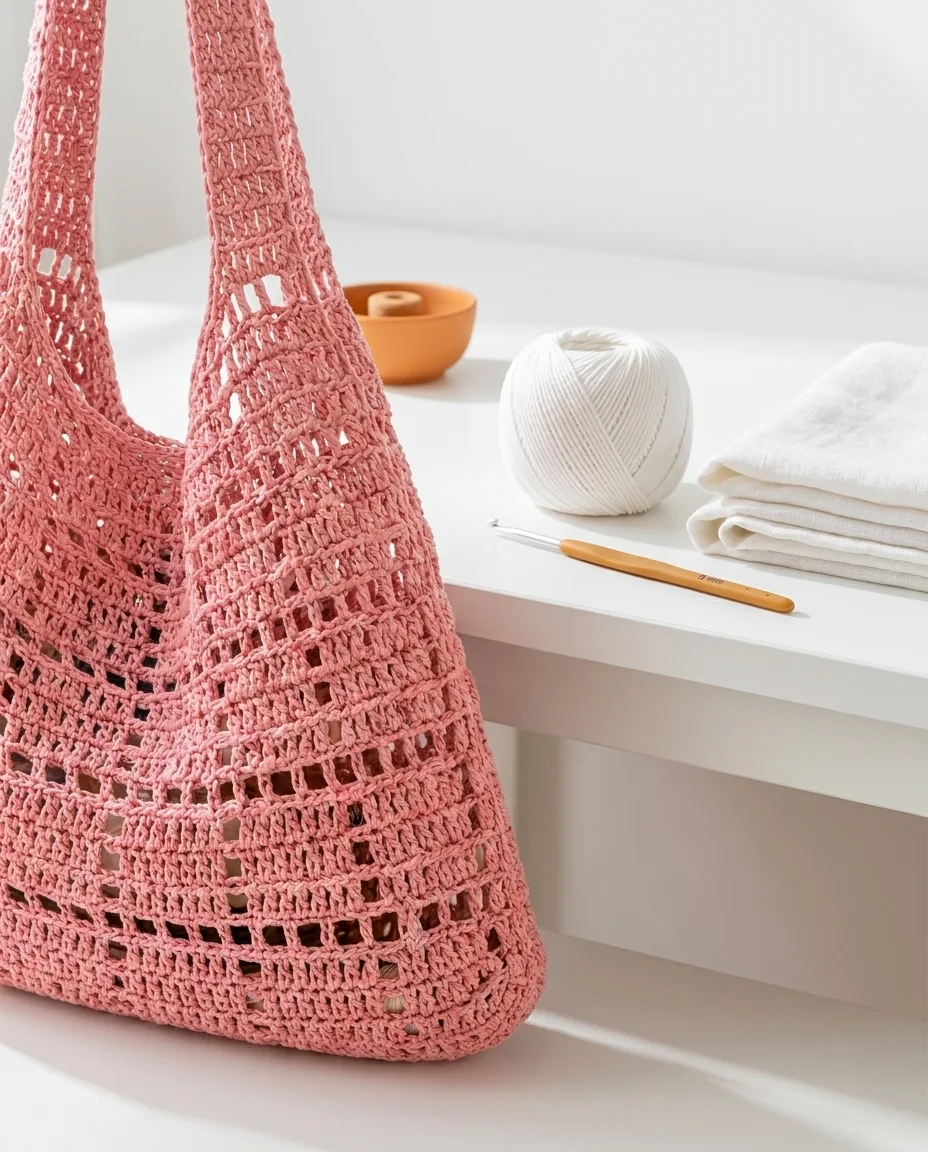
The best yarn for a crochet tote bag needs to do more than look pretty in the skein. It has to show the stitch pattern clearly, hold up to everyday use, and give the finished bag enough structure without making it stiff. For this openwork tote, the pattern calls for 100% cotton, weight 4 yarn and approximately 180 g of yarn. That combination is a helpful starting point because it balances stitch definition, strength, and a relaxed drape.
Why the best yarn for a crochet tote bag matters
A tote bag is handled, carried, set down, and occasionally filled with more than you planned. Yarn choice affects how the fabric stretches, how the mesh openings look, and how the straps feel on your shoulder. Two yarns can share the same weight category and still create noticeably different results because their twist, fiber content, and finish are not identical.
The openwork body of this design makes yarn choice especially visible. Smooth yarn lets the repeating double-crochet and chain spaces read clearly. A fuzzy or loosely spun yarn can soften those spaces until the pattern looks cloudy, while a very thin yarn may create a delicate fabric that does not have enough body for a useful tote.
That does not mean there is only one acceptable yarn. It means you should choose a substitute with the same general behavior as the original: smooth, strong, washable, and close to the same weight.
Why 100% cotton is a practical choice
The pattern specifies 100% cotton, weight 4 yarn, with approximately 180 g needed. Cotton is a sensible match for a market-style tote because it has good stitch definition and a naturally grounded feel. It also tends to hold the open mesh pattern neatly instead of blooming into a fuzzy surface.
Cotton is not completely stretch-proof, so the finished bag can still relax when it is loaded. That is normal. The goal is controlled movement rather than a rigid basket. The strap construction and even tension do a lot of the work in keeping the tote comfortable and balanced.
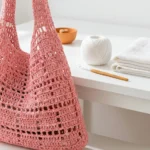
Another advantage is color clarity. The pale pink sample shows how a smooth cotton yarn can make the horizontal rows and open spaces easy to see. If you choose another color, a solid shade will usually show the pattern more clearly than a busy variegated yarn.
- Clear stitch definition for the mesh body
- A comfortable, natural hand
- Good color clarity in solid shades
- A practical choice for a handmade everyday accessory
What weight 4 means for this pattern
Weight 4 is a category rather than a promise that every ball of yarn behaves identically. One brand may feel firm and tightly twisted, while another may feel softer or more relaxed. Read the label, but also look at the strand itself and consider how it behaves when you make a few stitches.
For this tote, the weight 4 recommendation works together with the 5 mm hook and the pattern counts. If you change both yarn and hook dramatically, the mesh body may become wider, taller, or more open than expected. The instructions still provide the stitch structure, but your tension will influence the fabric.
A quick swatch is worthwhile even though the compact pattern guide does not list a formal gauge measurement. Use the same hook and yarn you plan to use for the bag, then examine whether the fabric feels sturdy enough and whether the openings look intentional.
How to substitute the yarn
If the exact yarn is unavailable, match the important characteristics first: 100% cotton or a similarly stable fiber, weight 4 thickness, a smooth surface, and enough yardage for approximately 180 g of work. A substitute can be a different brand and still work well when those basic properties are close.
Pay attention to the way the yarn twists. A firmly twisted cotton often produces crisper double crochets, while a soft chainette or loosely spun yarn may flatten or separate around the hook. Neither is automatically wrong, but the second option may require more patience and may not give the same visual definition.
Color is the easy part of substitution. The PDF pattern is shown with a main color listed as red, while the product reference used for this content is pale pink. The stitch design is not limited to one color, so the pink version can be presented as a colorway of the same tote.
- Match weight 4 as closely as possible
- Choose a smooth strand with visible twist
- Buy enough yarn for approximately 180 g of finished work
- Test the substitute with a small swatch
- Keep the color solid if you want the mesh pattern to stand out
Materials for the openwork crochet tote
Along with the yarn, the project uses a 5 mm crochet hook, a couple of stitch markers, a darning or tapestry needle, and scissors. Stitch markers are particularly useful when you begin the body and later mark the strap zones. The needle is needed for weaving in the ends and securing the final join.
Keeping all of the tools together before you start makes the first session smoother. Put the hook, markers, needle, and scissors in a small project pouch so you do not have to pause halfway through the base. The project is estimated at five to six hours, although your pace will depend on your experience and how often you stop to check the work.
Because the pattern uses US crochet terms, the abbreviations are straightforward: ch for chain, sc for single crochet, dc for double crochet, and sl st for slip stitch. If you normally use UK terminology, double-check the conversion before beginning.
The yarn used in the PDF pattern
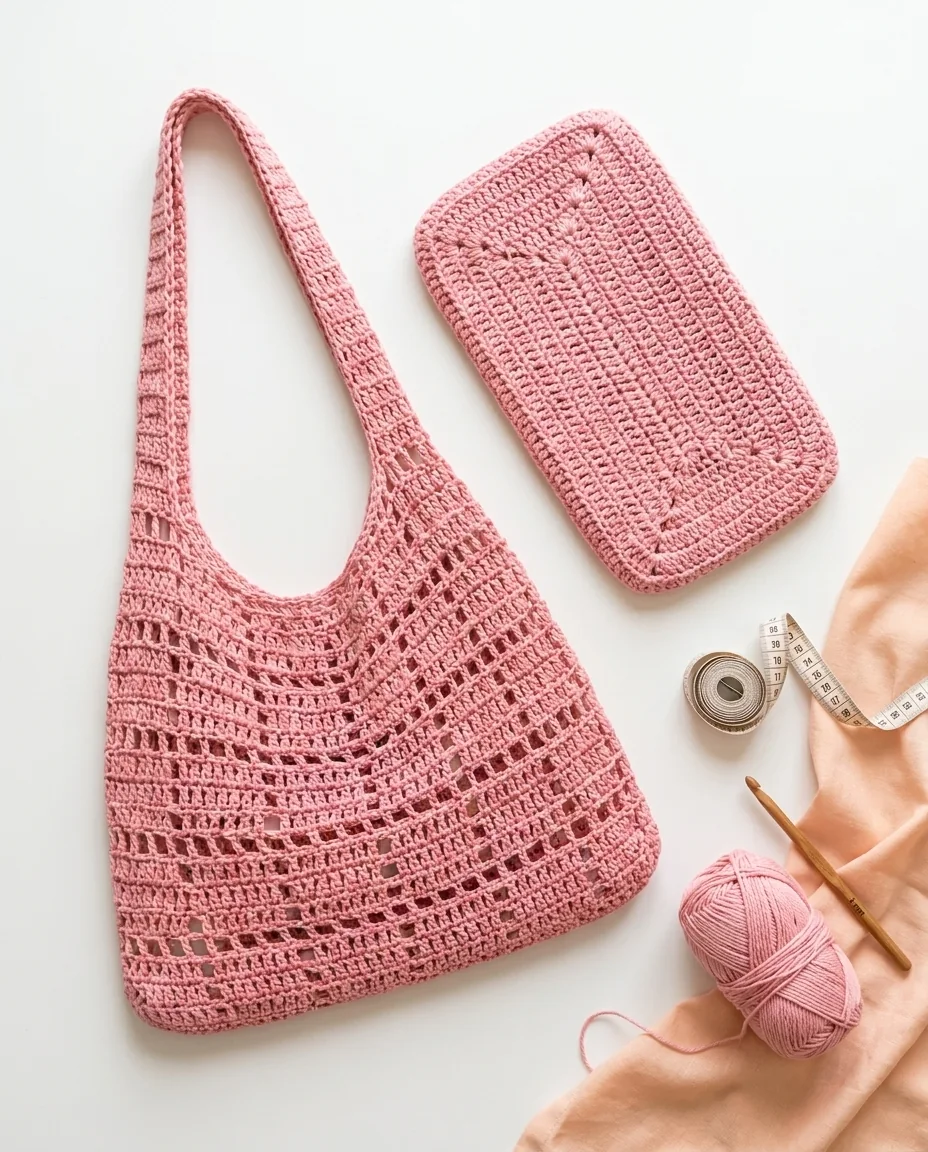
The complete guide specifies 100% cotton, weight 4 yarn, approximately 180 g, and a 5 mm hook. It then builds the tote from a rectangular base, a repeating mesh-style body, two shaped straps, and an optional single-crochet edging. If you want the stitch counts and sequence in one place, the complete PDF pattern is the natural next step.
The PDF is written for a medium-difficulty project and gives an estimated working time of five to six hours. That estimate is useful for planning, but do not rush the first rounds. A few extra minutes spent checking the foundation and the mesh repeat can save much more time later.
Helpful visual references
Frequently Asked Questions
Can I use acrylic yarn for this crochet tote bag?
You can, but the result may feel different from the cotton sample. Acrylic can be softer and lighter, while cotton usually gives clearer stitches and a more grounded structure. If you substitute, test the yarn before making the full bag.
How much yarn does this pattern use?
The pattern specifies approximately 180 g of 100% cotton, weight 4 yarn.
What hook size does the pattern use?
The preparation instructions specify a 5 mm crochet hook.
Can I make the bag in pink instead of red?
Yes. The PDF lists red as the main color, but the stitch design can be made in another solid color. The pale pink sample is a colorway example.
Final thoughts
The best way to approach this project is one checkpoint at a time. Keep the yarn, hook, stitch counts, and finishing notes together, then use the complete PDF pattern when you are ready to make the tote. This guide to best yarn for a crochet tote bag is designed to keep the next step clear.