
Crochet Tension for a Mesh Bag: How to Keep the Shape Even
Practical ways to keep the open mesh body even, balanced, and easier to assemble.
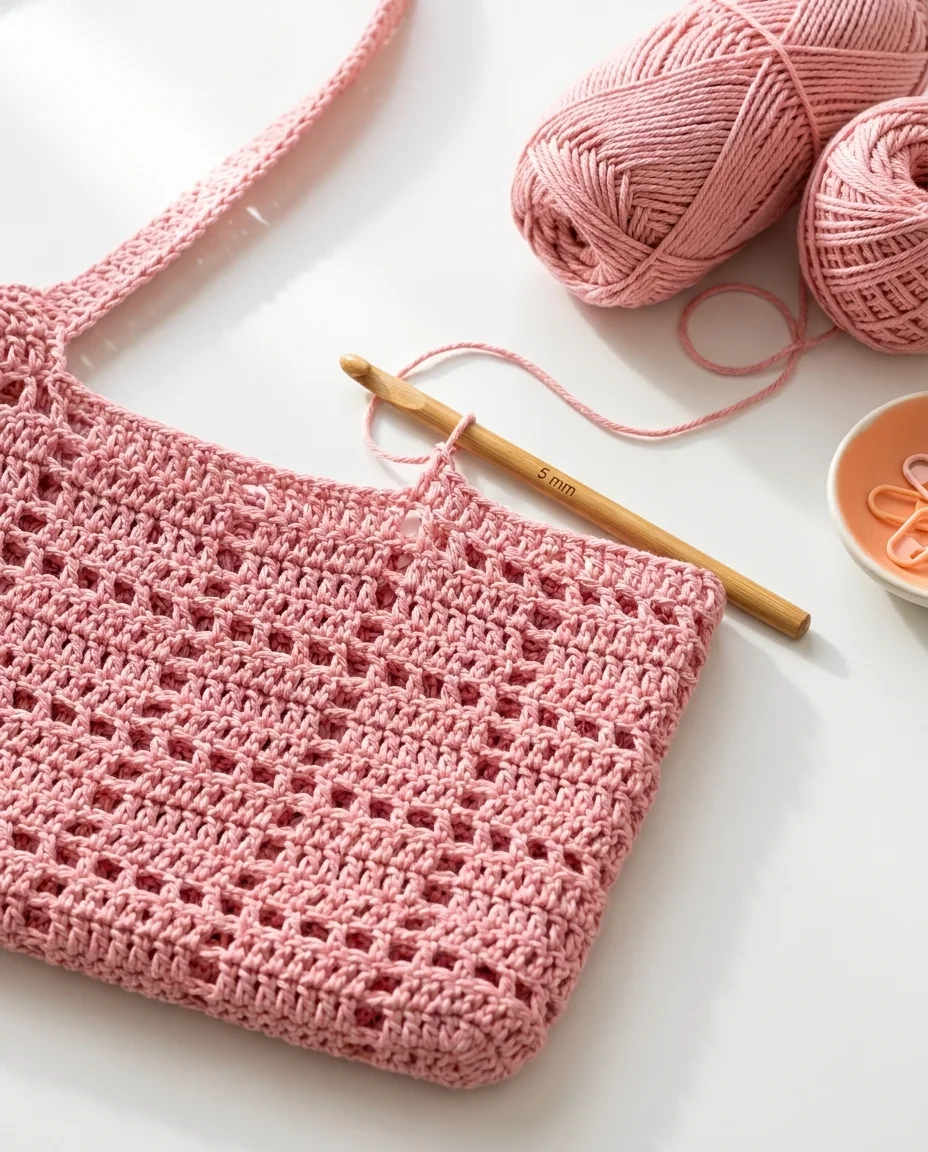
Crochet tension for a mesh bag matters because open stitches make small differences easy to see. If one round is loose and the next is tight, the chain spaces can change size, the body may lean, and the straps may not sit symmetrically. This tote pattern uses a repeating mesh-style body worked over 20 rounds, so a steady rhythm is more useful than trying to force every stitch to look identical.
What crochet tension for a mesh bag really means
Tension is the relationship between your yarn, hook, and hands as you form each stitch. It includes how tightly you pull the loops, how much yarn you allow between stitches, and how consistently you repeat the movement. It is not a test of talent. It is simply the behavior of your fabric while you work.
In an open mesh design, tension shows up in the chain spaces as much as in the stitches. If the spaces are stretched wider on one side, the bag can look uneven even when the double crochets themselves seem acceptable. The goal is a relaxed, repeatable motion that gives each section a similar height and width.
The compact pattern guide does not give a separate numerical gauge. That means your best checkpoints are the stated stitch counts, the repeated structure, and the appearance of the fabric. Keep those three things in view rather than relying only on a ruler.
How tension affects the 20-round mesh body
The body begins after the rectangular base and follows a four-round repeat. That repeat is worked four more times until the body reaches 20 total rounds. Because the same rhythm returns several times, you have a built-in opportunity to compare one repeat with the previous one.
If Round 1 looks compact but Round 5 suddenly spreads out, the issue may be tension rather than the written sequence. Likewise, if the openings become much smaller after a few rounds, check whether you are pulling the chain-one spaces tight or accidentally skipping a different stitch.
Turning the work at the start of each new round is another part of the pattern rhythm. A missed turn can change the direction of the fabric and make the mesh appear to drift. Mark the start and pause after each round so you can confirm where you are.
- Compare the height of each four-round repeat
- Watch the size of the chain-one spaces
- Turn the work whenever the instructions say to turn
- Use the stitch marker to keep the round start visible
Signs your tension is too tight
Tight tension can make the tote smaller and firmer than intended. The hook may feel difficult to insert, the chain spaces may close, and your hands may become tired before the project is finished. If you notice those signs early, it is better to adjust your grip than to keep pushing through.
A larger hook is one possible solution, but do not change it automatically. First try relaxing your shoulders, allowing the yarn to slide more freely, and avoiding a hard tug after every stitch. The pattern calls for a 5 mm hook, so begin by working more comfortably with that hook before making a size change.
A firm fabric is not always a problem. The question is whether the mesh remains visible and whether the bag still has the light, open character shown in the reference.
Signs your tension is too loose
Loose tension can create oversized openings, a floppy body, and straps that lengthen more than expected. Some drape is part of the charm of an openwork tote, but the fabric still needs enough stability to carry everyday items. If the bag stretches dramatically when lifted, your tension may be too relaxed or the yarn may be too soft for the project.
Try keeping the hook movement smooth rather than tightening the stitches after the fact. If you repeatedly pull the yarn hard at the end of a stitch, you may create alternating tight and loose sections. A steady feed from the yarn ball usually gives a more even result.
The strap sections deserve extra attention because they are worked in double crochet and later joined at the center. Uneven tension there can make one side longer than the other, even when the body looks fine.
- Check the bag while it is lying flat
- Compare both strap sections before joining
- Do not judge the fabric while it is being stretched in your hands
- Keep the yarn feed steady rather than tightening every stitch
A practical tension check before the full bag
Even without a formal gauge number, a small swatch can answer useful questions. Use the 5 mm hook and the same weight 4 cotton yarn listed in the pattern. Work a few repeats of the mesh idea, then look at the openings from a normal distance.
Ask whether the stitches are easy to see, whether the fabric feels comfortable, and whether the chain spaces look similar from row to row. You are not trying to recreate a perfect rectangle for its own sake. You are learning how your hands are behaving before the project becomes large.
If the swatch is much stiffer, looser, wider, or narrower than the reference, make a small adjustment and test again. Write down the yarn and hook combination so you can repeat the result.
How to keep your tension consistent while crocheting
Work in short checkpoints instead of waiting until the end. After the base, examine the corners. After the first mesh repeat, compare the openings. Before beginning the straps, lay the bag flat and check that the sides have not pulled in one direction.
The pattern uses US crochet terms and a small set of repeating stitches: chains, single crochets, double crochets, and slip stitches. That makes it easier to focus on rhythm. Read the next instruction before starting the round, then keep your marker in the location described.
If you need to undo a section, or frog it, do so while the problem is still small. Frogging a few rounds is frustrating, but it is usually kinder than finishing a bag whose body or straps do not balance.
Use the PDF as your stitch-count checkpoint
The complete PDF pattern gives the base counts, the four-round body repeat, the 20-round total, and the strap sequence. Use those written checkpoints alongside your visual tension check. That combination is more dependable than judging the fabric by appearance alone.
The goal is not to make every crocheter produce an identical fabric. Yarn, hands, and personal style all vary. The goal is to understand how those differences affect your tote and make deliberate choices before you commit to the final finishing.
Helpful visual references
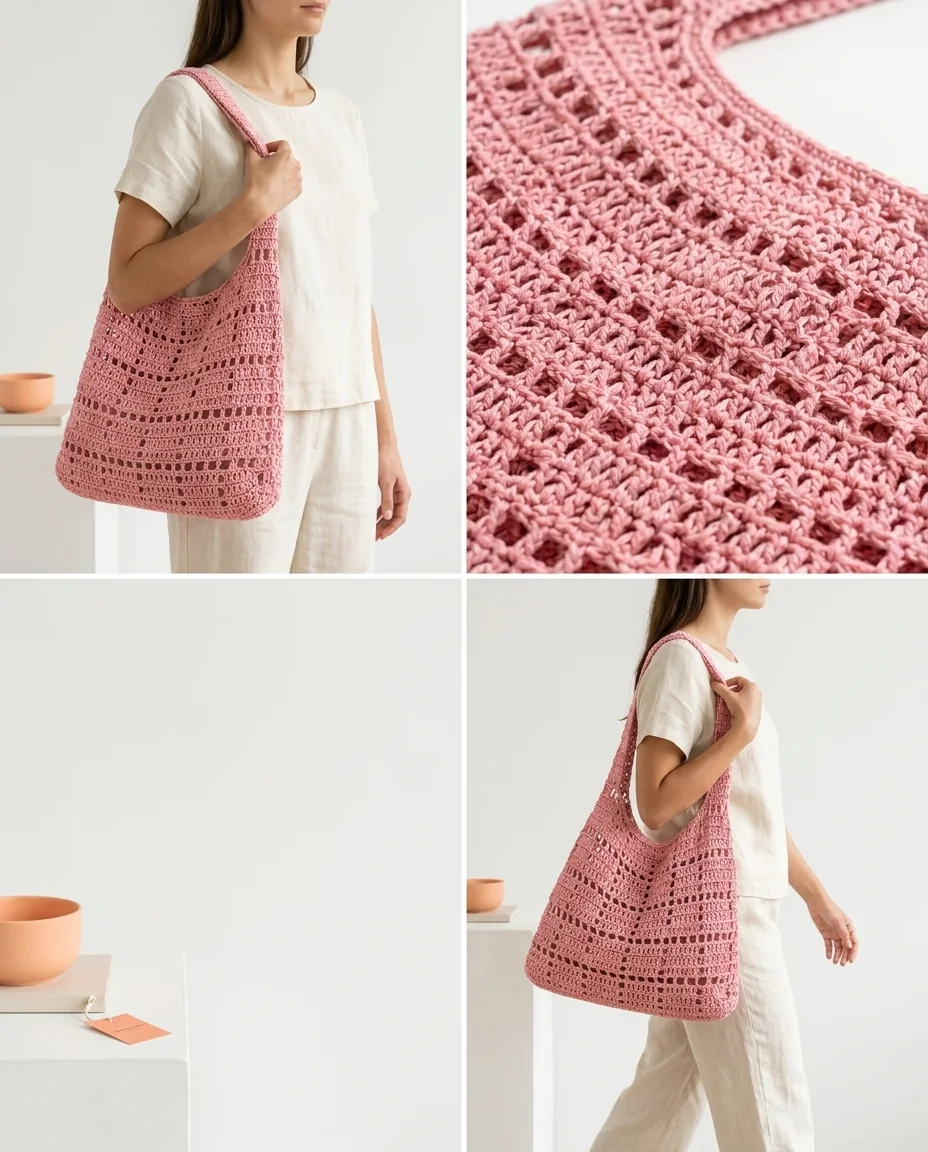
Frequently Asked Questions
Does this pattern include a gauge measurement?
The compact guide does not list a separate numerical gauge. Use the 5 mm hook, weight 4 cotton yarn, stated stitch counts, and visual checkpoints to keep your fabric consistent.
What should I do if my mesh holes are too large?
First relax your yarn feed and check that you are following the chain-one and skip instructions correctly. If the fabric is still too loose, test a smaller hook with a short swatch.
Why does one strap look longer than the other?
The most common causes are different tension, uneven marker placement, or a missed decrease. Compare the two strap sections before joining them.
Should I block the tote?
The guide does not require blocking. If you choose to block, use a method suitable for your cotton yarn and avoid stretching the mesh beyond the shape you want.
Final thoughts
The best way to approach this project is one checkpoint at a time. Keep the yarn, hook, stitch counts, and finishing notes together, then use the complete PDF pattern when you are ready to make the tote. This guide to crochet tension for a mesh bag is designed to keep the next step clear.
Related resources
On My Crochet Universe
- Best yarn for a crochet tote bag
- Crochet tote bag finishing tips
- Crochet tote bag construction guide