
My Crochet Universe · Crescent Handbag Series
9 Beautiful Crochet Crescent Bag Colors You’ll Want to Make
Choose a palette that fits your wardrobe while keeping the dense cotton texture and structured shape in focus.
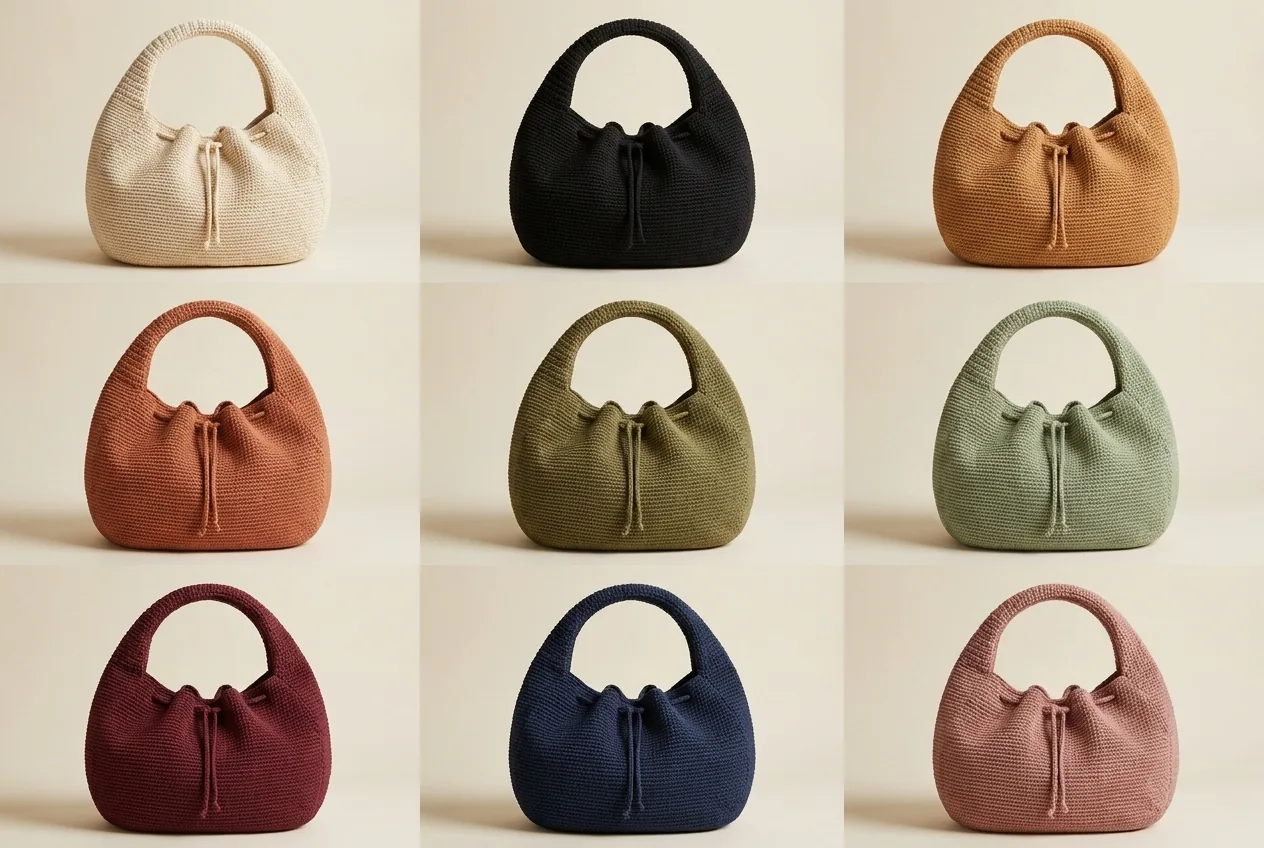
The crescent handbag’s modern shape is versatile enough to inspire color, styling, design, and gift decisions without competing with the core pattern tutorial.
1. Natural cream
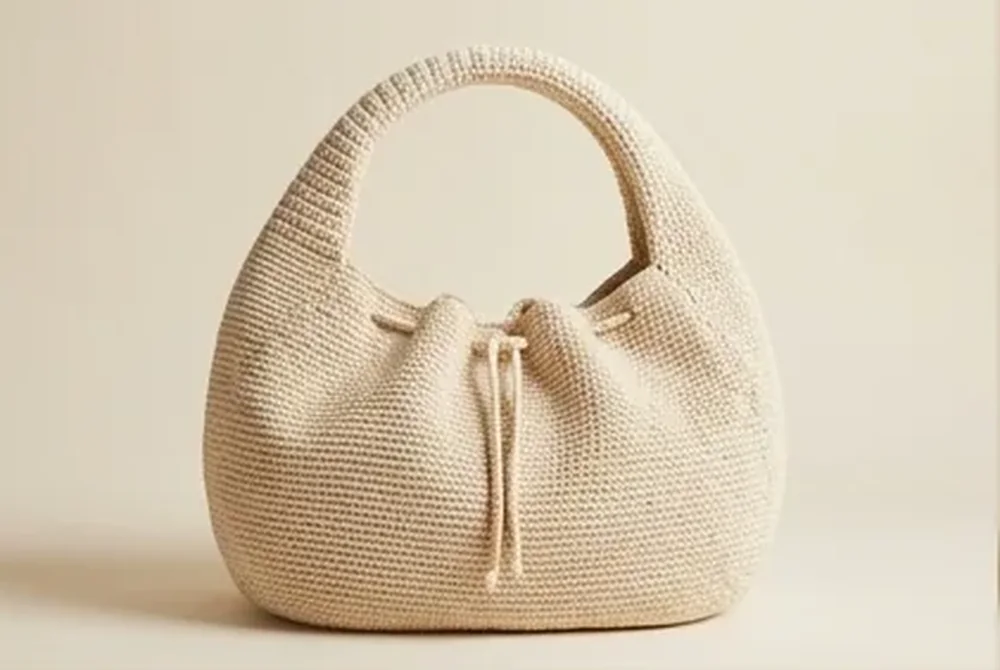
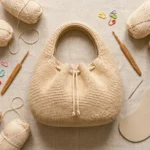
The original neutral highlights every single-crochet stitch, the oval base, padded arch, and drawstring folds. It pairs with denim, linen, black tailoring, and warm earth tones. Choose a cotton shade that is not too yellow if you want a clean modern result.
2. Deep black
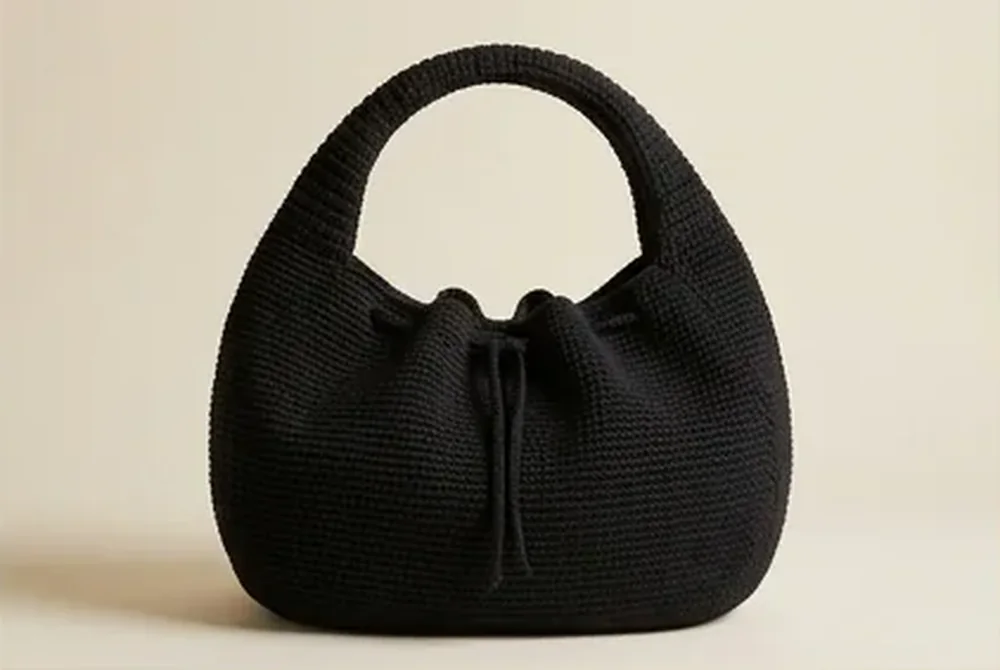
Black makes the crescent silhouette graphic and evening-ready. Strong lighting is important when photographing it because dense stitches can disappear in shadow. Check dye transfer before use and pair it with monochrome outfits, camel coats, or crisp white shirts.
3. Warm caramel
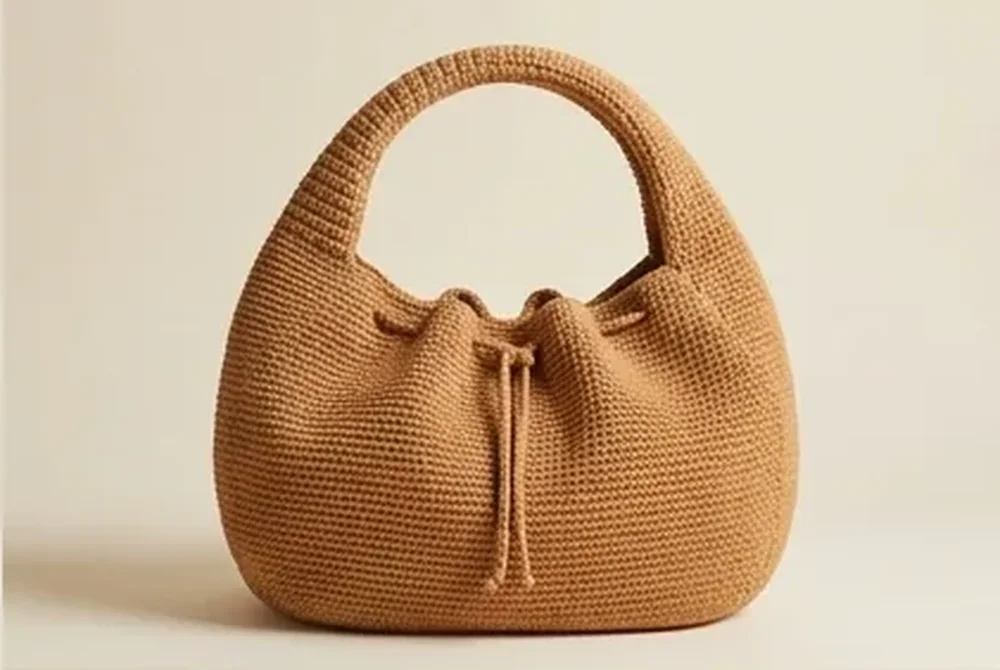
Caramel feels polished and leather-inspired while remaining visibly handmade. It works beautifully with cream, navy, denim, olive, and chocolate. A tonal drawstring keeps the structure elegant; a slightly darker lining can help the interior stay practical.
Crochet the complete structured crescent handbag
Keep all 34 steps, stitch counts, measurements, construction photographs, and finishing notes together in the printable PDF.
4. Terracotta
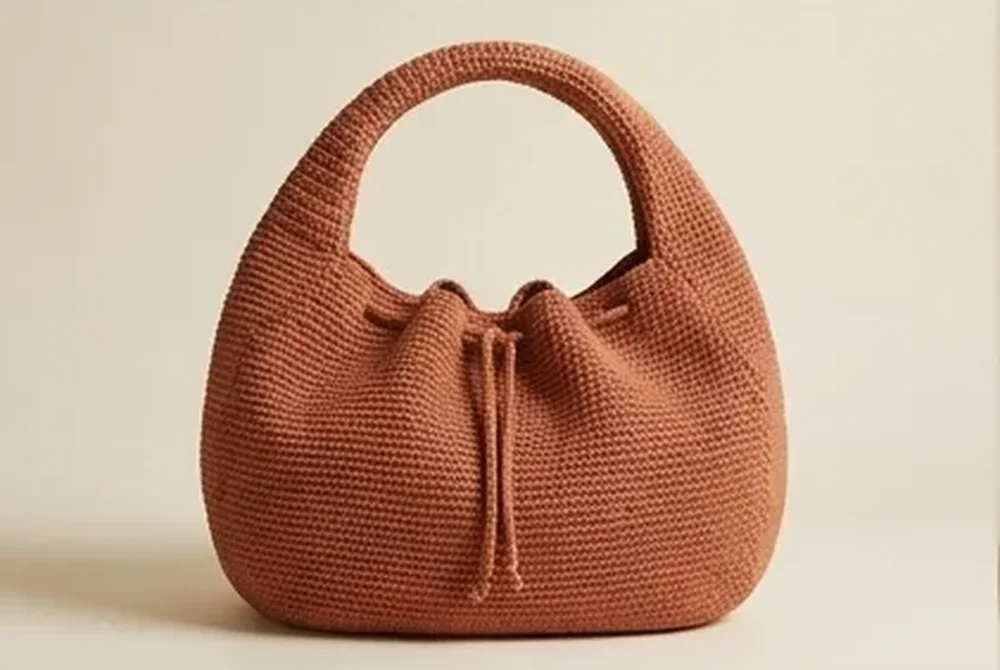
Muted terracotta adds warmth without becoming overly bright. It suits summer linen, autumn neutrals, and simple white dresses. Compare skeins in daylight because orange-red cotton can shift considerably under warm indoor bulbs.
5. Olive green
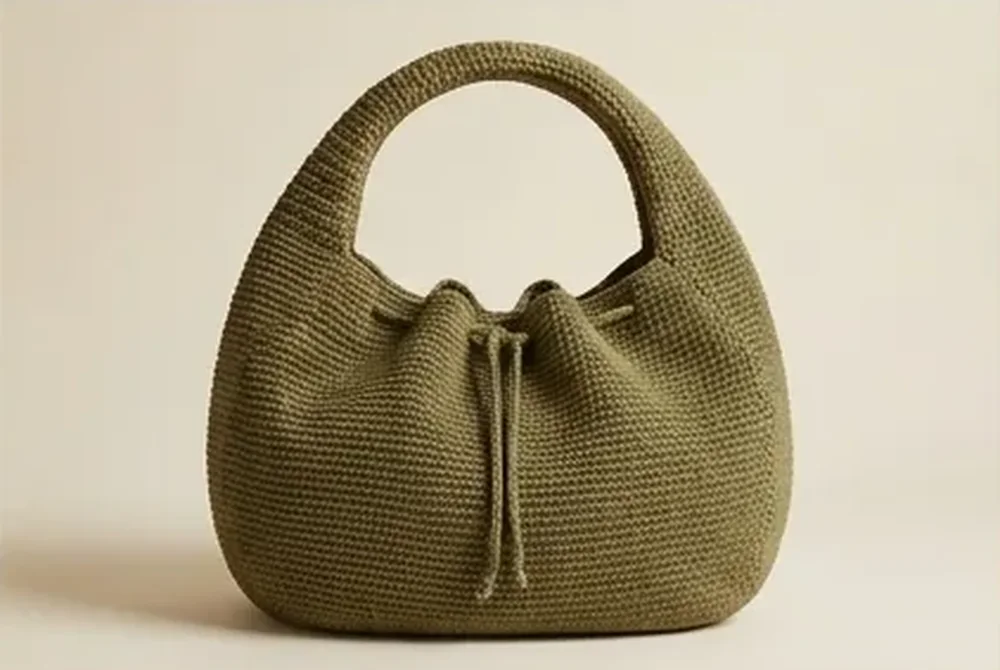
Olive gives the bag an earthy, utilitarian character. It pairs with khaki, denim, black, ivory, and rust. The deep neutral also hides everyday marks better than cream while preserving enough shadow to show the stitchwork.
6. Soft sage
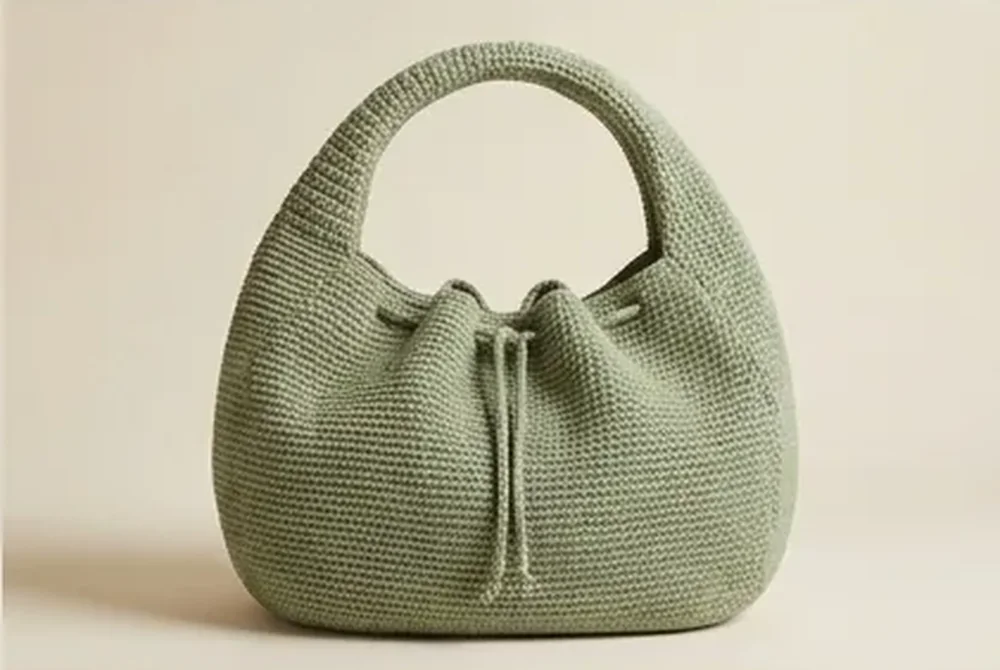
Sage feels calm and contemporary. Use a shade with enough depth to separate the body from a cream outfit. It is a versatile spring and summer choice and photographs best on warm stone, light wood, or clean gray backgrounds.
Crochet the complete structured crescent handbag
Keep all 34 steps, stitch counts, measurements, construction photographs, and finishing notes together in the printable PDF.
7. Rich burgundy
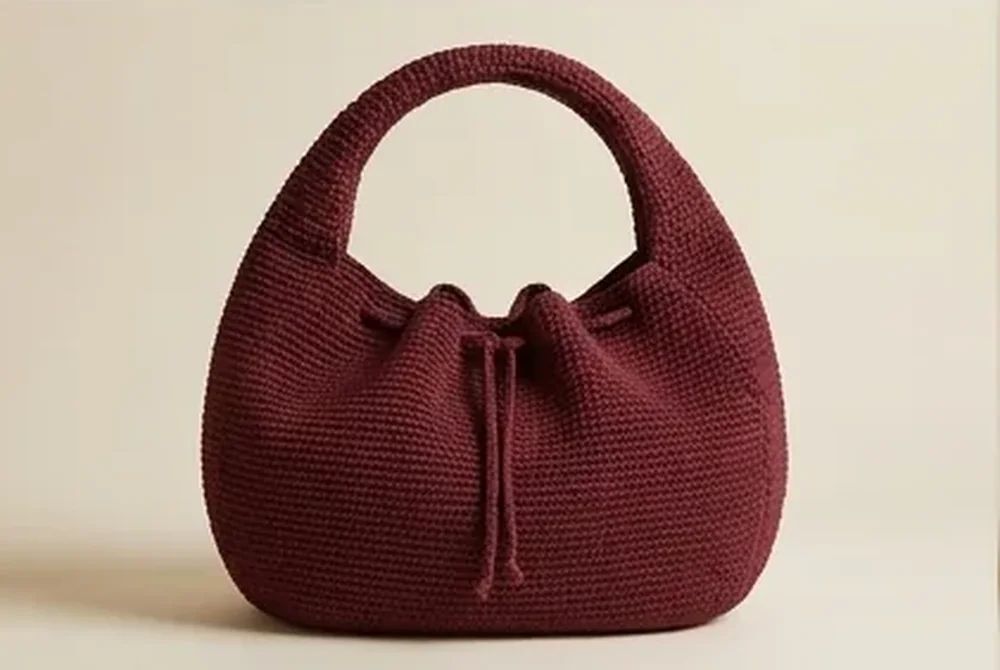
Burgundy turns the handmade bag into a strong wardrobe accent. Pair it with navy, charcoal, cream, camel, or pale blue. Dense cotton creates saturated color, so buy enough yarn from one dye lot for the entire 350–450 g project.
8. Classic navy
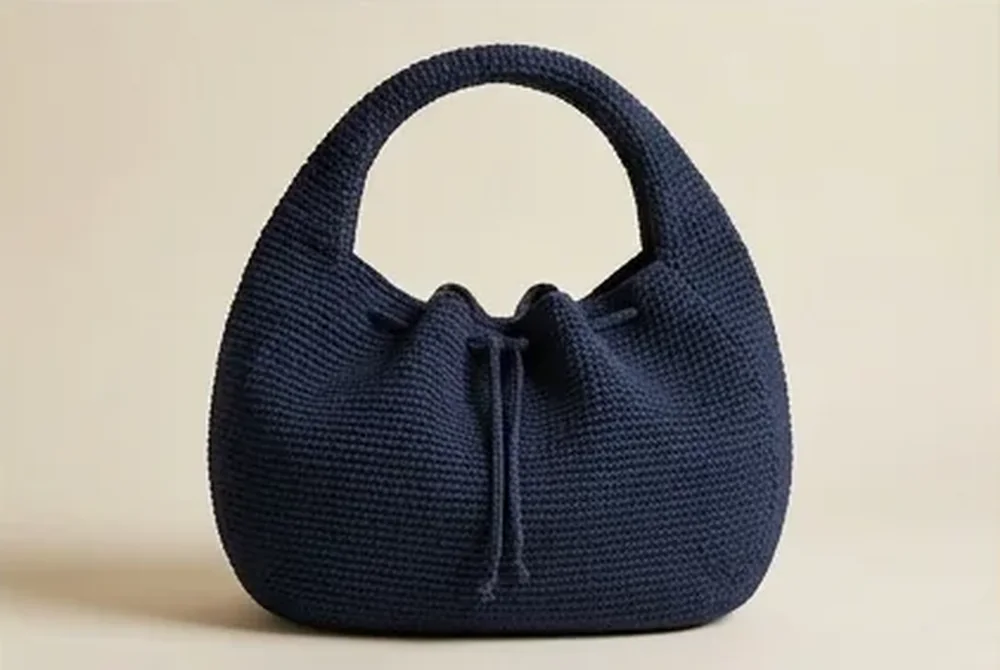
Navy offers nearly the versatility of black with a softer daytime feel. It complements denim, white shirts, camel outerwear, striped knits, and gold jewelry. Use good lighting to keep the padded handle and side shaping visible.
9. Dusty rose
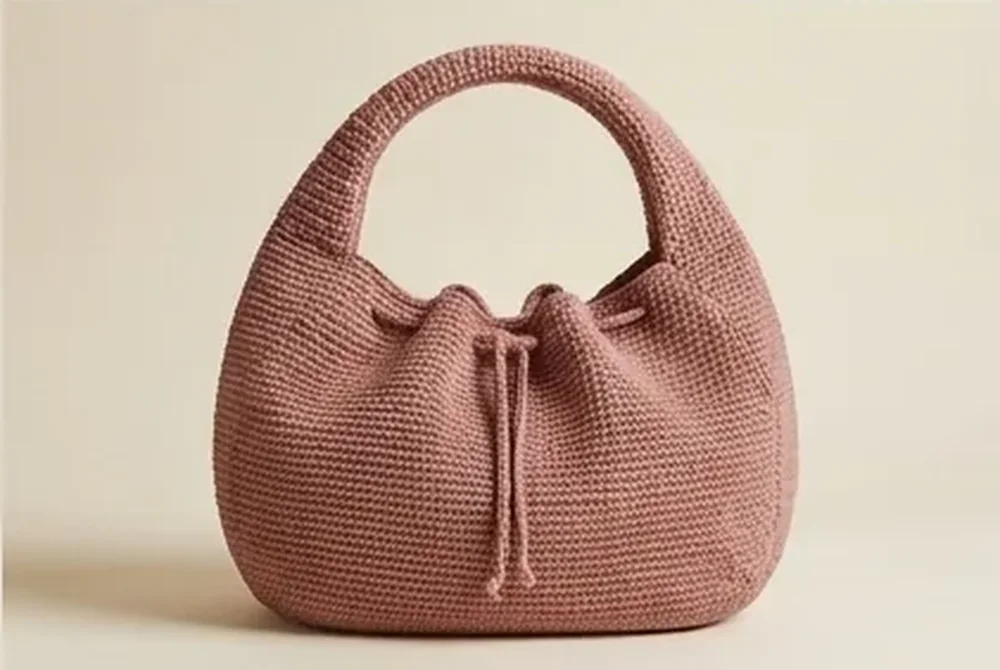
Dusty rose adds softness without looking overly sweet. It works with gray, cream, chocolate, faded denim, and burgundy. Select a muted rose with enough contrast against skin and clothing so the sculptural handle remains distinct.
How to make the idea feel intentional
Start with the purpose of the bag, then choose color and finishing. The supplied construction uses category 3 cotton, dense single crochet, a flat oval base, a carefully tapered upper body, an integrated padded handle, and an eyelet drawstring. Those structural choices give the design its identity. Alternate colors and styling should support that identity rather than hide it with excessive embellishment.
Use generated editorial images as inspiration only. Real yarn, gauge, lighting, and hand tension determine the final color and shape. Before photographing, gifting, or selling a finished handbag, compare it with the written measurements, inspect every join, weave in all ends, and test the handle with a light load. Avoid promising an exact result from an illustrative image.
A simple wardrobe test helps: place the yarn beside three outfits the recipient already wears. If it complements all three, the finished bag is likely to be useful. For gifts, include fiber content, care instructions, finished measurements, and a note to store the bag lightly stuffed and avoid overloading it. Thoughtful practical details make handmade style feel polished.
Crochet the complete structured crescent handbag
Keep all 34 steps, stitch counts, measurements, construction photographs, and finishing notes together in the printable PDF.
Frequently asked questions
What gives the crescent bag its structure?
Which color is most versatile?
Can generated images be used as exact product examples?
How should the bag be stored?
Is the Etsy CTA for a finished bag?
Continue the series
Final creative and quality checklist
Check the article idea against the real project before publishing: use the correct yarn category, describe the construction accurately, preserve the intended silhouette, and label generated photographs as inspiration where relevant. Confirm that every image URL uses the WordPress September 2026 uploads folder and that the Etsy button points to the final pattern listing. Review headings, table-of-contents links, FAQ answers, and internal links after WordPress assigns its final permalinks.
For the finished bag, inspect the oval base, turning ridge, body height, eyelets, side decreases, handle anchors, center seam, drawstring, and woven ends. Test the handle with a light everyday load and avoid overfilling. If the fabric is softer than intended, use a fitted base insert, lining, or inner pouch instead of relying on aggressive blocking. Store the bag lightly stuffed so the crescent body and padded arch remain smooth.
Keep the visual story consistent across the cluster. The pattern article explains construction, the color article helps readers select a palette, the styling article connects the bag to everyday outfits, the handbag roundup expands the design vocabulary, and the gift article focuses on presentation. Each page should serve its own search intent while guiding readers naturally toward the core PDF when they are ready to make the structured crescent handbag.
Before the final WordPress upload, preview every page on desktop and mobile, confirm that the Poppins font is loaded by the theme, and verify the orange button hover state. Keep the WebP photographs clear enough to preserve the cotton texture while maintaining fast page performance.
Use captions and alternative text to explain what each photograph contributes: construction checkpoint, color inspiration, outfit styling, handbag comparison, or gift presentation. Clear image context improves accessibility and prevents generated lifestyle scenes from being mistaken for exact pattern instructions. The finished handmade bag should always be photographed and described accurately.