
My Crochet Universe · Bunny Booties Series
9 Beautiful Crochet Baby Booties Colors You’ll Want to Make
From classic blush to modern terracotta, these nine palettes give the same bunny booties design a distinct mood.
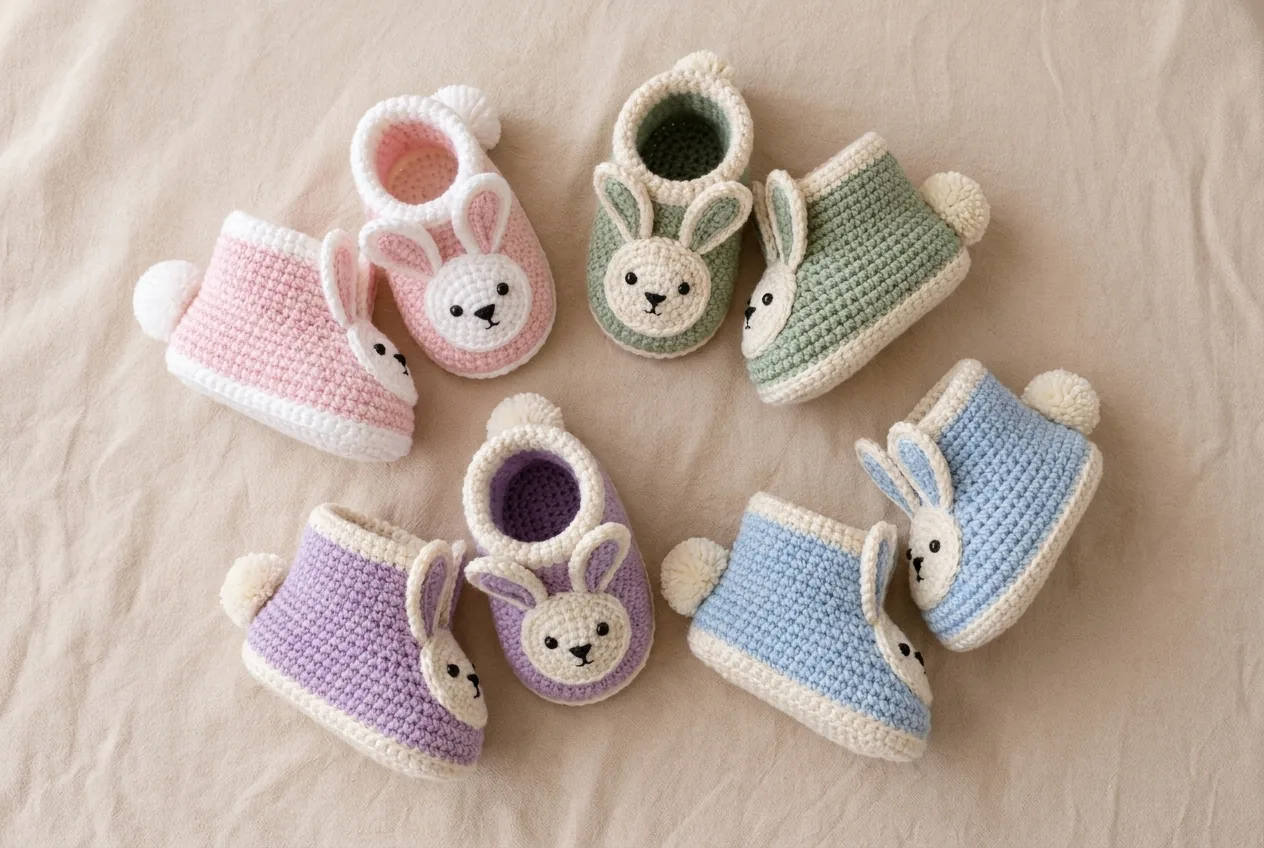
Color changes should never alter the pattern structure. Keep DK/light #3 yarn, check the 9–9.5 cm sole, and preserve the written 22 → 30 → 36 and 36 → 36 → 32 → 32 → 28 sequences.
1. Blush pink and clean white
The original palette feels soft, springlike, and instantly recognizable. White frames the sole, cuff, outer ears, face, and tail; blush fills the upper and inner ears. Pale pink on the nose ties the two yarn colors together. Style the pair on cream linen or light wood so the pink remains visible.
2. Sage green and warm cream
Muted sage creates a botanical or woodland mood. Choose warm cream rather than optical white for a gentle contrast, then use charcoal or deep brown embroidery. A dusty-rose nose can add warmth without competing with the green. This palette suits neutral nurseries and understated spring gifts.
3. Lavender and ivory
Lavender feels dreamy and storybook-like. Select a medium-light lavender that stays distinct from the ivory framing pieces. Rosy mauve works well for the nose, while charcoal eyes look slightly softer than black. Keep the yarn solid because heavy speckles may hide the small ears and expression.
4. Powder blue and cream
Powder blue gives the design a light, classic feel. Check the yarn under warm indoor bulbs because pale blues can shift gray. Cream keeps the result softer than bright white. Dark navy may replace black only if it provides strong enough contrast on the face circle.
5. Soft peach and vanilla
Peach adds warmth without becoming vivid. Pair it with vanilla cream and a terracotta-pink embroidered nose. This combination photographs beautifully in warm window light. Avoid backgrounds that are too orange; use pale gray, cream, or light oak to keep the booties from blending into the scene.
6. Buttercream and white
A nearly tonal yellow palette feels sunny and delicate. Choose a buttercream deep enough to separate from the white sole and face. Dark brown embroidery can feel warmer than black. Because the values are close, make a small swatch and view the colors in grayscale before beginning the full pair.
7. Oatmeal and ivory
Oatmeal with ivory offers a quiet neutral option. Texture becomes the hero, so consistent tension and a crisp BLO edge matter. Add a muted pink or warm taupe nose for just a hint of color. Use smooth yarns; a very fuzzy neutral can obscure the small embroidered features.
8. Mint and soft white
Mint feels fresh and playful without being too bright. Soft white repeats through the trim, ears, face, and tail. A pale coral nose adds a complementary accent. Keep the eye thread dark and secure. Mint works especially well for a spring baby-shower presentation with simple cream packaging.
9. Terracotta and cream
A muted terracotta upper creates a modern, earthy version. Balance it with cream framing pieces and very dark brown eyes. A blush nose softens the palette. Because deeper yarns may show lint and tension differences more clearly, work both booties stage by stage and compare them often.
Keep every count and image beside you
Get the compact five-page Pink Bunny Baby Booties PDF with all eight illustrated construction stages, safety guidance, care, and selling terms.
Frequently asked questions
Can I use any color?
Should the sole always be white?
Will darker yarn change the size?
Can I mix yarn brands?
Are generated color images exact finished results?
Continue the series
How to choose between the nine palettes
Start with three questions: where will the booties be photographed or displayed, what colors does the recipient already enjoy, and which yarn options can reproduce the required gauge? A beautiful shade is not useful if the yarn is too thick, scratchy, unstable after washing, or difficult to embroider. Compare real skeins in daylight and warm indoor light, because pale colors can shift dramatically. Wrap small lengths around a card and place the face and eye colors over them to test contrast before buying full quantities.
Next, give every color a clear role. The main shade fills the upper and inner ears. The framing shade repeats through the sole, cuff, outer ears, face circle, and pompom. The eye thread should be dark enough to remain visible, while the nose can echo the main shade or add one gentle accent. Limiting the palette in this way keeps even terracotta or buttercream versions recognizable as the same bunny design. It also makes photographs, gift packaging, and internal styling easier to coordinate.
Finally, crochet both booties stage by stage and keep the yarn labels. Different colors from the same range can occasionally behave differently because of dye or fiber finish, so measure both soles and compare the uppers after each decrease round. Photograph the completed pair on a neutral background and check that the face remains clear at thumbnail size. If the result will be sold, describe the actual yarn and finished colors accurately rather than relying on generated inspiration images.
Before you use or publish the finished idea
Return to the supplied pattern before making final claims about size, materials, or construction. The authoritative project uses DK/light #3 yarn, a 3.5 mm hook, a measured 9–9.5 cm sole, joined rounds, sewn appliqués, and embroidered facial details. Count both booties at every stage and compare them side by side. Styling suggestions, alternate palettes, and generated editorial images are inspiration only; they do not replace the written counts or guarantee an identical handmade result.
Complete a final inspection in bright light. Check the sole edge, centered toe shaping, flexible cuff, face stitching, ear bases, embroidery ends, and pompom attachments. Remove any long strand and repair any section that moves during a gentle tug test. These booties are designed for supervised keepsake wear, not sleep and not walking. If the finished pair is gifted or sold, provide accurate fiber, measurement, care, and supervision information, and follow all applicable local requirements. Responsible presentation protects both the recipient and the value of the handmade work.