
My Crochet Universe · Bunny Booties Series
5 Easy Ways to Make Crochet Bunny Booties Extra Cozy
Five practical choices can make the finished pair softer and more comfortable-looking without changing the pattern or adding unsafe extras.
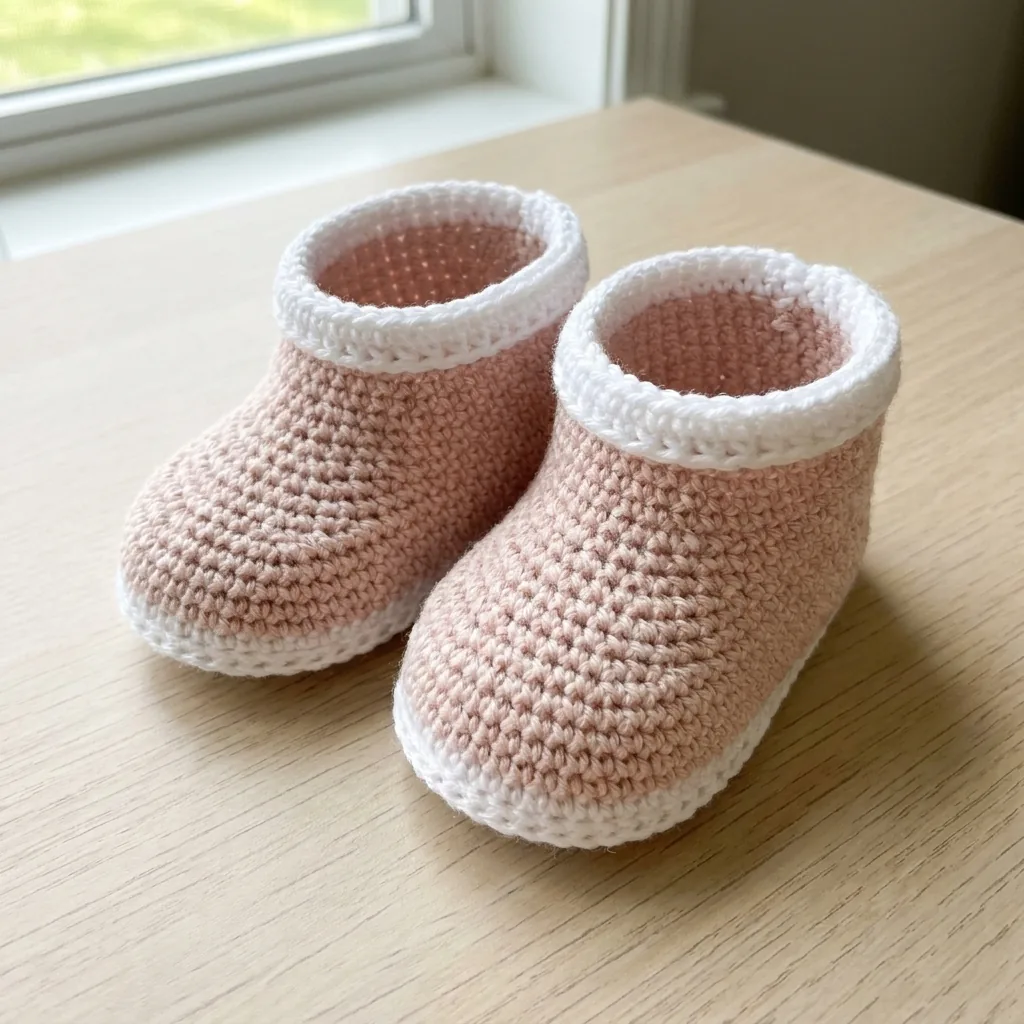
“Extra cozy” should mean soft yarn, smooth construction, and gentle care. It should not mean adding loose lining, hard components, cords, or bulky decorations. These remain supervised keepsake booties—not sleepwear or walking shoes.
1. Choose soft DK yarn and test it first
The pattern uses DK/light #3 yarn with a 3.5 mm hook. Rub the yarn against the inside of your wrist, crochet a small sample, and wash it as the finished booties will be washed. Look for softness, low shedding, and enough stitch definition for the shaped toe and tiny ears. A yarn that feels plush in the ball may become stiff when crocheted too tightly, so judge the fabric rather than the label alone.
2. Measure the sole instead of forcing gauge
A flat, correctly sized sole supports a smoother bootie. The three sole rounds progress from 22 to 30 to 36 stitches, with a target length of 9–9.5 cm. If the oval is far from that measurement, change hook size or yarn before building the upper. Pulling or steaming an incorrect sole into shape can make the fabric firm and distort the toe.
3. Keep the inside smooth and knot-free
Weave ends securely on the wrong side, then feel around the interior with a fingertip. The cuff, embroidery, appliqué stitches, and pompom attachment should not leave hard knots or long tails inside. Sew the face flat without drawing the upper inward. Smooth finishing is more important to a cozy result than adding thick lining, elastic, ties, or extra decorations.
4. Preserve a flexible opening and balanced shaping
The white cuff is one round of single crochet over 28 stitches. Roll it outward only very slightly by hand if you want a softer look. Do not stiffen it or add a tight closure. Keep toe decreases centered and compare both booties after each stage. A balanced opening and correctly placed shaping help the pair sit neatly during brief, supervised keepsake wear.
5. Wash gently and reshape by hand
Hand wash in lukewarm water with mild detergent. Do not scrub the face, twist the fabric, or pull the ears. Press water out in a towel, reshape the oval soles and details while damp, and air dry flat. If the yarn permits light steaming, apply it only to the outside through a cloth and avoid flattening the ears, faces, or pompoms. Inspect every attachment again after cleaning.
Keep every count and image beside you
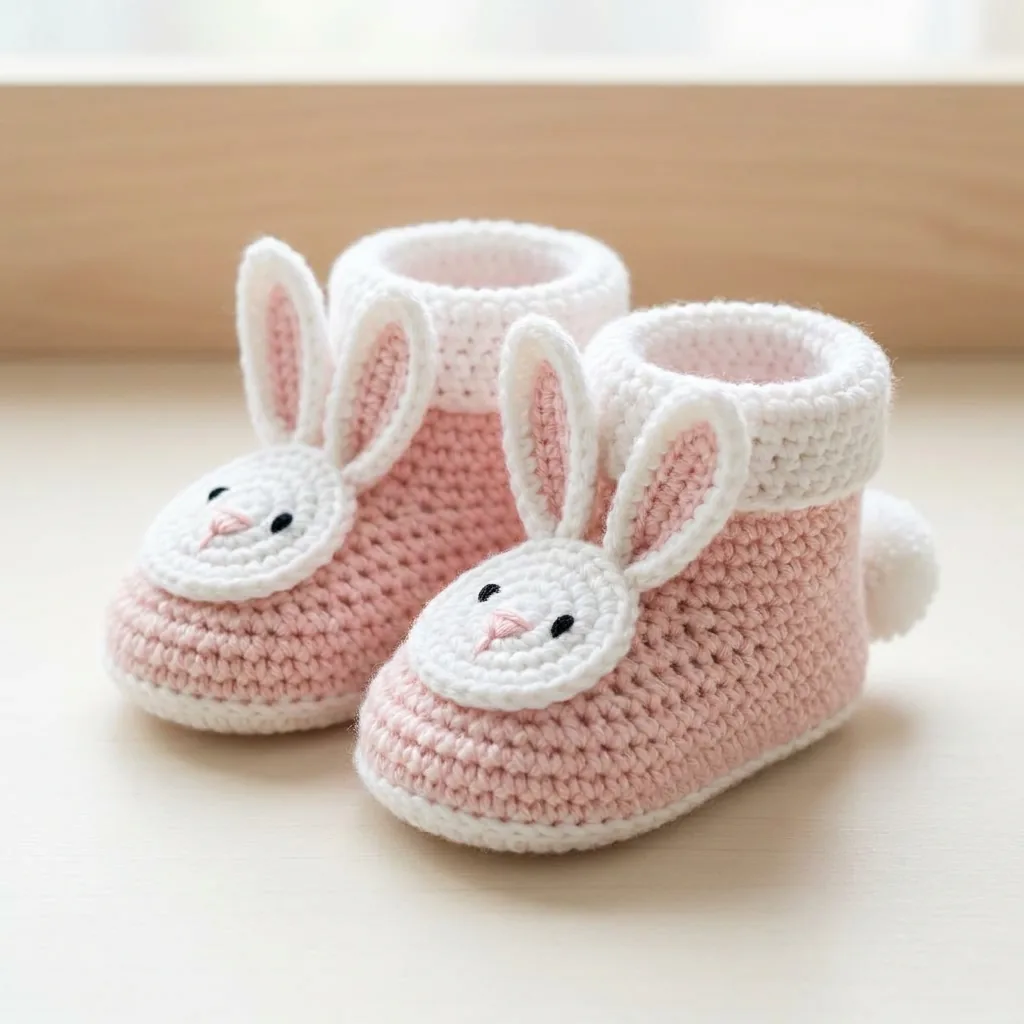
Get the compact five-page Pink Bunny Baby Booties PDF with all eight illustrated construction stages, safety guidance, care, and selling terms.
Frequently asked questions
Can I add fleece lining?
What yarn weight should I use?
Can I make the cuff tighter with elastic?
How do I prevent hard knots inside?
Does cozy mean safe for sleep?
Continue the series
The cozy-finish checklist
Before calling the pair finished, check it with both your eyes and fingertips. The sole should lie flat rather than curling, the toe decreases should sit in the center, and the cuff should open without being forced. Feel along the entire interior for knots, abrasive thread ends, or appliqué stitches that have been pulled too tightly. Gently flex the bootie shell; it should hold its shape while still feeling like soft crochet fabric, not a stiff container.
Inspect the decorative pieces separately. The face circle should rest flat over the toe without puckering the pink upper. Ear bases should be sewn through both layers several times, yet remain soft enough to bend. Pompoms should be compact and evenly trimmed with no long loose strands. Pull each attachment gently from several directions, then recheck the hidden tails. If anything shifts, repair it before the pair is photographed, gifted, or used.
Remember that softness does not change the intended use. The booties remain supervised keepsake wear and should be removed before sleep or unattended time. They are not walking shoes and do not provide a protective or traction sole. Record the yarn fiber, finished sole length, washing method, and completion date on a separate card. That information helps the recipient care for the handmade work without adding labels, ties, or extra material inside the opening.
Before you use or publish the finished idea
Return to the supplied pattern before making final claims about size, materials, or construction. The authoritative project uses DK/light #3 yarn, a 3.5 mm hook, a measured 9–9.5 cm sole, joined rounds, sewn appliqués, and embroidered facial details. Count both booties at every stage and compare them side by side. Styling suggestions, alternate palettes, and generated editorial images are inspiration only; they do not replace the written counts or guarantee an identical handmade result.
Complete a final inspection in bright light. Check the sole edge, centered toe shaping, flexible cuff, face stitching, ear bases, embroidery ends, and pompom attachments. Remove any long strand and repair any section that moves during a gentle tug test. These booties are designed for supervised keepsake wear, not sleep and not walking. If the finished pair is gifted or sold, provide accurate fiber, measurement, care, and supervision information, and follow all applicable local requirements. Responsible presentation protects both the recipient and the value of the handmade work.