
5 Structural Details That Prove Smart Crochet Tote Bag Construction
Crochet tote bag construction works best when every choice has a clear purpose. This guide follows the supplied editorial direction while staying faithful to the sage floral-lattice hobo bag, its dense oval base, gathered rim, broad tapered handle and wooden button. Each numbered section has a directly relevant visual and practical guidance.
In this article
1. The Dense Oval Base
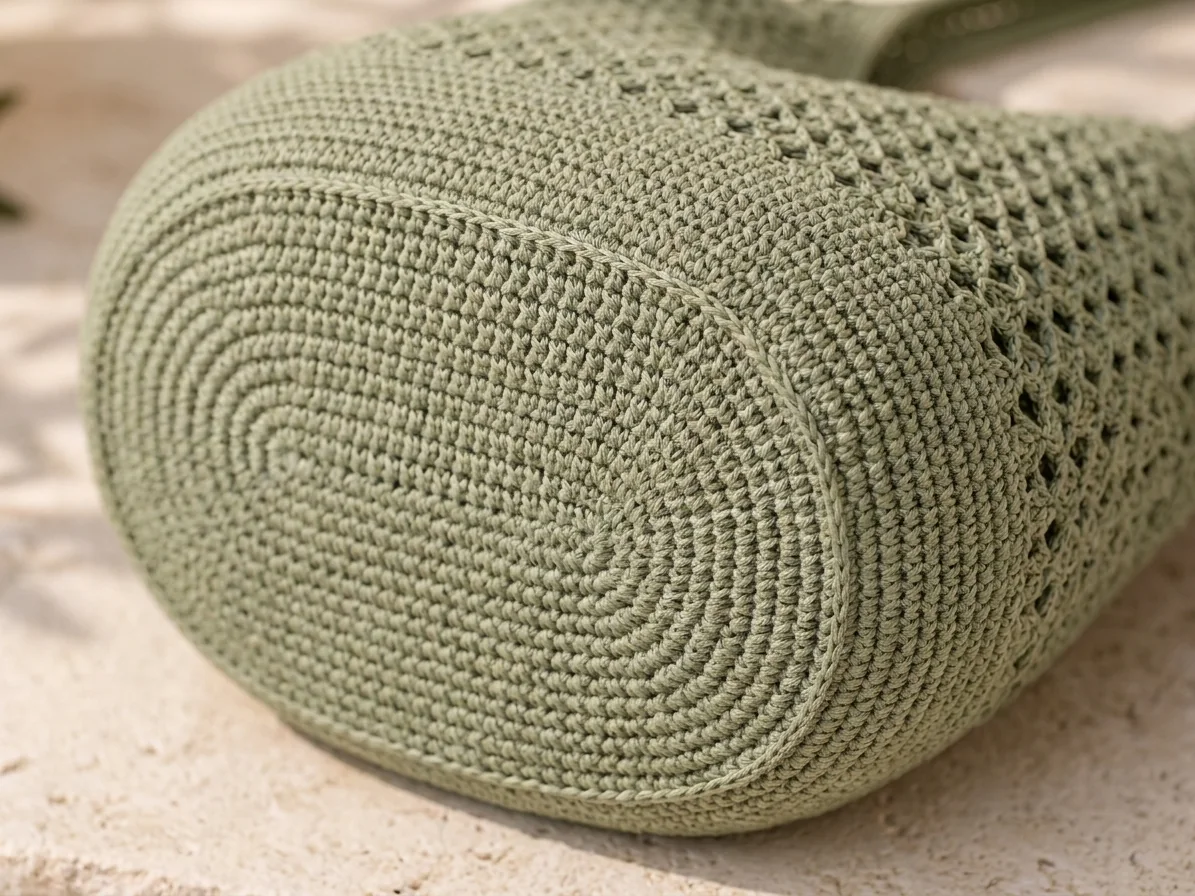
A six-round oval grows from chain 31 to 104 stitches while keeping 28 straight stitches on each long side. Concentrating increases at the curved ends creates the flat footprint; a back-loop ridge turns the work upward. Before moving on, check the bag from the front, side and inside. Small adjustments made now protect the proportion of the solid base, airy body and gathered rim. Look for pressure points, uneven stretching, loose fibers or items that interrupt the closure. A deliberate pause is more useful than correcting damage after a full day of carrying. Use the photograph as a visual planning reference rather than a promise that every handmade sample will behave identically.
Yarn, tension, finishing and actual use all change the result. Keep choices light, reversible and compatible with the care information for the specific fiber in your bag. The solid oval base should remain the visual and practical anchor. Arrange weight over that dense area, leave the floral lattice free from sharp edges, and avoid pulling the gathered opening wider than necessary. These habits preserve the relaxed hobo silhouette without making unsupported durability claims. Color and texture also guide the decision.
Sage green reads as a soft botanical neutral, so cream, oatmeal, olive, unbleached cotton, warm wood and restrained metallic finishes usually create a coherent result. One or two purposeful contrasts look calmer than many competing details. Finally, inspect the wooden button, crochet loop, rim and handle ends. If any section looks distorted or loose, remove the contents and correct the cause before continuing. Careful observation supports both appearance and everyday function. This approach keeps crochet tote bag construction useful, visually calm and honest about what has actually been verified.
Used as a practical checkpoint, crochet tote bag construction becomes easier to understand and repeat without rushing the details.
2. The Controlled Floral Lattice
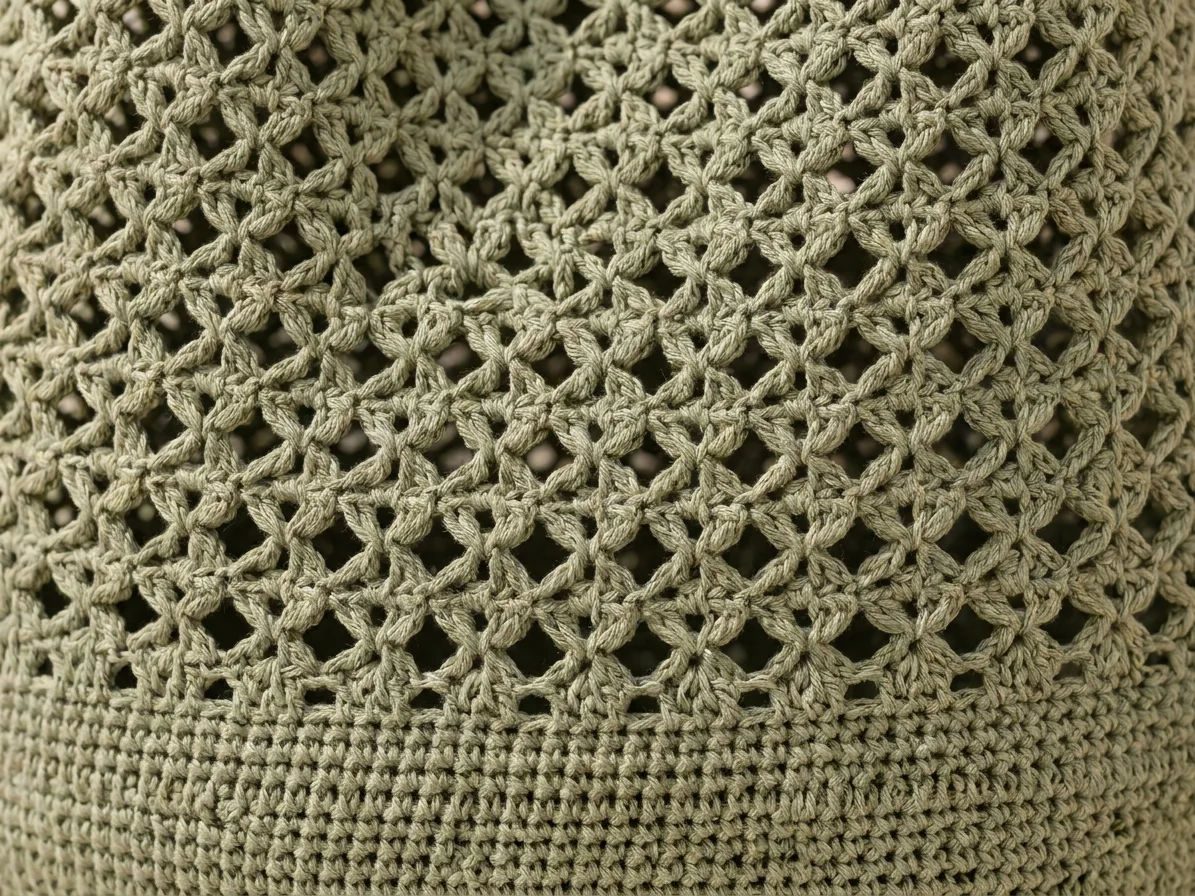
The body maintains exactly 26 repeats. Alternating shell, recovery, blossom and recovery rounds builds openness without abandoning alignment. Counting at the join is a structural task, not merely a decorative preference. Before moving on, check the bag from the front, side and inside. Small adjustments made now protect the proportion of the solid base, airy body and gathered rim. Look for pressure points, uneven stretching, loose fibers or items that interrupt the closure. A deliberate pause is more useful than correcting damage after a full day of carrying. Use the photograph as a visual planning reference rather than a promise that every handmade sample will behave identically.
Yarn, tension, finishing and actual use all change the result. Keep choices light, reversible and compatible with the care information for the specific fiber in your bag. The solid oval base should remain the visual and practical anchor. Arrange weight over that dense area, leave the floral lattice free from sharp edges, and avoid pulling the gathered opening wider than necessary. These habits preserve the relaxed hobo silhouette without making unsupported durability claims. Color and texture also guide the decision.
Sage green reads as a soft botanical neutral, so cream, oatmeal, olive, unbleached cotton, warm wood and restrained metallic finishes usually create a coherent result. One or two purposeful contrasts look calmer than many competing details. Finally, inspect the wooden button, crochet loop, rim and handle ends. If any section looks distorted or loose, remove the contents and correct the cause before continuing. Careful observation supports both appearance and everyday function. This approach keeps crochet tote bag construction useful, visually calm and honest about what has actually been verified.
Used as a practical checkpoint, crochet tote bag construction becomes easier to understand and repeat without rushing the details.
3. The Reinforced Handle Attachment
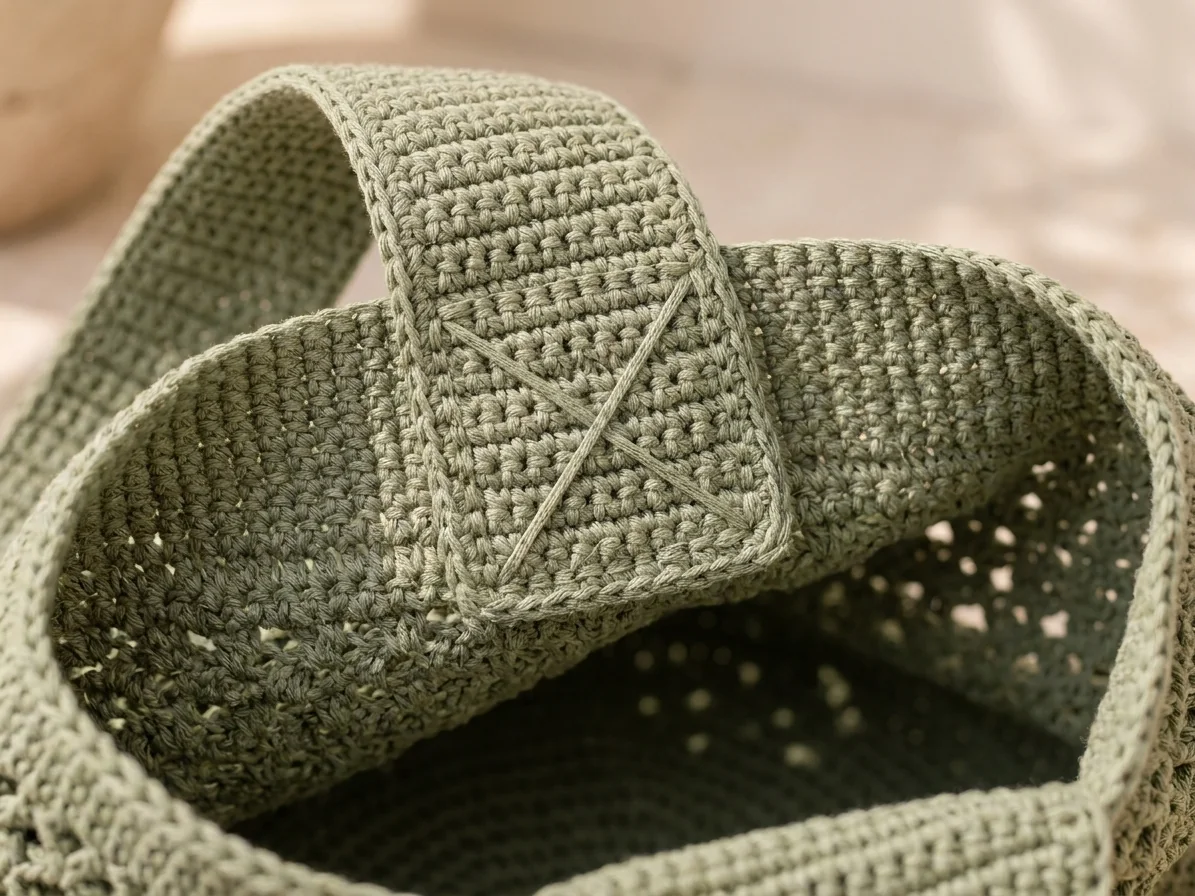
Each 14-stitch end overlaps the dense rim by 3 cm and is sewn with a rectangle and diagonal X. The load path stays in compact fabric instead of relying on open lace; every finished sample still needs inspection and testing. Before moving on, check the bag from the front, side and inside. Small adjustments made now protect the proportion of the solid base, airy body and gathered rim. Look for pressure points, uneven stretching, loose fibers or items that interrupt the closure.
A deliberate pause is more useful than correcting damage after a full day of carrying. Use the photograph as a visual planning reference rather than a promise that every handmade sample will behave identically. Yarn, tension, finishing and actual use all change the result. Keep choices light, reversible and compatible with the care information for the specific fiber in your bag.
The solid oval base should remain the visual and practical anchor. Arrange weight over that dense area, leave the floral lattice free from sharp edges, and avoid pulling the gathered opening wider than necessary. These habits preserve the relaxed hobo silhouette without making unsupported durability claims. Color and texture also guide the decision. Sage green reads as a soft botanical neutral, so cream, oatmeal, olive, unbleached cotton, warm wood and restrained metallic finishes usually create a coherent result.
One or two purposeful contrasts look calmer than many competing details. Finally, inspect the wooden button, crochet loop, rim and handle ends. If any section looks distorted or loose, remove the contents and correct the cause before continuing. Careful observation supports both appearance and everyday function. This approach keeps crochet tote bag construction useful, visually calm and honest about what has actually been verified.
Used as a practical checkpoint, crochet tote bag construction becomes easier to understand and repeat without rushing the details.
4. The Wooden Button and Crochet Loop
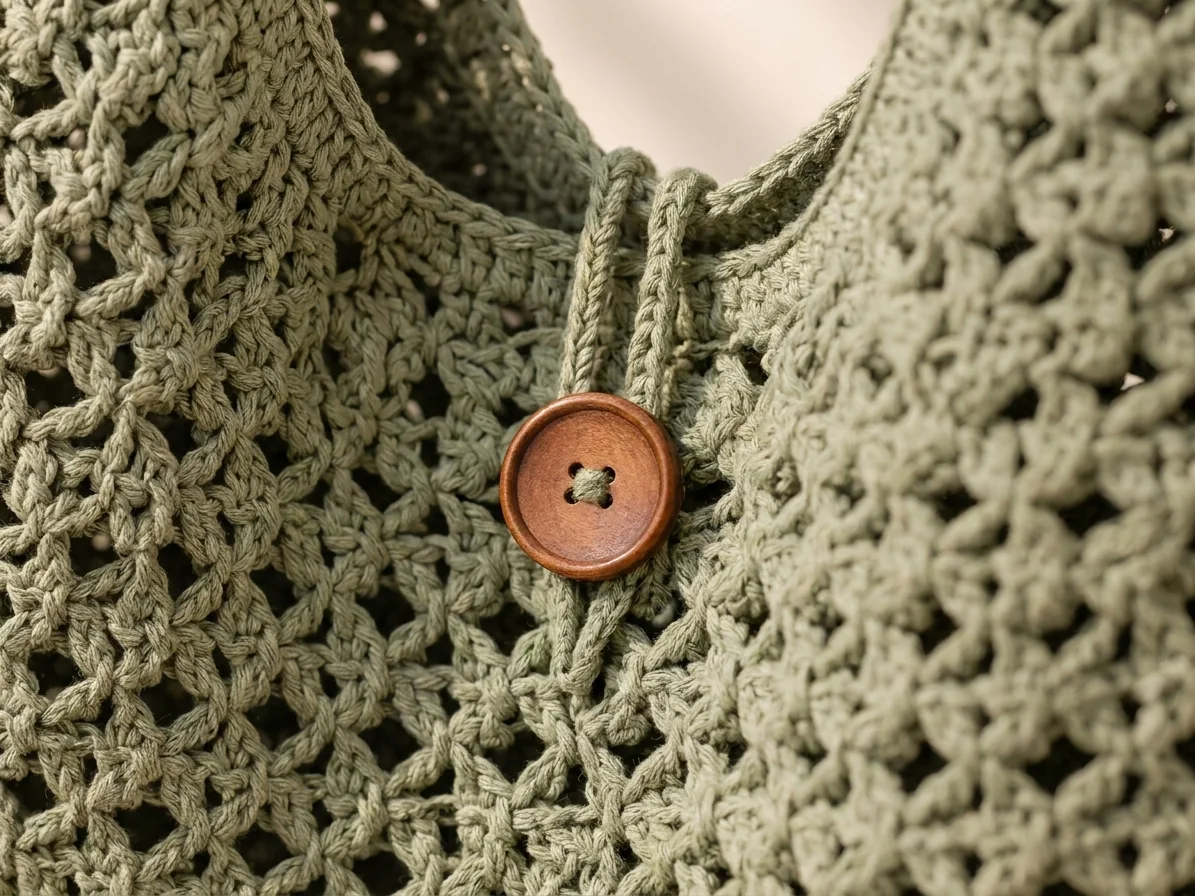
A five-stitch tab folds from back to front and a chain-eight loop fits the 22–25 mm wooden button. The closure gathers the opening lightly without a heavy metal fitting, while remaining replaceable if wear develops. Before moving on, check the bag from the front, side and inside. Small adjustments made now protect the proportion of the solid base, airy body and gathered rim. Look for pressure points, uneven stretching, loose fibers or items that interrupt the closure.
A deliberate pause is more useful than correcting damage after a full day of carrying. Use the photograph as a visual planning reference rather than a promise that every handmade sample will behave identically. Yarn, tension, finishing and actual use all change the result. Keep choices light, reversible and compatible with the care information for the specific fiber in your bag. The solid oval base should remain the visual and practical anchor. Arrange weight over that dense area, leave the floral lattice free from sharp edges, and avoid pulling the gathered opening wider than necessary.
These habits preserve the relaxed hobo silhouette without making unsupported durability claims. Color and texture also guide the decision. Sage green reads as a soft botanical neutral, so cream, oatmeal, olive, unbleached cotton, warm wood and restrained metallic finishes usually create a coherent result. One or two purposeful contrasts look calmer than many competing details. Finally, inspect the wooden button, crochet loop, rim and handle ends. If any section looks distorted or loose, remove the contents and correct the cause before continuing.
Careful observation supports both appearance and everyday function. This approach keeps crochet tote bag construction useful, visually calm and honest about what has actually been verified.
Used as a practical checkpoint, crochet tote bag construction becomes easier to understand and repeat without rushing the details.
5. The Symmetrical Tapered Handle
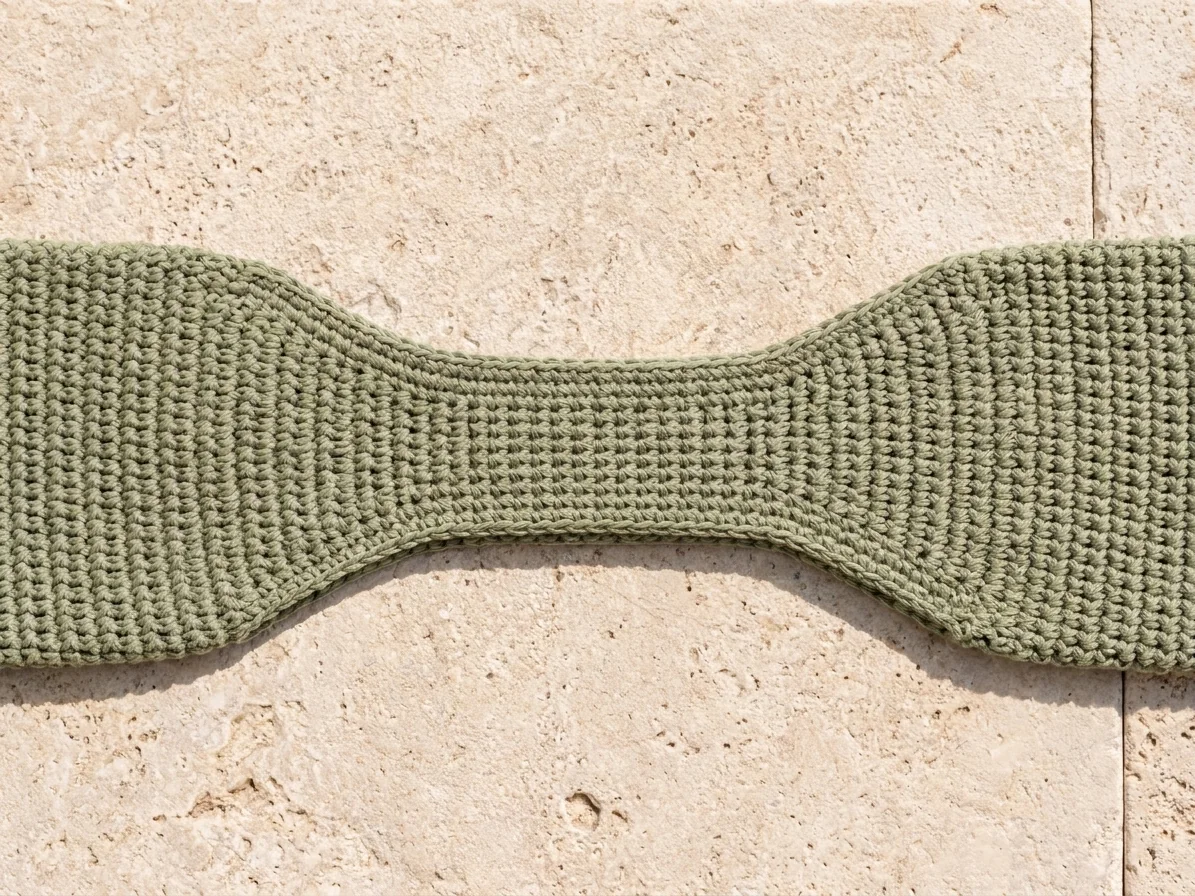
The separate handle follows 14 to 12 to 10 to 12 to 14 stitch shaping. A narrower center reduces bulk over the shoulder, and wider ends provide attachment area. Blocking before sewing reveals twists or uneven edges. Before moving on, check the bag from the front, side and inside. Small adjustments made now protect the proportion of the solid base, airy body and gathered rim. Look for pressure points, uneven stretching, loose fibers or items that interrupt the closure. A deliberate pause is more useful than correcting damage after a full day of carrying. Use the photograph as a visual planning reference rather than a promise that every handmade sample will behave identically.
Yarn, tension, finishing and actual use all change the result. Keep choices light, reversible and compatible with the care information for the specific fiber in your bag. The solid oval base should remain the visual and practical anchor. Arrange weight over that dense area, leave the floral lattice free from sharp edges, and avoid pulling the gathered opening wider than necessary. These habits preserve the relaxed hobo silhouette without making unsupported durability claims. Color and texture also guide the decision. Sage green reads as a soft botanical neutral, so cream, oatmeal, olive, unbleached cotton, warm wood and restrained metallic finishes usually create a coherent result.
One or two purposeful contrasts look calmer than many competing details. Finally, inspect the wooden button, crochet loop, rim and handle ends. If any section looks distorted or loose, remove the contents and correct the cause before continuing. Careful observation supports both appearance and everyday function. This approach keeps crochet tote bag construction useful, visually calm and honest about what has actually been verified.
Used as a practical checkpoint, crochet tote bag construction becomes easier to understand and repeat without rushing the details.
Final checklist
- Review every measurement or packing choice before use.
- Keep the dense base, openwork body, rim, closure and handle in proportion.
- Photograph or note the result so future adjustments are consistent.
- Follow the yarn or finished-item care information actually available to you.
The best results come from treating crochet tote bag construction as a complete system rather than a single decorative idea.
Frequently asked questions
How much weight can the bag hold?
Do not claim a universal capacity. The supplied development check is 2–3 kg for 30 minutes on a finished sample, followed by inspection; materials and workmanship vary.
Can I reinforce the base?
An optional fabric-covered plastic-canvas oval may be added after blocking and fitting. Keep edges smooth and the insert removable if possible.
Continue with aesthetic moods that complement the structured shape or explore seasonal care that protects the structure.
As a final editorial check, crochet tote bag construction should appear naturally where it helps readers understand the topic, not as empty repetition.