
6 Things to Know Before You Crochet a Summer Sun Cap With DK Cotton
Before you make a crochet summer sun cap, six decisions determine whether the fabric matches gauge, the adult size is appropriate, and the brim behaves as planned. The supplied pattern provides a DK-cotton starting point, two adult size ranges, and several brim options, but physical testing still matters.
This article treats the product accurately as a digital crochet pattern. The phrase crochet summer sun cap identifies the planning topic; it is not a guarantee of fit, sun protection, delivery, availability, or finished performance.
In this article
Decision 1: Choose and Test the DK Cotton
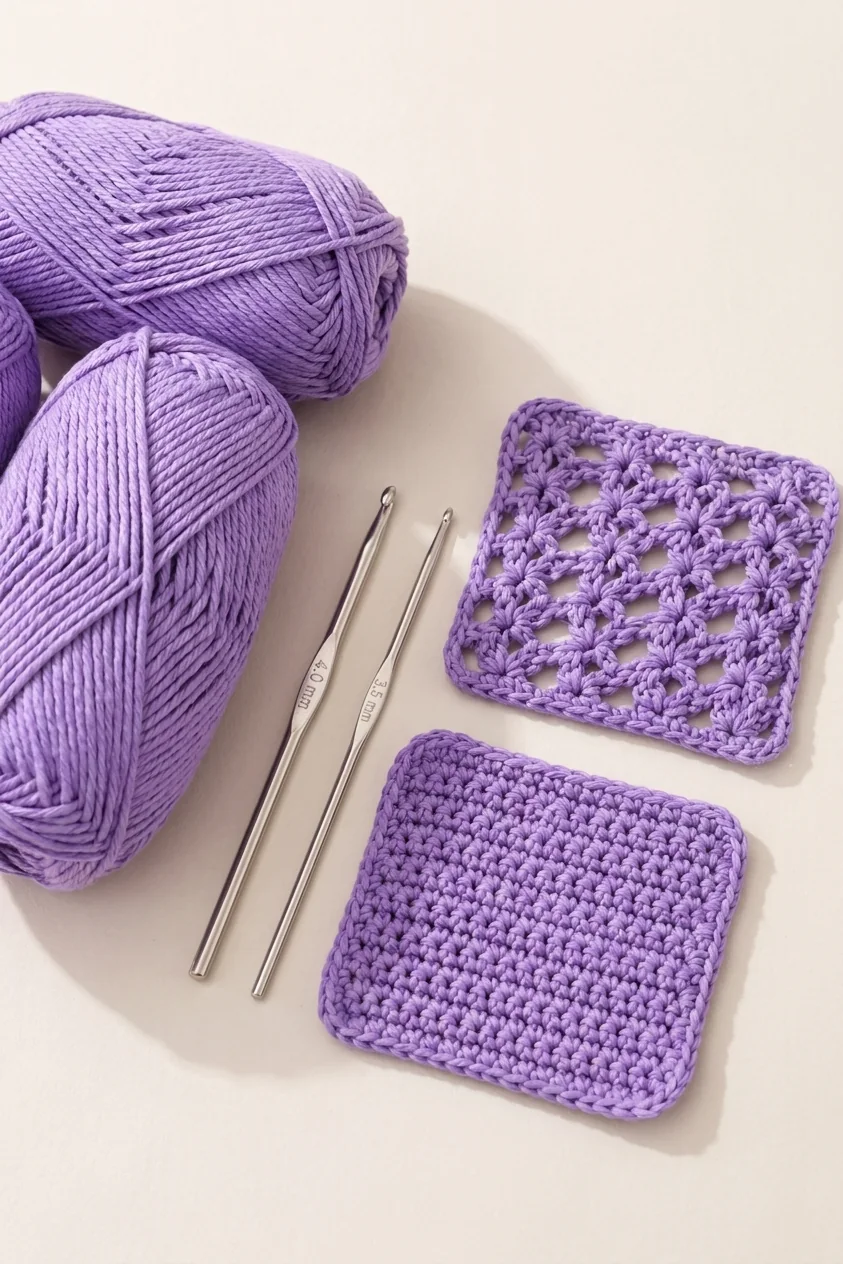
The sample uses approximately 200 yd / 180 m of smooth lavender CYC #3 DK cotton. Treat that total as a project estimate rather than a guaranteed amount per size. Buy enough to cover swatching and personal tension, and record actual usage.
Cotton yarns vary in twist, stretch, sheen, and washing instructions. The category name alone cannot guarantee the cap’s drape or durability. Use the 4.0 mm hook as the starting point and change only after measuring blocked fabric.
crochet summer sun cap planning note
Record color, yarn, blocked gauge, recipient measurements, and any modification before cutting yarn. Keep your changes separate from the original pattern instructions.
Pause at this point and examine decision 1: choose and test the dk cotton in natural light. Count the repeat, compare both sides, and note the active size before moving on. A removable marker and a one-line project note prevent small orientation errors from becoming several rounds of rework.
The supporting visual is an independently generated instructional reference based on the supplied finished-cap image. It is not a cropped pattern page and should not replace the official written instructions. Your yarn, tension, and blocking method may produce a slightly different texture while still meeting the verified measurements.
Decision 2: Verify Both Gauges
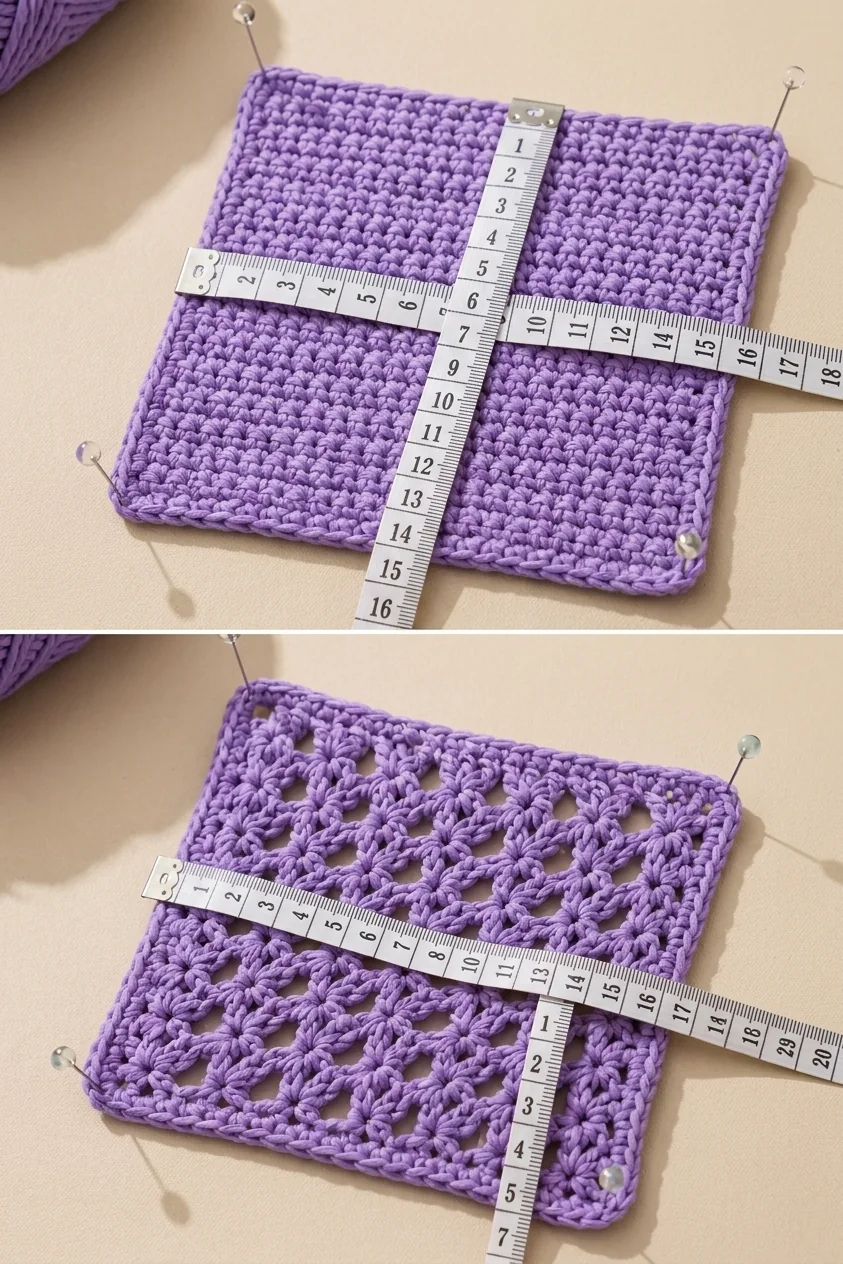
The dense target is 20 single crochets and 10 rows per 10 cm / 4 in after blocking. The crown reference is two shell repeats and eight rounds per 10 cm / 4 in, but the PDF explicitly marks that crown gauge for designer confirmation.
Swatch the two fabrics separately because a hook that matches the band may not create the expected shell geometry. Record width, height, hook, yarn, and blocking method.
crochet summer sun cap planning note
Record color, yarn, blocked gauge, recipient measurements, and any modification before cutting yarn. Keep your changes separate from the original pattern instructions.
Pause at this point and examine decision 2: verify both gauges in natural light. Count the repeat, compare both sides, and note the active size before moving on. A removable marker and a one-line project note prevent small orientation errors from becoming several rounds of rework.
The supporting visual is an independently generated instructional reference based on the supplied finished-cap image. It is not a cropped pattern page and should not replace the official written instructions. Your yarn, tension, and blocking method may produce a slightly different texture while still meeting the verified measurements.
Decision 3: Select a Brim-Stiffening Method
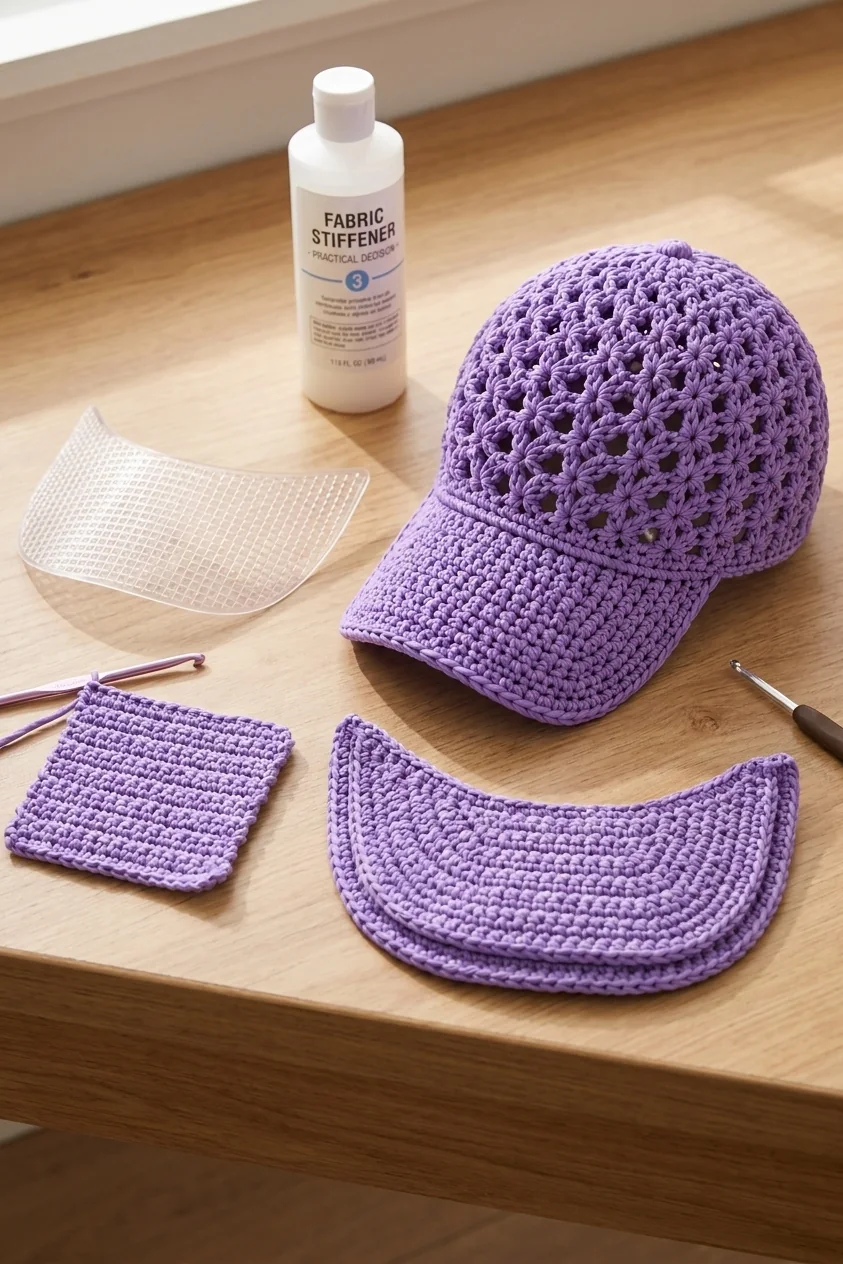
Plastic canvas enclosed between two brim layers gives the firmest option in the pattern, provided every corner is rounded and every edge is completely covered. A smaller 3.5 mm hook creates denser crochet without an insert.
Fabric stiffener can be applied after blocking, subject to product and yarn compatibility. A double crochet layer without insert remains softer. Compare the methods in a sample and review the craftsmanship reasoning behind the brim before deciding.
crochet summer sun cap planning note
Record color, yarn, blocked gauge, recipient measurements, and any modification before cutting yarn. Keep your changes separate from the original pattern instructions.
Pause at this point and examine decision 3: select a brim-stiffening method in natural light. Count the repeat, compare both sides, and note the active size before moving on. A removable marker and a one-line project note prevent small orientation errors from becoming several rounds of rework.
The supporting visual is an independently generated instructional reference based on the supplied finished-cap image. It is not a cropped pattern page and should not replace the official written instructions. Your yarn, tension, and blocking method may produce a slightly different texture while still meeting the verified measurements.
Decision 4: Measure Before Choosing a Size
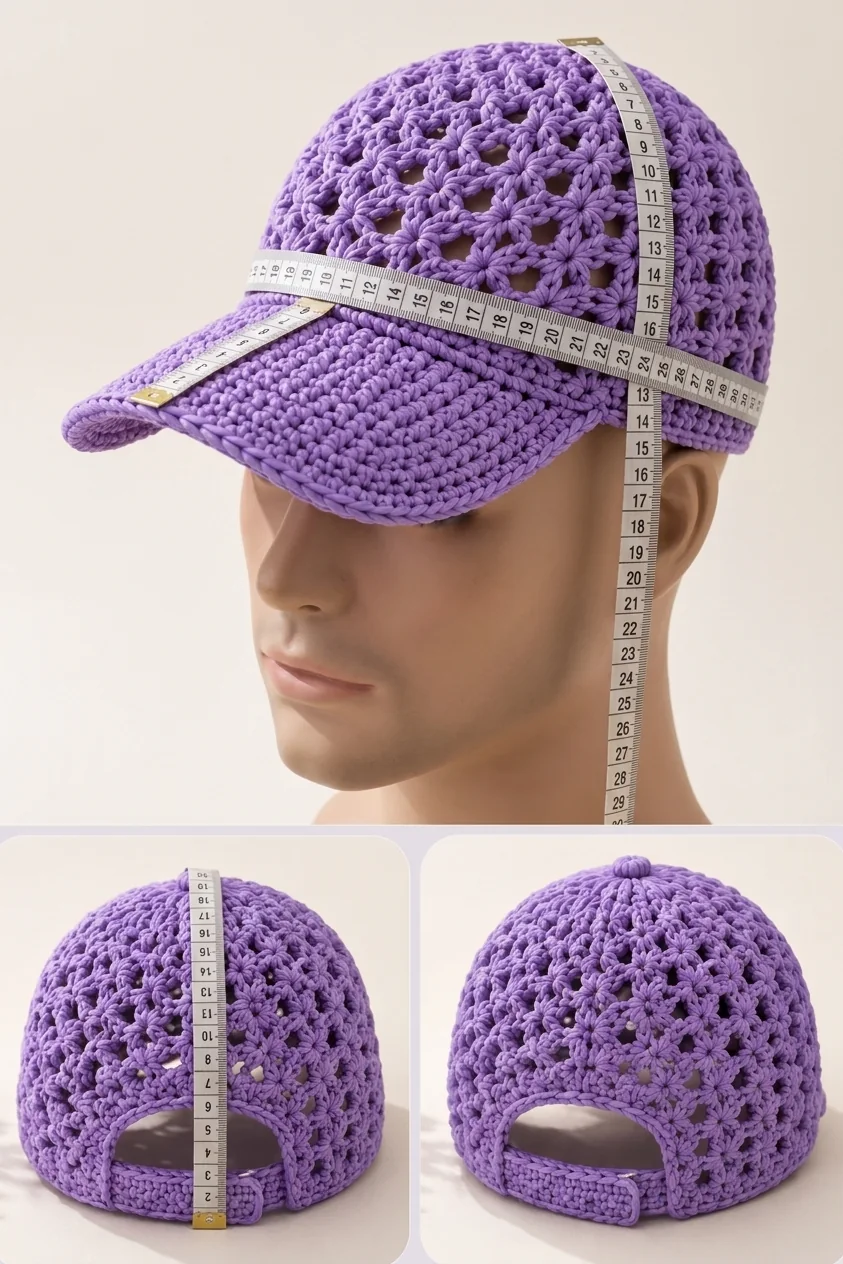
S/M is designed around 53–56 cm and L/XL around 58–60 cm. The reference crown depth is 17 cm, brim 7 cm deep × 17 cm wide, and back opening 8 × 6 cm. Measure the intended adult wearer and compare a cap that already fits.
The button-back opening does not make every circumference interchangeable. Complete fit claims require physical samples in both sizes and blocked measurement reconciliation.
crochet summer sun cap planning note
Record color, yarn, blocked gauge, recipient measurements, and any modification before cutting yarn. Keep your changes separate from the original pattern instructions.
Pause at this point and examine decision 4: measure before choosing a size in natural light. Count the repeat, compare both sides, and note the active size before moving on. A removable marker and a one-line project note prevent small orientation errors from becoming several rounds of rework.
The supporting visual is an independently generated instructional reference based on the supplied finished-cap image. It is not a cropped pattern page and should not replace the official written instructions. Your yarn, tension, and blocking method may produce a slightly different texture while still meeting the verified measurements.
Decision 5: Plan the Blocking Form
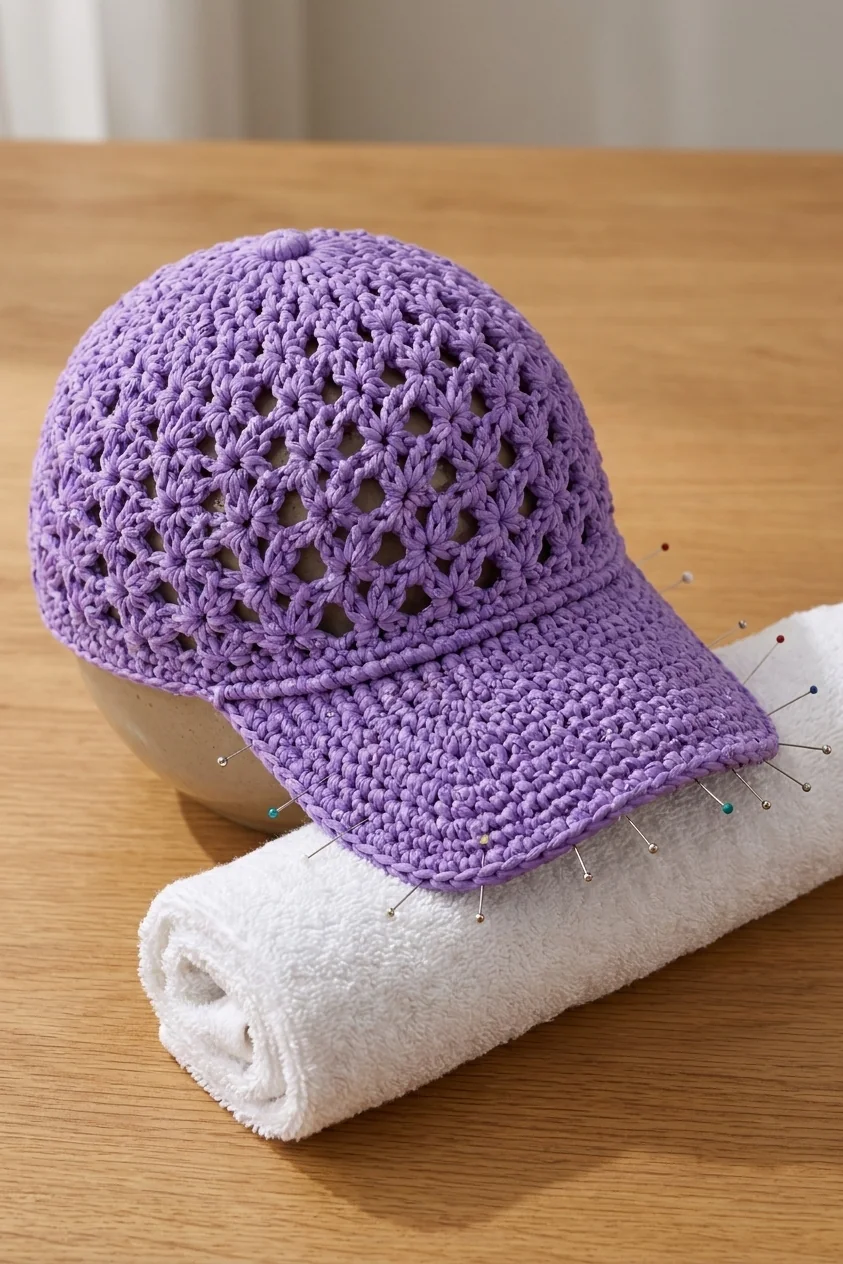
Choose a bowl or balloon close to the target circumference and a rolled towel that supports the desired brim curve. Wet-block according to the yarn label, smooth the shell mesh, and avoid overstretching the dense band.
Let the cap dry completely before removing support or measuring. If stiffener is used, follow its directions and first test compatibility on a swatch.
crochet summer sun cap planning note
Record color, yarn, blocked gauge, recipient measurements, and any modification before cutting yarn. Keep your changes separate from the original pattern instructions.
Pause at this point and examine decision 5: plan the blocking form in natural light. Count the repeat, compare both sides, and note the active size before moving on. A removable marker and a one-line project note prevent small orientation errors from becoming several rounds of rework.
The supporting visual is an independently generated instructional reference based on the supplied finished-cap image. It is not a cropped pattern page and should not replace the official written instructions. Your yarn, tension, and blocking method may produce a slightly different texture while still meeting the verified measurements.
Decision 6: Write a Realistic Care Routine
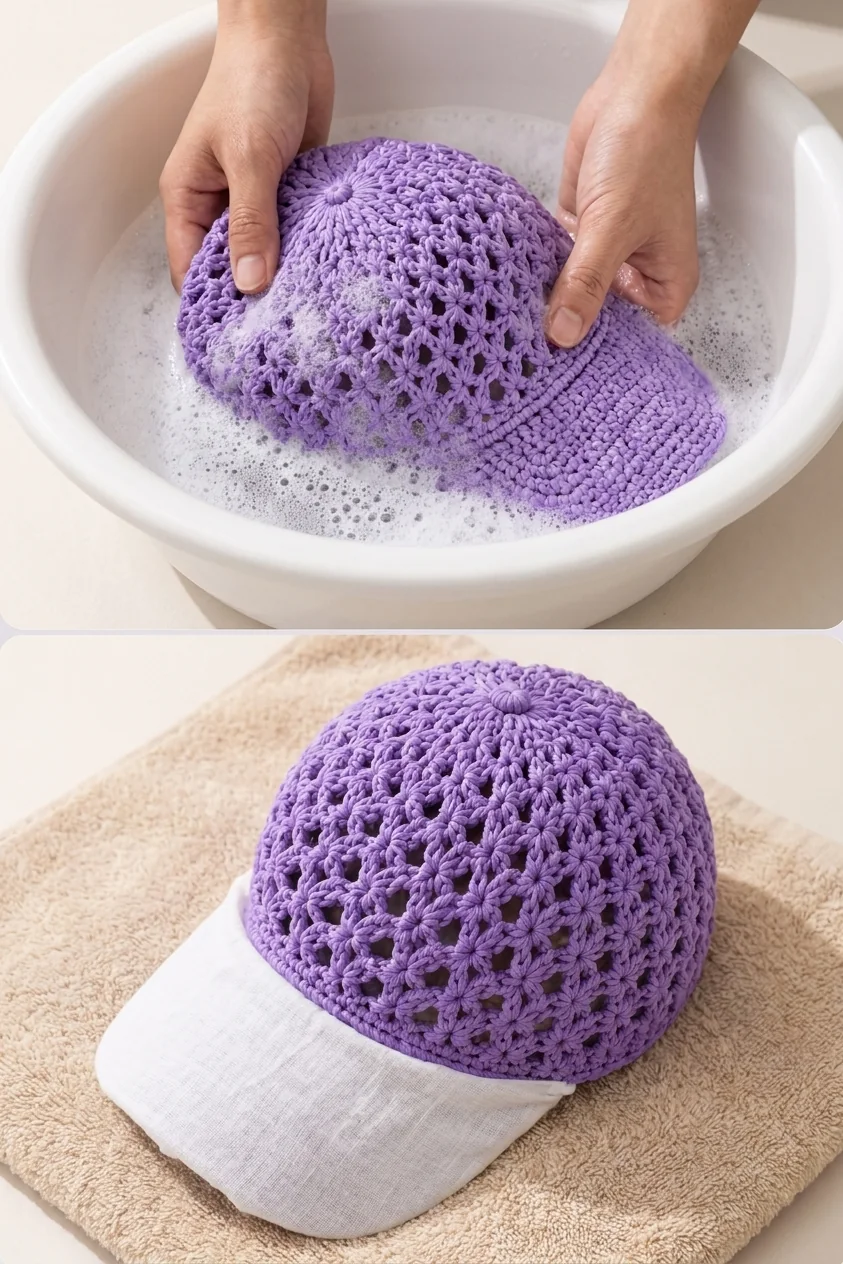
Base washing instructions on the yarn label and any stiffener or insert used. Hand washing and flat reshaping may be a conservative approach, but do not publish care claims without checking the chosen materials.
Store crown-down with the brim protected from weight. If the brim softens, reshape or re-block only in a way compatible with the insert, stiffener, and yarn.
crochet summer sun cap planning note
Record color, yarn, blocked gauge, recipient measurements, and any modification before cutting yarn. Keep your changes separate from the original pattern instructions.
Pause at this point and examine decision 6: write a realistic care routine in natural light. Count the repeat, compare both sides, and note the active size before moving on. A removable marker and a one-line project note prevent small orientation errors from becoming several rounds of rework.
The supporting visual is an independently generated instructional reference based on the supplied finished-cap image. It is not a cropped pattern page and should not replace the official written instructions. Your yarn, tension, and blocking method may produce a slightly different texture while still meeting the verified measurements.
Practical Notes
After sizing is settled, the seven-recipient gift guide offers color directions. For construction reasoning, read the eight shell-stitch design details. Neither article replaces physical gauge and size testing.
Pause at this point and examine the final plan in natural light. Count the repeat, compare both sides, and note the active size before moving on. A removable marker and a one-line project note prevent small orientation errors from becoming several rounds of rework.
The supporting visual is an independently generated instructional reference based on the supplied finished-cap image. It is not a cropped pattern page and should not replace the official written instructions. Your yarn, tension, and blocking method may produce a slightly different texture while still meeting the verified measurements.
Frequently Asked Questions
Can I use a cotton-acrylic blend?
You can test a substitute, but must verify both blocked gauges, drape, care compatibility, and brim behavior.
Will the brim stay firm without an insert?
That depends on yarn, gauge, hook, layering, blocking, and use. Test the smaller-hook, double-layer, or stiffener option.
How much yarn should I buy?
The pattern estimates about 200 yd / 180 m total. Record actual use and consider the PDF’s 10–15% purchasing buffer.
Can I scale this to a child?
No child grading is supplied. Do not extrapolate fit or safety from the adult sizes.
How long should blocking take?
Until the cap is completely dry. Time depends on fiber, climate, airflow, and thickness.
Final Checklist
- ✓ Yarn category and care label are recorded.
- ✓ Dense and shell gauges are blocked and measured.
- ✓ Adult head circumference is confirmed.
- ✓ Brim method is tested before enclosure.
- ✓ Blocking form matches target circumference.
- ✓ Care routine reflects all materials used.
Ready to make the cap?
The listing contains the complete illustrated digital pattern, size-specific stitch counts, and construction sequence. It is a pattern, not a finished hat.