Why Crochet Flower Patterns Are Worth Learning
Small motifs provide quick feedback. You can see immediately whether your tension is even, whether your chain spaces are the correct size, and whether every petal contains the same number of stitches. Because most crochet flower patterns are built from a repeating section, they are also excellent chart-reading exercises.
Flowers are useful for testing unfamiliar yarn. A smooth cotton highlights stitch definition, while wool creates a softer and fuller shape. Tiny changes in hook size can transform the same chart from a firm appliqué into a relaxed decorative motif.
How to Read Crochet Flower Patterns and Symbol Charts
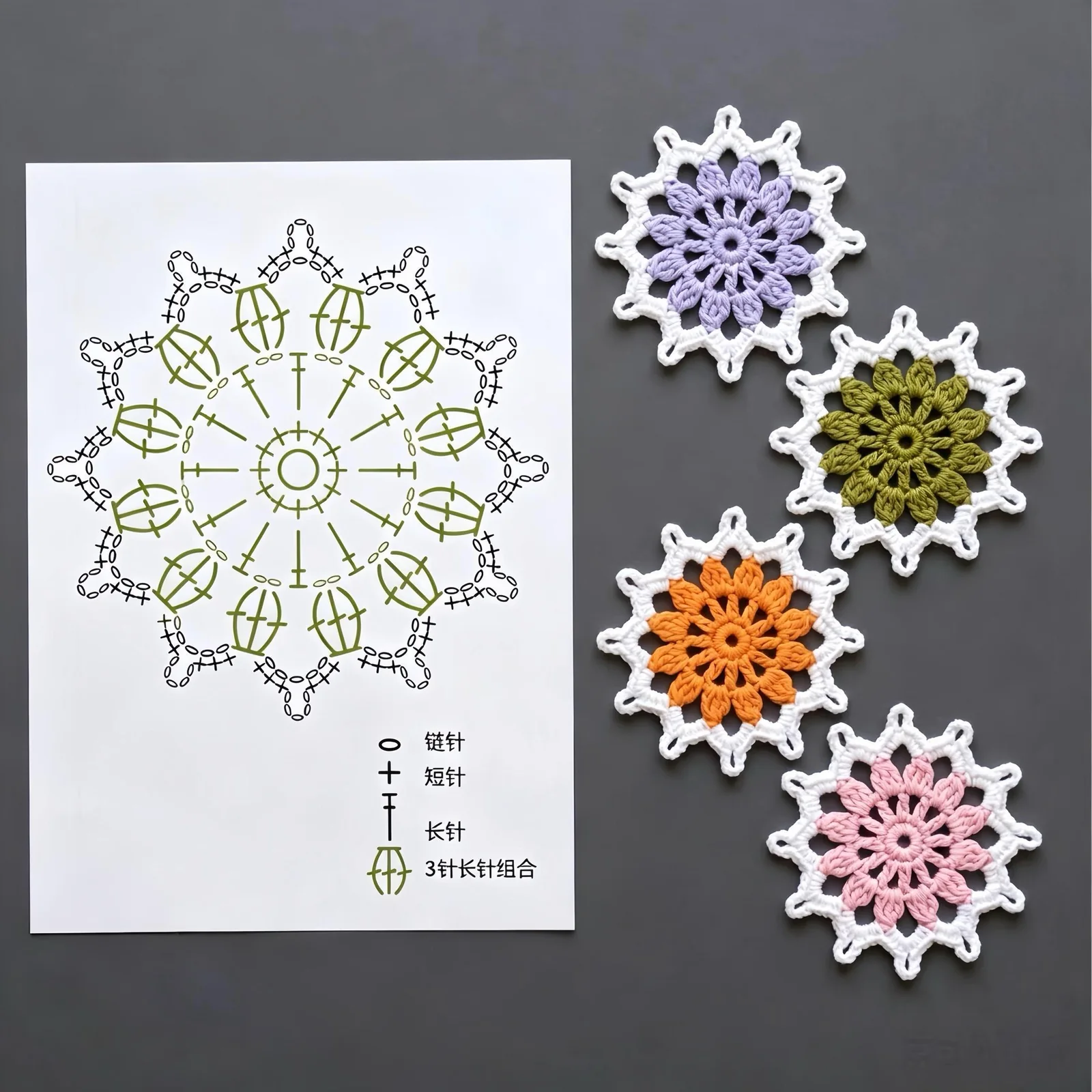
Most round charts are read from the center outward. Locate the starting ring first, then follow the first round counterclockwise unless the chart says otherwise. A repeated petal section is usually worked once into every stitch or chain space from the previous round.
- Oval: chain stitch.
- Dot: slip stitch.
- Cross or plus sign: single crochet.
- T-shaped symbol: half double crochet or double crochet, depending on the number of crossbars.
- Grouped symbols: stitches worked together, often a cluster, puff, or decrease.
Before beginning crochet flower patterns, count the repeats around the chart. If the design shows eight identical petals, the foundation round must supply eight usable stitches or spaces. Add removable markers after every repeat when the diagram is dense.
Popular Crochet Flower Patterns and Their Construction
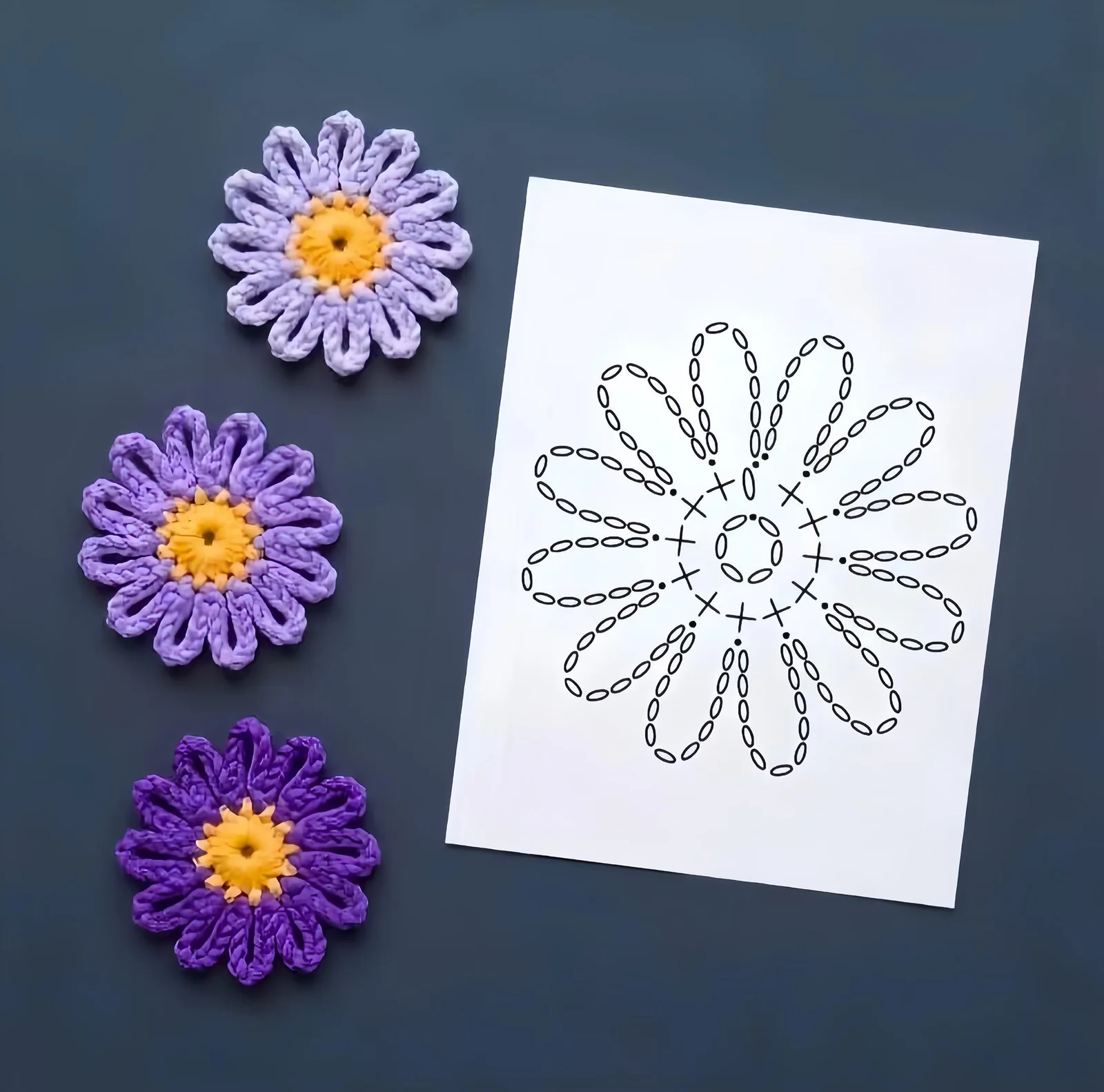
1. Loop-Petal Flowers
Loop petals are usually chains anchored with slip stitches or single crochet. They are fast, flexible, and ideal for garlands or layered embellishments. Keep every chain loop the same length so the flower remains balanced.
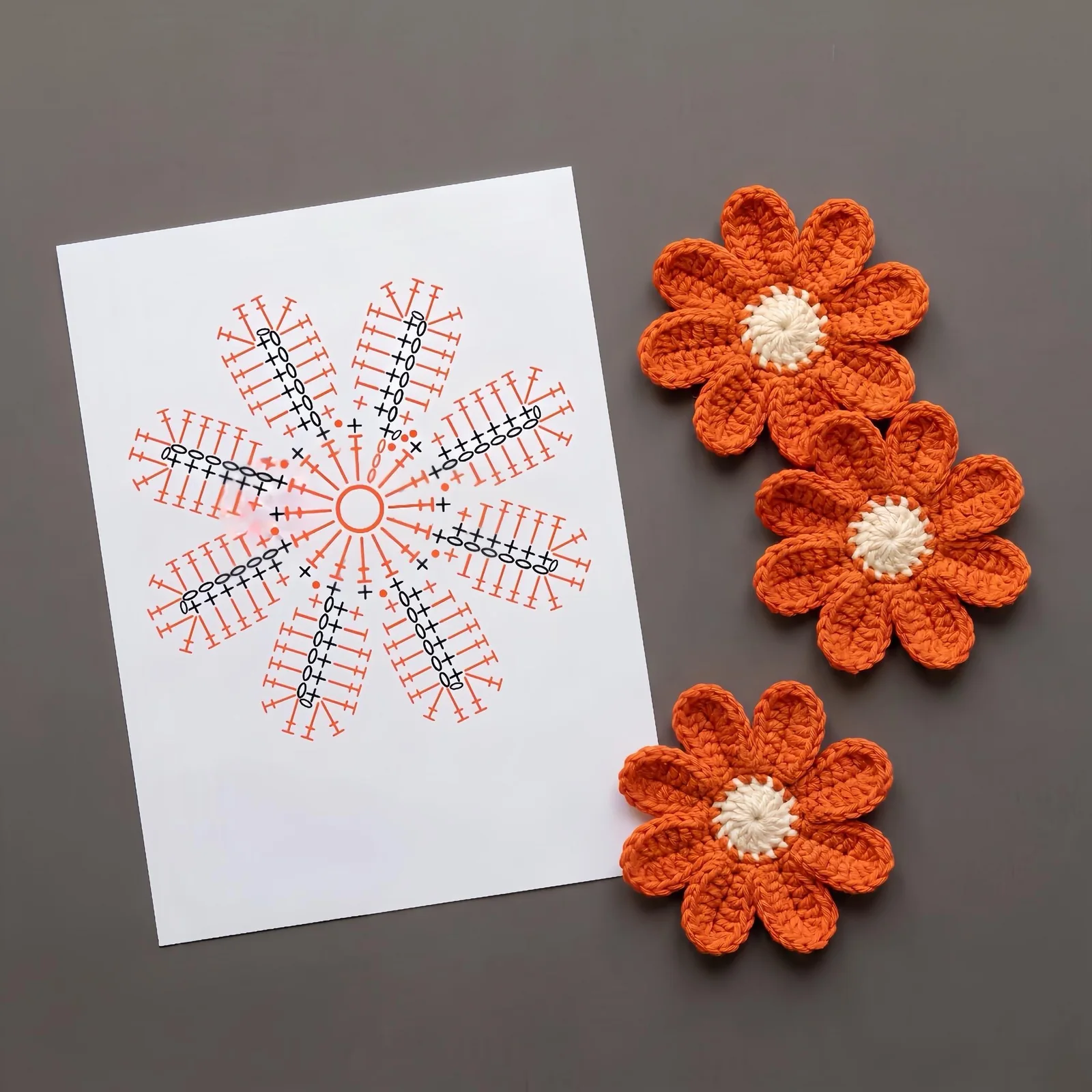
2. Solid Double-Crochet Petals
Solid petals use groups of taller stitches worked into one base space. Increasing stitch height toward the center of each petal creates a rounded outline. These crochet flower patterns work well for appliqués because the fabric is substantial and easy to sew onto another item.
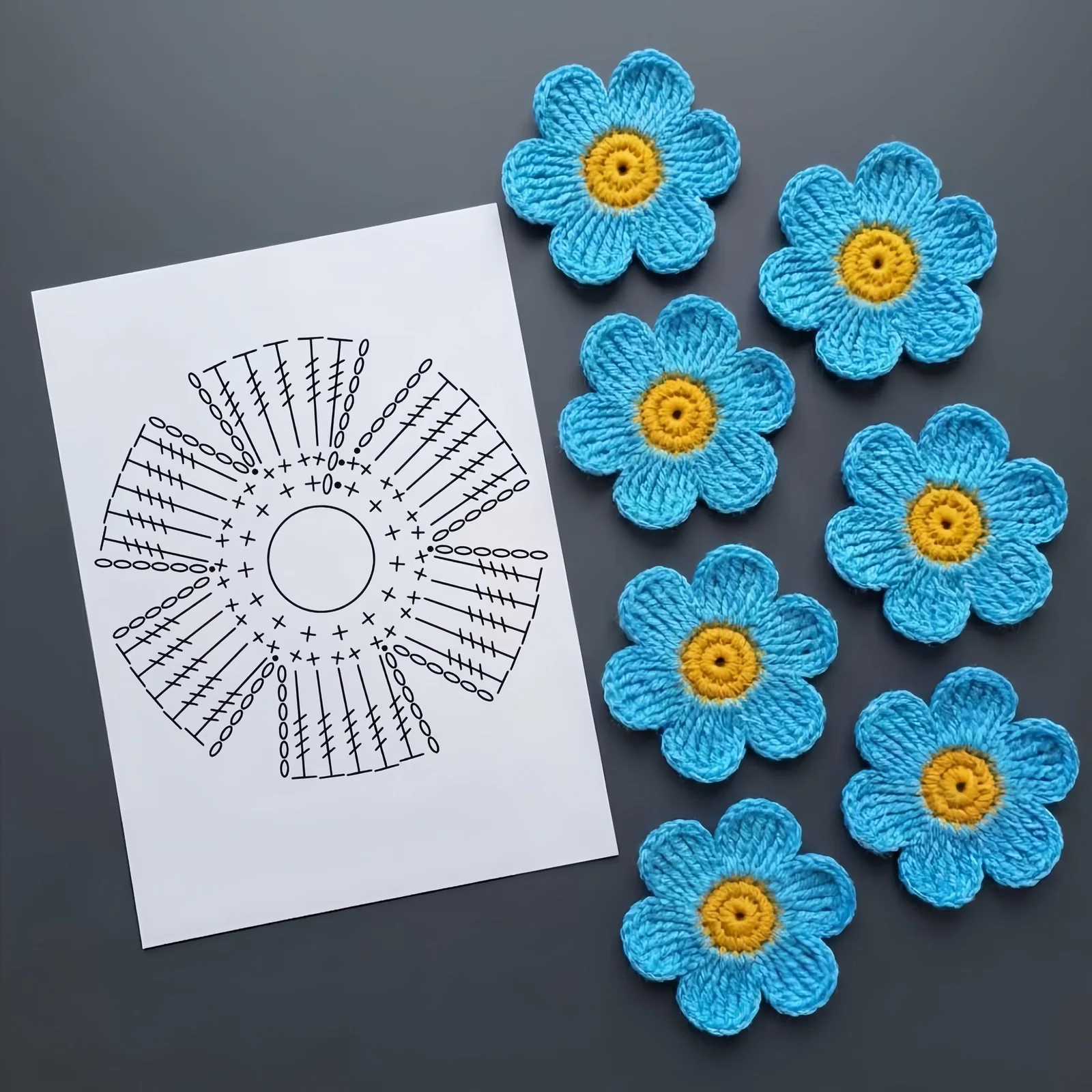
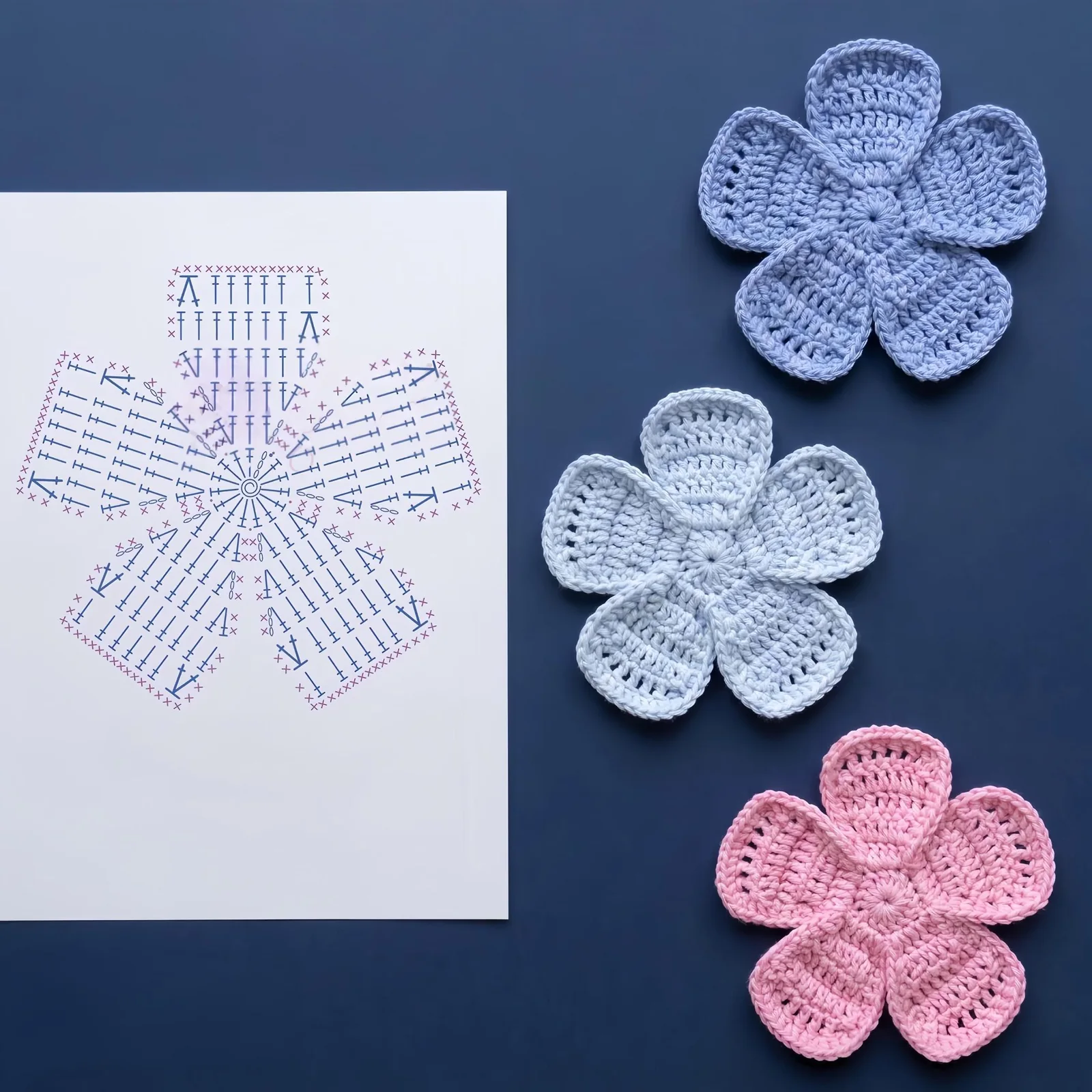
3. Five-Petal Flowers
Five petals create a natural botanical silhouette. The simplest version uses one fan or shell per repeat. A contrasting center makes the shape easier to read and gives leftover yarn a useful purpose.
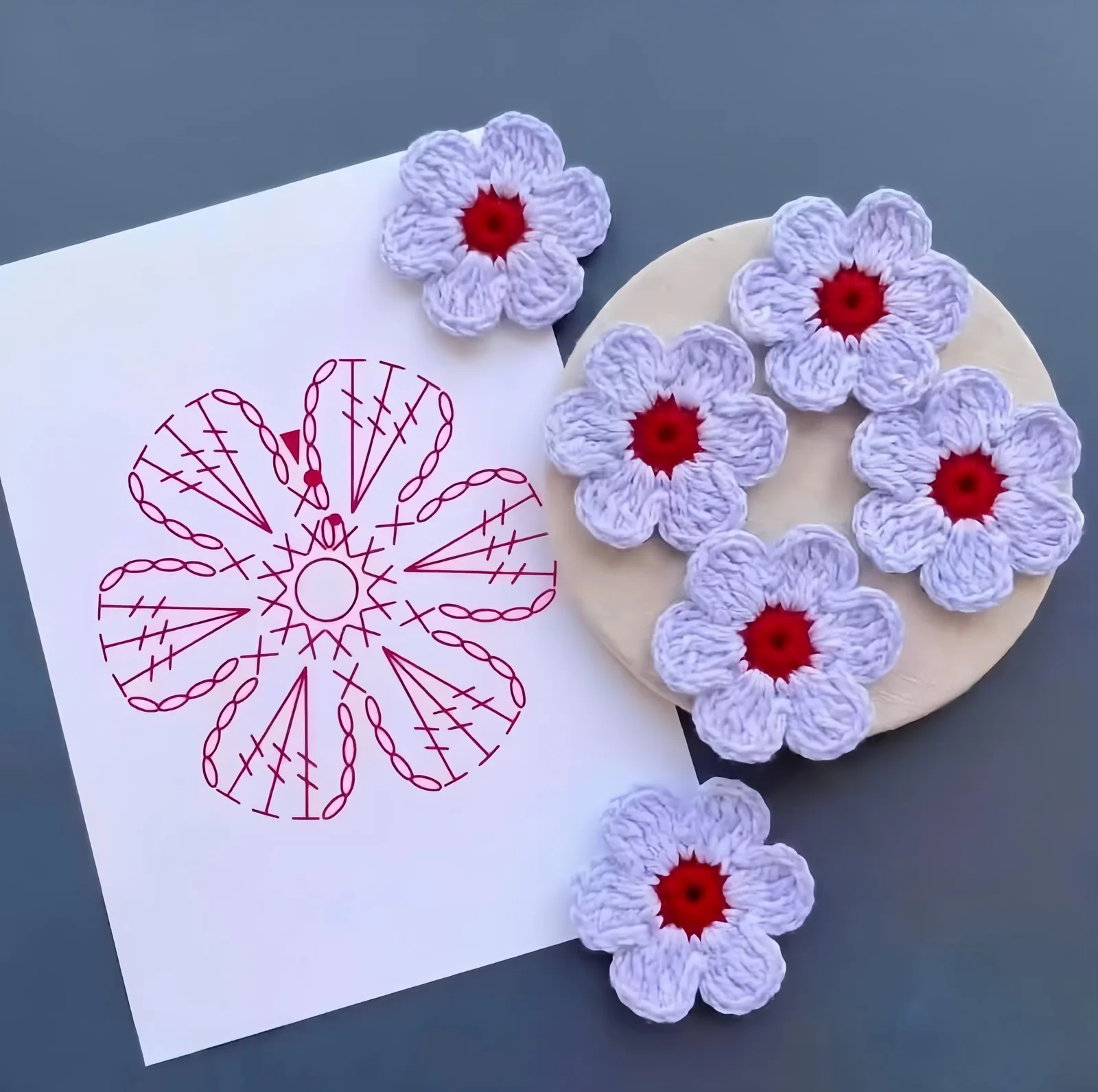
4. Two-Tone Petals
Color changes placed within the petal produce a striped or radiating effect. Change yarn on the final pull-through of the stitch before the new color begins. Carrying short floats can be efficient, but separate yarn ends usually give small motifs a cleaner back.
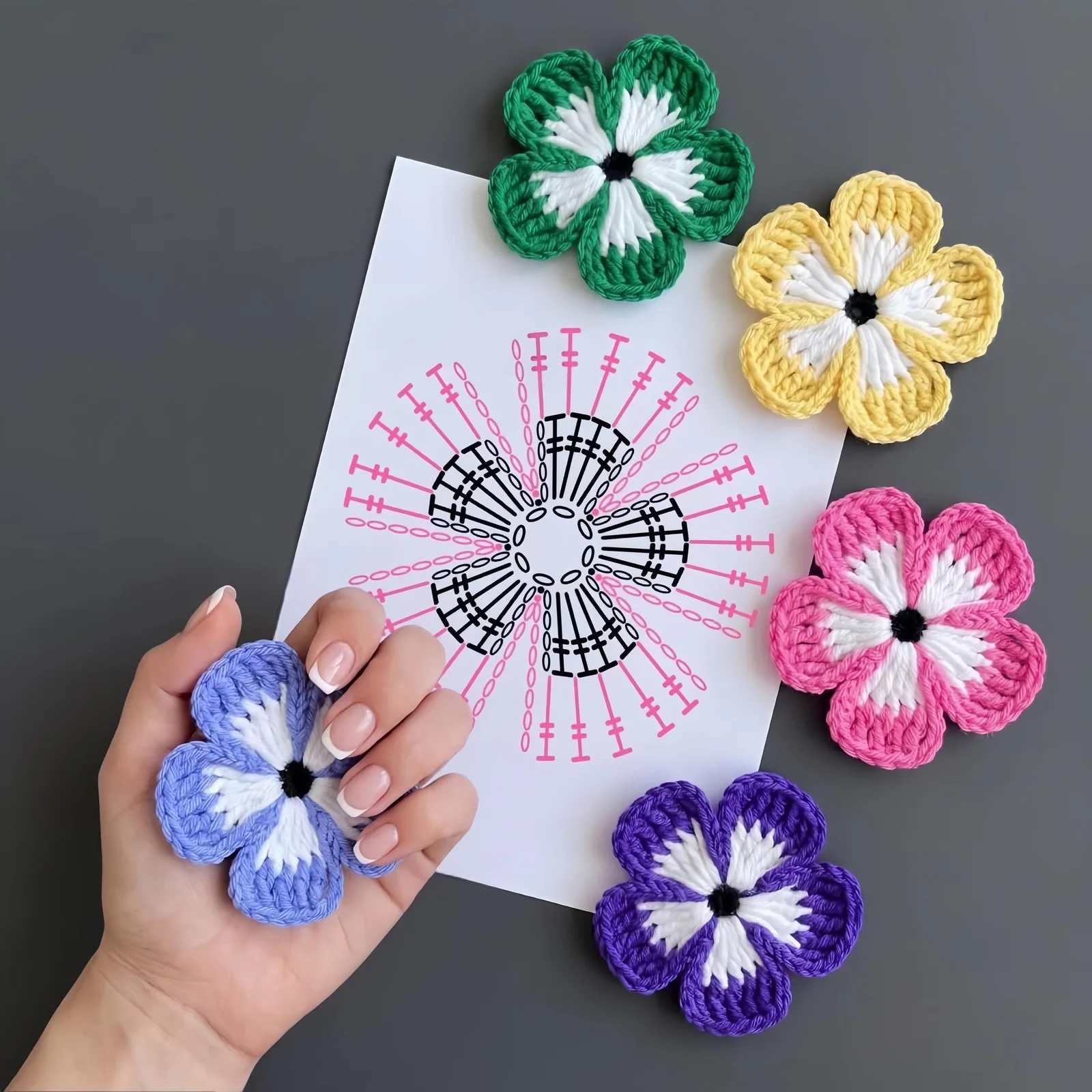
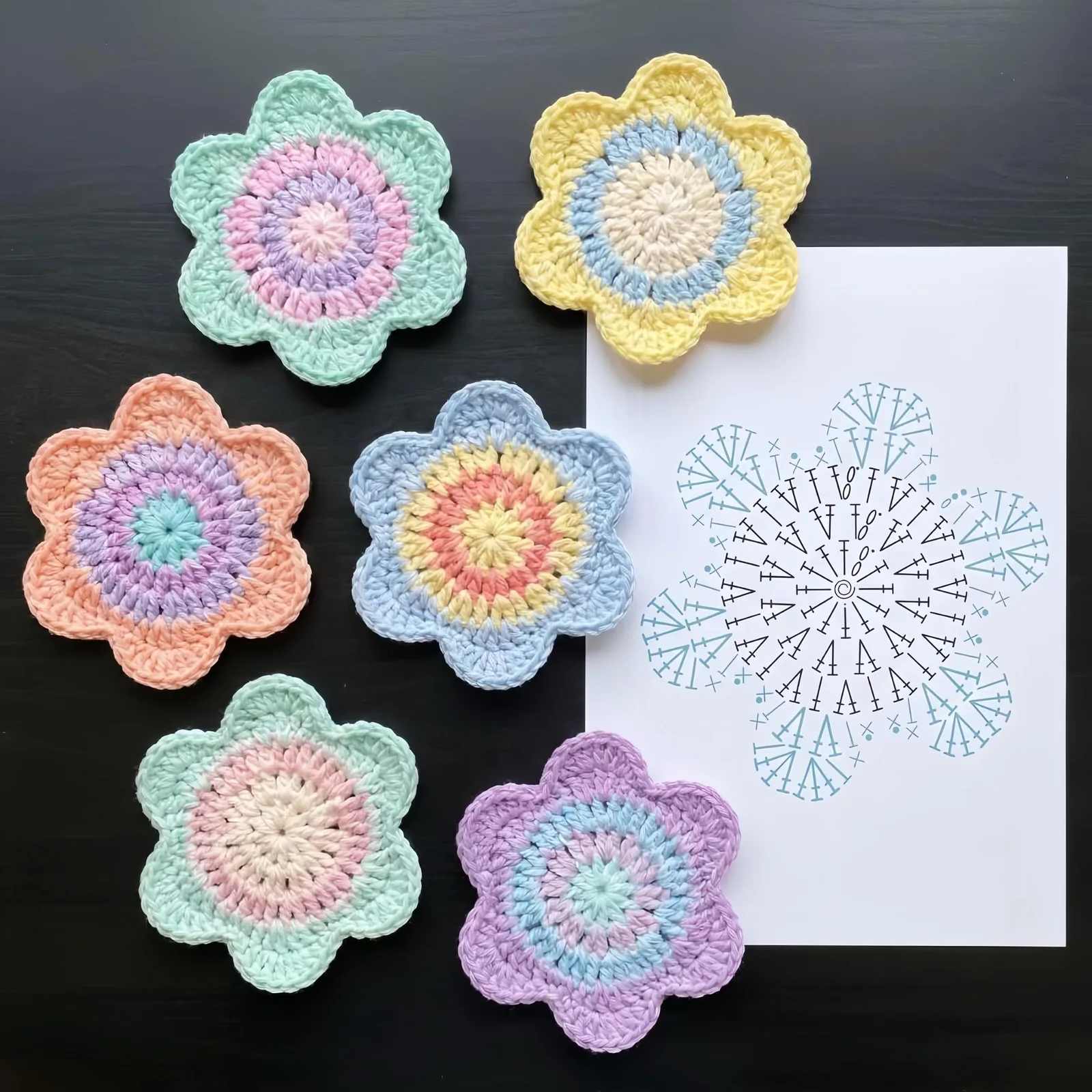
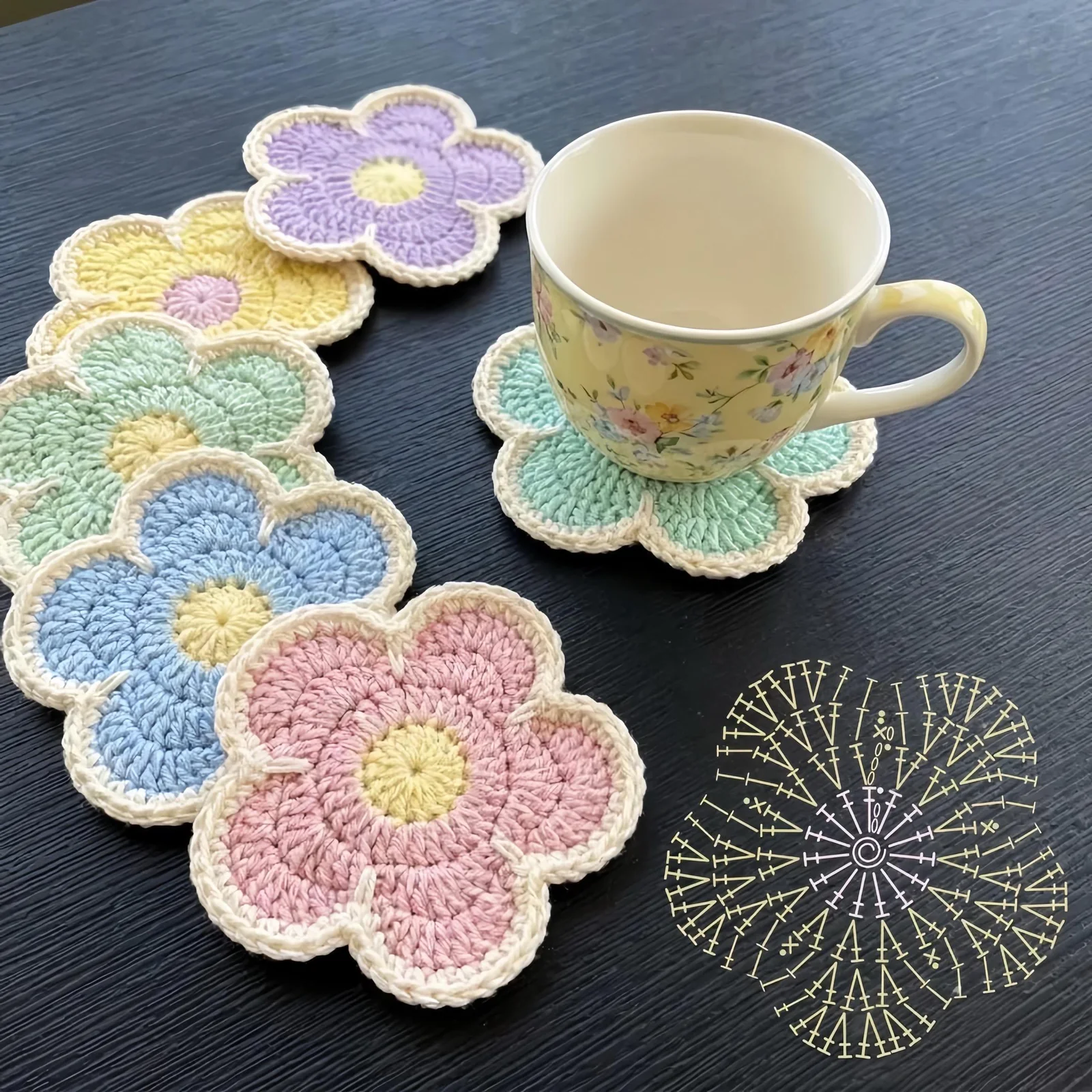
5. Rounded Pastel Motifs
Not every flower needs an open center. Circular centers made with increases create a firm base, while a scalloped final round forms soft petals. These crochet flower patterns are especially useful for coasters, face scrubbies, and patches.
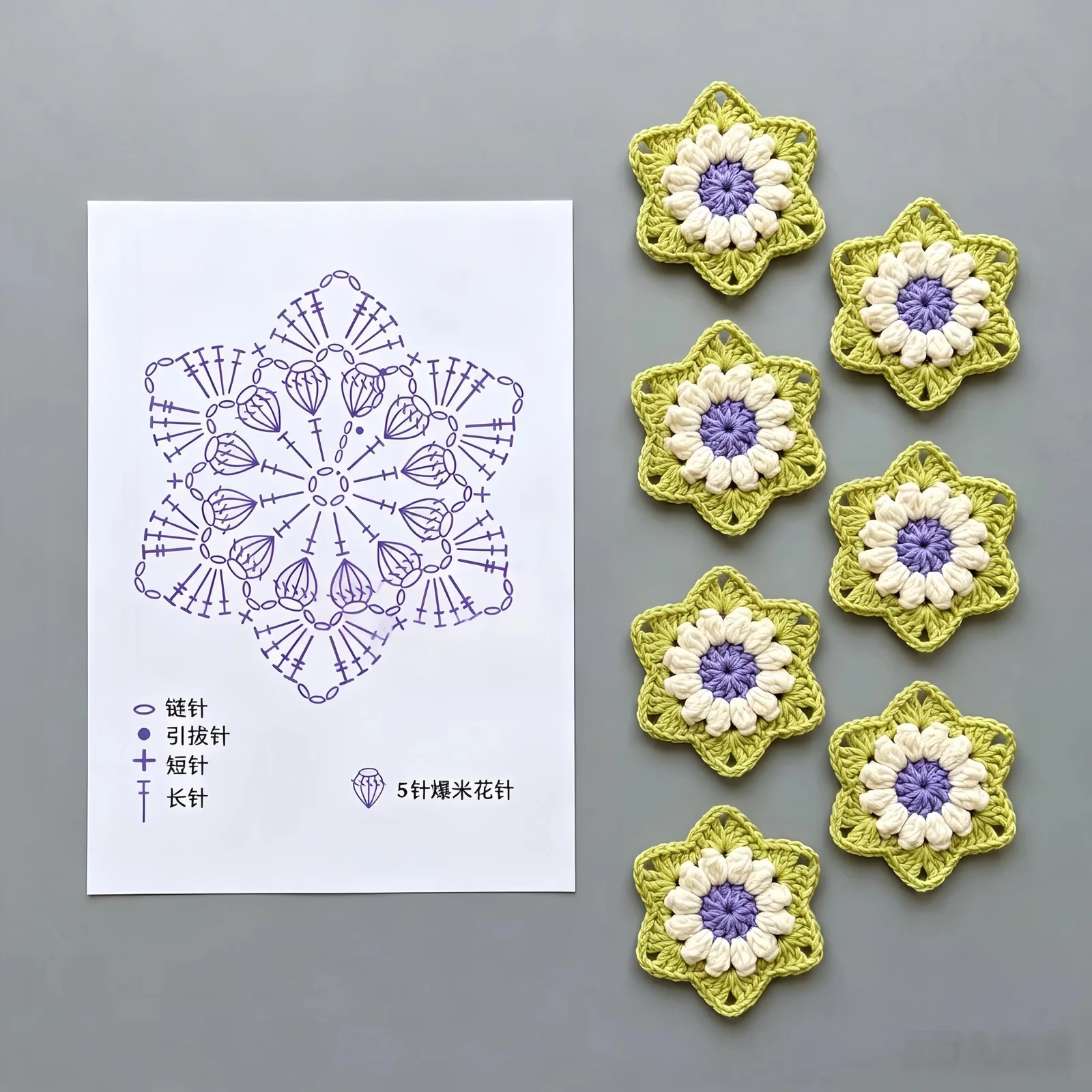
6. Star and Puff-Stitch Flowers
Puff stitches create raised texture and a strong floral center. Keep every puff the same height and close each one consistently. A pointed outer round turns the motif into a star or small medallion.
7. Layered Six-Petal Motifs
A layered flower combines an inner star or wheel with a second petal round. Work loosely around chain spaces so the outer petals can spread during blocking. This construction gives crochet flower patterns a lace-like appearance without making them fragile.
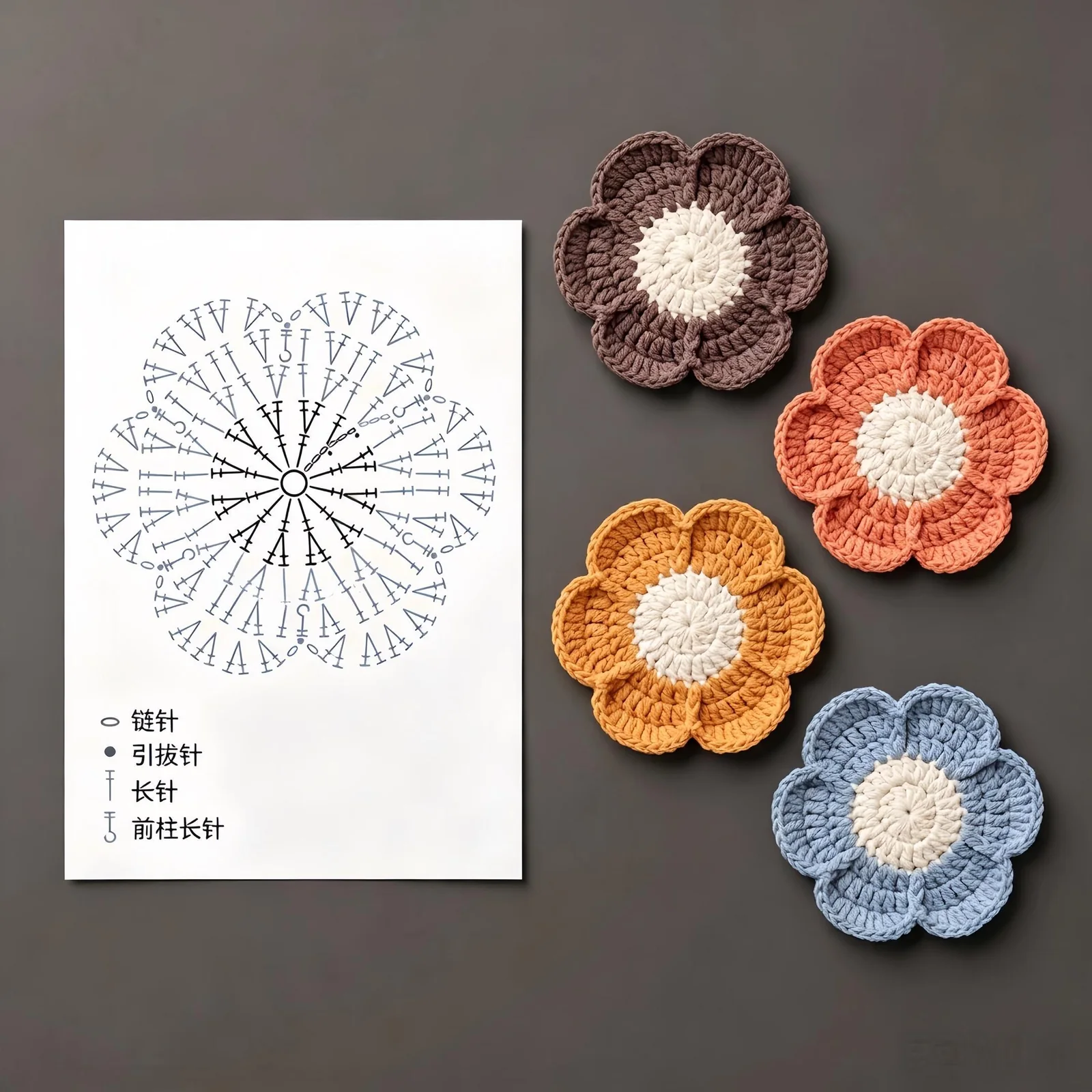
8. Flower Coaster Motifs
Coasters need a dense center and a stable edge. Cotton yarn is absorbent, washable, and resistant to heat from warm mugs. For practical crochet flower patterns, avoid oversized chain loops that can catch on the cup base.
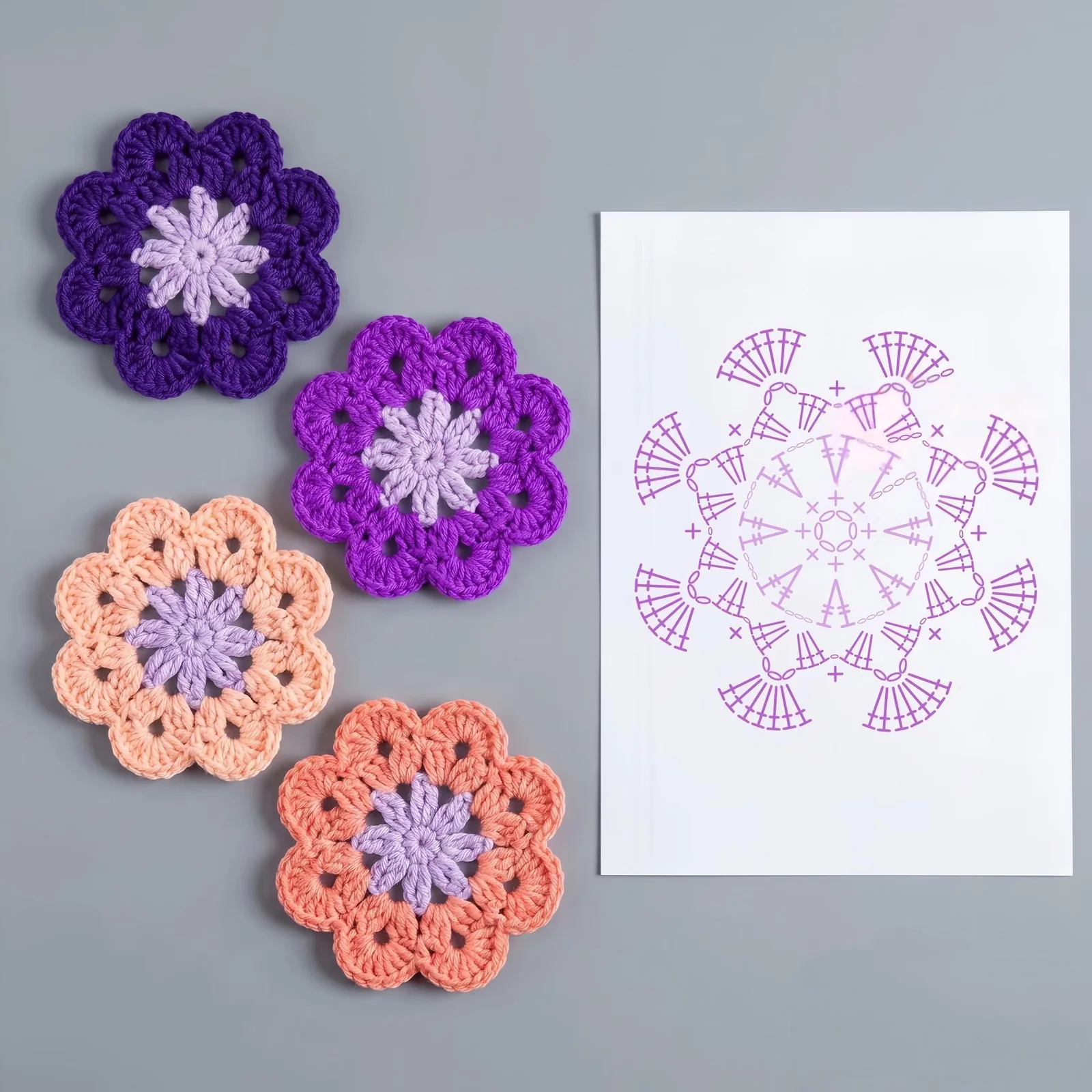
9. Scalloped and Dimensional Flowers
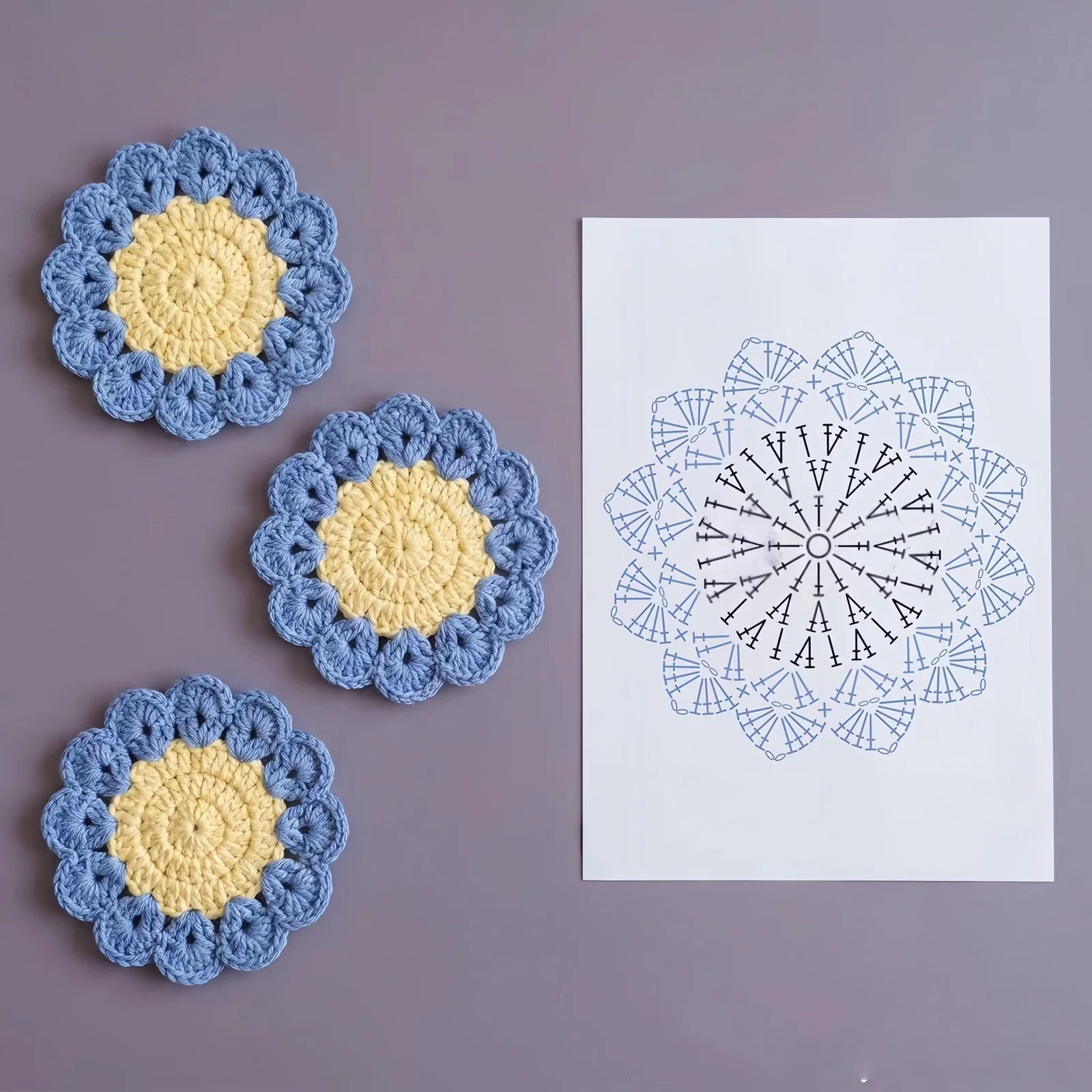
Scalloped petals use several tall stitches between lower anchoring stitches. More stitches create a deeper curve; fewer stitches create a flatter edge. Dimensional crochet flower patterns may need steam blocking instead of heavy pinning to preserve their texture.
Choosing Yarn and Hooks for Crochet Flower Patterns
Mercerized cotton offers crisp stitch definition and is the best all-purpose choice for coasters, appliqués, and home décor. Standard cotton produces a softer matte finish. Acrylic is economical and comes in many colors, while wool is ideal when the flowers will be felted.
Use the hook size recommended on the yarn label as a starting point. Choose a hook 0.5 mm smaller for firm shapes or 0.5 mm larger for flexible lace. The best crochet flower patterns should lie flat without becoming stiff, cupped, or wavy.
Blocking and Finishing Crochet Flower Patterns
- Weave each yarn tail through stitches of the same color.
- Shape the petals with your fingers before adding moisture.
- Pin opposite petals first to keep the motif symmetrical.
- Wet-block washable fibers or use light steam without touching acrylic.
- Allow the piece to dry completely before removing pins.
If a motif cups, the round may need more stitches, larger chain spaces, or a bigger hook. If the edge ripples, reduce increases or switch to a smaller hook. Accurate stitch counts are more reliable than forcing the shape during blocking.
Creative Ways to Use Finished Flowers
Use crochet flower patterns for brooches, hair clips, greeting cards, nursery mobiles, seasonal garlands, bag charms, and decorative patches. Sew several motifs edge to edge for a scarf or table runner. For garments, attach flowers with removable snaps or a few loose stitches so they can be taken off before washing.
Frequently Asked Questions
Why does my crochet flower curl?
Curling usually means the round has too few stitches or the tension is too tight. Check the repeat count, loosen the chains, or move up one hook size.
What is the best yarn for flower coasters?
Medium-weight cotton is durable, absorbent, and easy to wash. It also gives crochet flower patterns clear edges and reliable sizing.
How do I enlarge a flower motif?
Use thicker yarn and a larger hook, or add controlled rounds while maintaining the same increase rate. Simply adding random stitches can cause rippling.
Can beginners follow symbol charts?
Yes. Start with a one-color motif containing five or six identical petals. Highlight one repeat, learn the few symbols it uses, and compare every finished section with the chart.