My Crochet Universe · Pocket Panda series
Scrap Yarn Crochet: 1 Perfect Panda From Your Leftovers
A practical, image-rich guide for crocheters who want a polished result.
The yarn leftovers hiding in plain sight
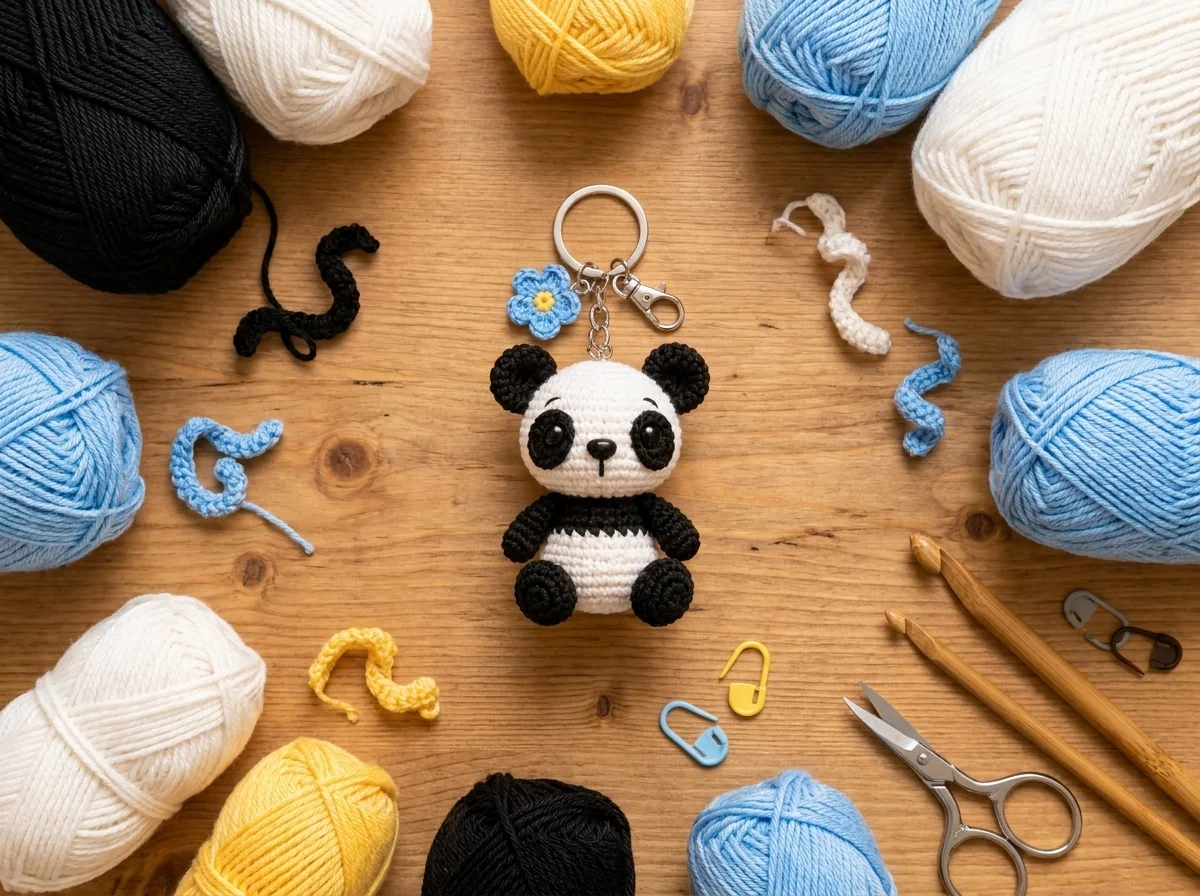
A scrap yarn crochet plan begins by weighing the two main colors before making the first round.
Most crocheters have a bag, basket, or drawer filled with leftovers. There is a little white from one project, black from another, and a few bright scraps that are too useful to throw away but too small for a full-size design.
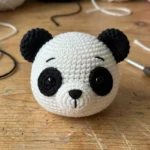
The Pocket Panda turns those leftovers into a finished object with a clear purpose. The main colors are simple: white for the head and lower body, black for the ears, eye patches, upper body, arms, and legs, plus small amounts of light blue and yellow for the flower.
This is why the project is more than a cute pattern. It is a controlled scrap yarn crochet project. Instead of forcing random leftovers into one large item, you use small quantities inside a design where each color has a job.
Why this project suits leftover yarn
Consistent yarn thickness helps a scrap yarn crochet character keep an even shape.
The PDF calls for worsted or medium #4 yarn and approximately 20–25 g each of white and black, around 5 g of light blue, and a small yellow scrap. Your exact usage depends on tension and the size of your yarn balls, so weigh the leftovers before starting.
The panda also has a compact finished size of approximately 8–10 cm. That means you do not need a full sweater quantity or a large skein. A project this small can help you use the last useful portion of a color while creating something that looks intentional.
The main argument is simple: scrap yarn crochet works best when the design gives the scraps a structured role. The panda does exactly that through high-contrast color blocking and a small flower detail.
Your color inventory
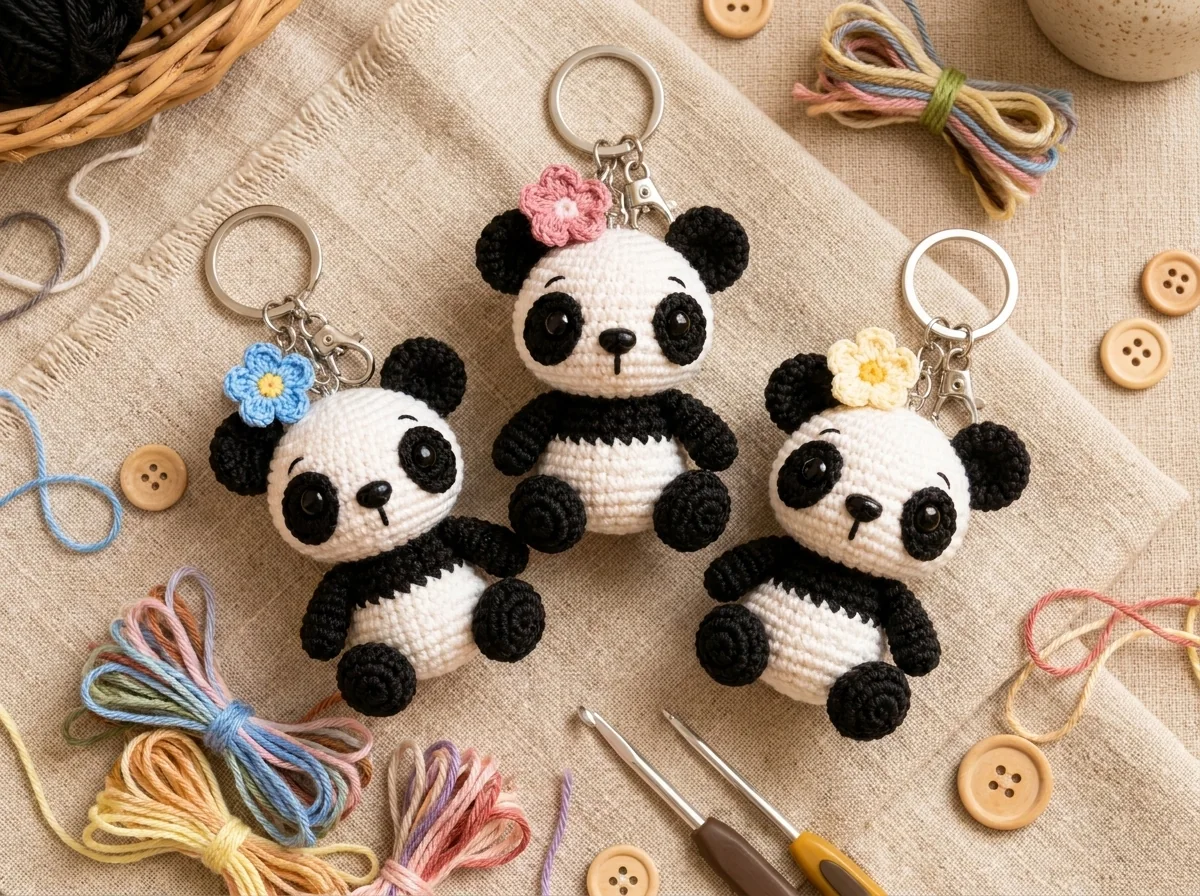
The flower makes scrap yarn crochet color experiments easy without changing the panda body.
Before opening the pattern, place your leftovers on a table and sort them into four groups:
- Main light color: white yarn for the head, muzzle, and lower body.
- Main dark color: black yarn for the ears, eye patches, upper body, arms, and legs.
- Accent color: light blue for the flower petals.
- Tiny contrast scrap: yellow for the flower center.
The original color arrangement gives the panda its identity. If your white yarn is cream, that is usually fine. If your black yarn is charcoal, the result may look softer and more vintage. The important point is to keep the eye patches darker than the face.
How to check whether your scraps are enough
Tight tension gives a scrap yarn crochet project a clean, stuffing-safe surface.
A simple kitchen scale can prevent a disappointing start. Weigh the white and black leftovers separately. Compare them with the approximate amounts listed in the PDF. If one color is short, decide before beginning whether you will substitute it or create a different colorway.
Do not wait until the body is almost finished to discover that the second color is missing. Small amigurumi pieces use less yarn than garments, but the main body and head still need enough material to complete their decreases and closing rounds.
The exact pattern includes the round-by-round instructions. This article gives you the planning method, while the paid PDF gives you the precise construction details.
The flower is where scraps become personality
Organized leftovers turn scrap yarn crochet into a deliberate project instead of a random mix.
The blue flower uses very little yarn, which makes it ideal for a leftover accent. The flower center uses a small yellow scrap, and the petal color can change without changing the panda itself.
Try these combinations:
- Blue petals with a yellow center for the original cheerful look.
- Pink petals with a white center for a softer gift version.
- Red petals with a yellow center for a festive charm.
- Lavender petals with a cream center for a cottagecore style.
The flower is attached to the chain near the keyring. This placement adds color without hiding the panda’s face.
The objection: “My leftover yarns are different brands”
Finish the scrap yarn crochet keychain by checking every tail, seam, and hardware join.
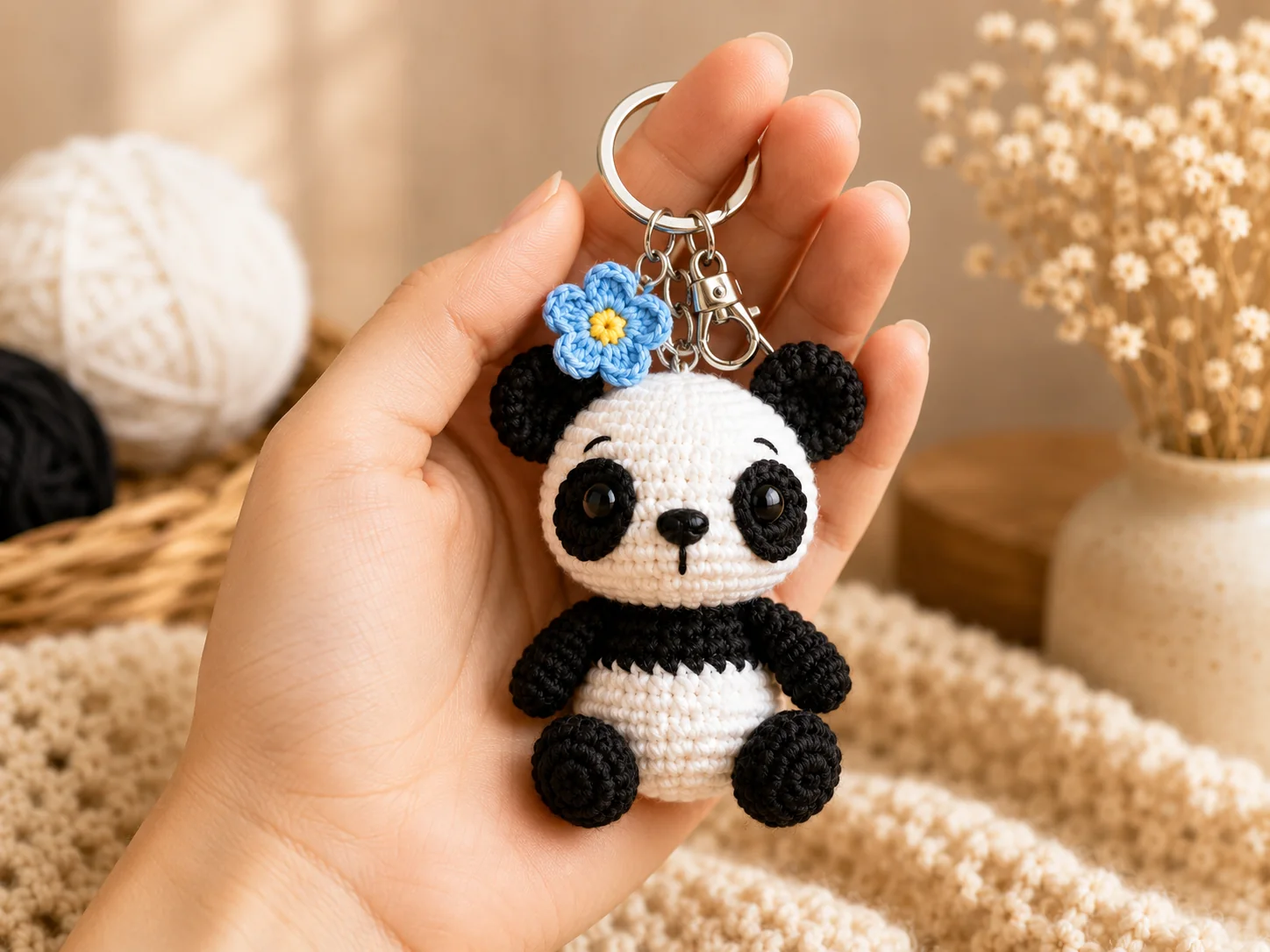
Different brands can work together if their thickness and fiber behavior are reasonably similar. Avoid combining a very thin yarn with a much thicker one for the same structural piece. That can change the size and tension noticeably.
For the decorative flower, small differences are easier to manage. For the head and body, prioritize a similar worsted weight and use the same hook size. The PDF specifies a 2.5 mm hook and a tight, stuffing-safe fabric; if your yarn creates gaps, adjust the hook size rather than accepting visible stuffing.
A satisfying scrap-project routine
Use this order to keep the project calm:
- Gather and weigh the scraps.
- Choose the panda’s main color pair.
- Prepare the light blue and yellow accent yarn.
- Make the head and body while checking the fabric for gaps.
- Complete the small pieces and keep the sewing tails long.
- Assemble the face before attaching the hardware.
- Use the remaining scraps for a second flower or a matching mini charm.
Conclusion
Scrap yarn crochet does not have to look random. With a focused color palette, a small character, and a clear construction plan, leftovers can become a polished item you can carry, gift, or sell.
The complete Pocket Panda PDF includes the exact rounds, color changes, face details, flower variation, hardware guidance, and safety information. Use your leftover yarns with a plan and make your own tiny panda. [Etsy pattern link — set to nofollow]
The smallest scraps can make the sweetest project.
Helpful answers
Frequently asked questions
How much yarn does this scrap yarn crochet project use?
Plan approximately 20–25 g each of black and white worsted yarn, about 5 g of light blue, and a small yellow scrap. Actual use varies with tension.
Can different yarn brands be mixed?
Yes, when they have a similar thickness and behave similarly. Test the fabric with the 2.5 mm hook and make sure stuffing cannot show through.
What if my white scrap is cream?
Cream works beautifully and creates a warmer panda. The most important visual choice is strong contrast between the face and the dark eye patches.
Can the flower use a different yarn weight?
A small variation can work for the flower, but the head and body should stay consistent. The scrap yarn crochet result looks most polished when the structural pieces share one yarn weight.
How should I organize leftovers before starting?
Sort by weight and color, weigh black and white separately, choose one accent, and reserve enough main yarn to finish all closing rounds before beginning.