7 Best Crochet Hooks for Beginners (and How to Choose)
Standing in the craft store aisle staring at forty different hooks, you have no idea where to start. Ergonomic handle or plain aluminum? Size H or size J? Pick the wrong one and your first project turns into a frustrating mess of dropped stitches and hand cramps before you even learn what a slip stitch is.
The right crochet hook for beginners comes down to a few things: comfortable grip, a size that matches worsted weight yarn, and a shape that makes your stitches easy to see. You don’t need a fancy set of fifteen hooks to start. You need one or two good ones that won’t fight you while you’re still figuring out tension and stitch counts.
This list walks through seven hooks that actually work well for new crocheters, from budget aluminum sets to ergonomic options that save your wrists during long practice sessions. We’ll also cover how crochet hooks for beginners differ in size, material, and handle design, so by the end you’ll know exactly which one to toss in your cart before your first project.
1. Ergonomic-handle crochet hooks
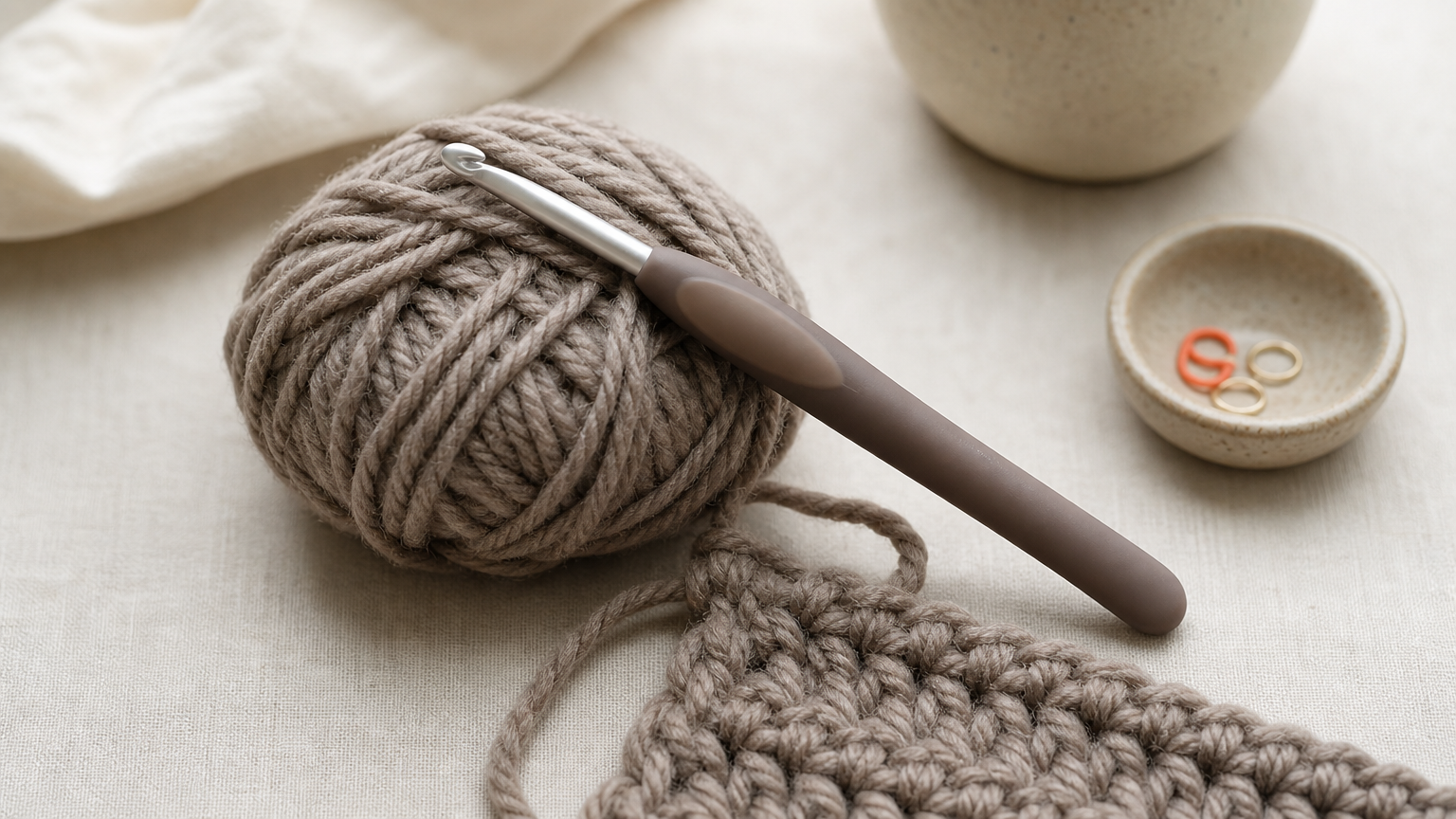
Ergonomic-handle crochet hooks are the single best upgrade a new crocheter can make before ever picking up yarn. Instead of a thin metal or plastic shaft you grip like a pencil for hours, these hooks have a molded, cushioned handle that spreads pressure across your palm. That difference matters more than most beginners expect, since hand fatigue is one of the top reasons people quit crocheting in their first week.
Key features
Most ergonomic hooks pair a standard aluminum or steel hook tip with a soft rubber or polymer grip shaped to fit your fingers naturally. Brands like Furls, Clover Amour, and Prym Ergonomics all use this same basic idea, though the exact shape and firmness of the grip varies. Look for a flat thumb rest on the shaft, which helps you keep the hook rotated at a consistent angle so your stitches stay uniform while you’re still learning tension.
A comfortable grip does more for a beginner’s progress than any fancy stitch pattern ever will.
Best hook size for beginners
A size H-8 (5.0mm) ergonomic hook is the sweet spot for anyone starting out. It pairs perfectly with worsted weight yarn, the most common yarn weight in beginner patterns, and it’s large enough that you can actually see your stitches form as you work.
Price range
Single ergonomic hooks typically run $6 to $12 each, while a boxed set of six to ten sizes costs $20 to $35. That’s a fair jump from bare aluminum hooks, but most crocheters say the wrist relief is worth every extra dollar within the first few projects.
Pros and cons
- Pro: Reduces hand and wrist strain during long practice sessions
- Pro: Textured grip prevents slipping when your palms get sweaty
- Pro: Consistent thumb placement helps beginners keep even tension
- Con: Bulkier handles can feel awkward for people with smaller hands
- Con: Costs more upfront than basic aluminum hooks
- Con: Not always available in every size at local craft stores
2. Classic aluminum crochet hooks
Before ergonomic grips existed, every crocheter learned on a plain aluminum hook, and honestly, plenty of experienced makers still prefer them. These are the simple, lightweight hooks you probably picture when you think of a crochet needle for beginners: a smooth metal shaft with a hook on one end and a flat thumb rest stamped into the middle. Boye and Susan Bates are the two names you’ll see most often, and both have been making these hooks for decades without changing much.
Key features
Aluminum hooks are slick and slide through stitches fast, which some beginners love once they get past the initial learning curve. The smooth surface means yarn glides easily, so you’re not fighting friction while you’re already fighting to remember which loop goes where.
A hook doesn’t need padding to teach you good stitches, just a size that matches your yarn.
Best hook size for beginners
Stick with an H-8 (5.0mm) or I-9 (5.5mm) here too. These sizes work with worsted weight yarn and give you enough room to see each stitch clearly as you practice.
Price range
A single aluminum hook costs $2 to $5, and a full set of ten to twelve sizes runs $8 to $15. It’s the cheapest way to try crochet before deciding if you want to invest more.
Pros and cons
- Pro: Extremely affordable and widely available
- Pro: Lightweight and easy to pack for travel
- Con: Thin handles cause hand fatigue during long sessions
- Con: Can slip from sweaty hands
3. Complete beginner crochet hook sets
Complete beginner sets bundle everything a new crocheter needs into one box: multiple hook sizes, a case, and often a few extras like stitch markers and yarn needles. If you’re not sure yet whether you’ll stick with the hobby, this is the smartest way to test crochet needles for beginners without buying sizes one at a time and guessing wrong.
Key features
Good beginner sets include a range from small steel hooks (used for thread crochet) up through larger sizes for chunky yarn, all housed in a zippered case or roll. Some, like the Clover Amour or Boye sets, mix ergonomic and aluminum designs so you can compare grip styles before committing to one.
One set lets you test five grip styles before you spend money on your favorite.
Best hook size for beginners
Even inside a full set, you’ll reach for the H-8 (5.0mm) or I-9 (5.5mm) hooks most often, since these match worsted weight yarn used in the majority of beginner patterns.
Price range
Sets typically cost $15 to $30 for nine to twelve hooks, which works out cheaper per hook than buying individually.
Pros and cons
- Pro: Covers nearly every project size you’ll need as a beginner
- Pro: Comes with a case that keeps hooks organized
- Pro: Cheaper per hook than buying single pieces
- Con: Includes sizes you may never actually use
- Con: Quality varies more between hooks in cheap sets
4. Bamboo and wood crochet hooks
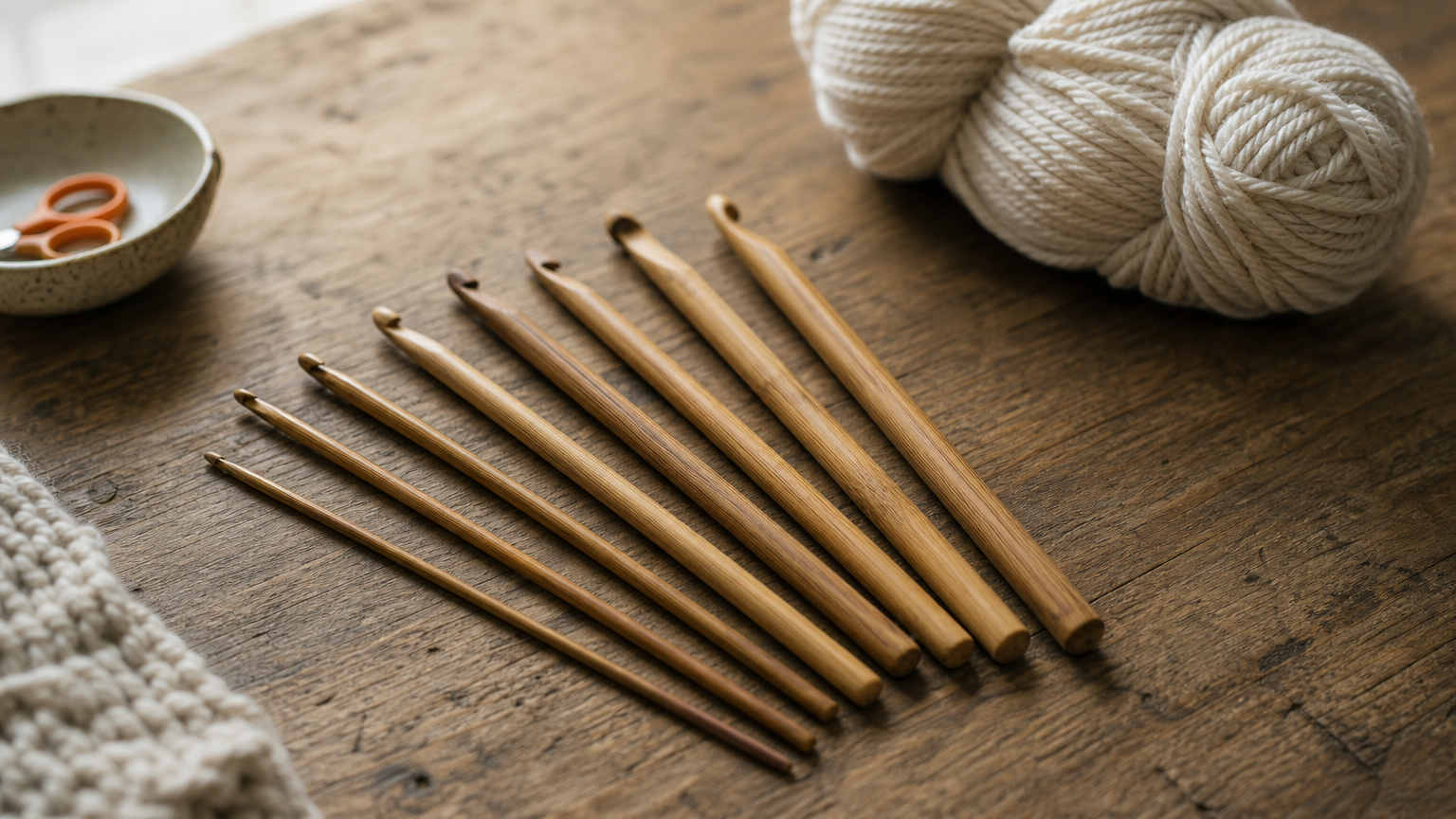
Bamboo and wood hooks trade the cold, slick feel of metal for something warmer and grippier in your hand. If you’ve ever had a stitch slide right off an aluminum hook mid-row, you’ll notice the difference immediately. These hooks are carved from a single piece of bamboo, birch, or other hardwood, then sanded smooth so the yarn still moves but doesn’t skate away from you.
Key features
Wood grip naturally, thanks to a slight texture in the material that most metal and plastic hooks lack. This makes them a favorite pick among crocheters who tension their yarn tightly, since the extra friction slows the yarn just enough to prevent stitches from popping loose. The lightweight material also means less strain during long sessions, even without a padded handle.
A little natural friction can save you more dropped stitches than any fancy grip.
Best hook size for beginners
An H-8 (5.0mm) or I-9 (5.5mm) bamboo hook works well with worsted weight yarn, the same range that suits aluminum and ergonomic hooks.
Price range
Single bamboo hooks run $4 to $9, and full sets cost $15 to $25, putting them right between aluminum and ergonomic pricing.
Pros and cons
- Pro: Warmer, more comfortable feel than metal
- Pro: Extra grip helps prevent slipping stitches
- Pro: Quiet to work with, no metal clicking sound
- Con: Can splinter or wear down over years of heavy use
- Con: Slower yarn glide than aluminum for fast crocheters
5. Soft-grip hooks for arthritis and wrist pain
Soft-grip hooks take the ergonomic idea a step further, using an extra-thick, extra-cushioned handle designed specifically for people who deal with arthritis, carpal tunnel, or general wrist pain. If gripping a thin hook for more than a few minutes leaves your fingers aching, this category solves a real problem rather than just adding comfort. Many beginners with chronic hand pain assume crochet isn’t for them until they try one of these hooks and realize the craft was never the issue, the hook was.
Key features
These hooks use a wider, often oval-shaped handle made from dense foam or molded silicone, sometimes with a slight curve that keeps your wrist in a neutral position instead of bent. Furls Streamline and Clover Soft Touch are two popular options built around this idea. The oversized grip distributes pressure across your whole hand instead of concentrating it in your fingers.
A hook that doesn’t hurt to hold is the difference between quitting after a week and crocheting for years.
Best hook size for beginners
Stick with H-8 (5.0mm) here too. The larger handle diameter combined with a mid-range hook size keeps tension loose and easy to manage, which matters even more when you’re also managing joint pain.
Price range
Expect to pay $10 to $18 per hook, or $30 to $45 for a small set of three to five commonly used sizes.
Pros and cons
- Pro: Significantly reduces joint and wrist strain
- Pro: Neutral wrist position lowers repetitive stress
- Con: Bulky handles don’t fit in every project bag
- Con: Higher price per hook than most other styles
6. Interchangeable and Tunisian hook sets
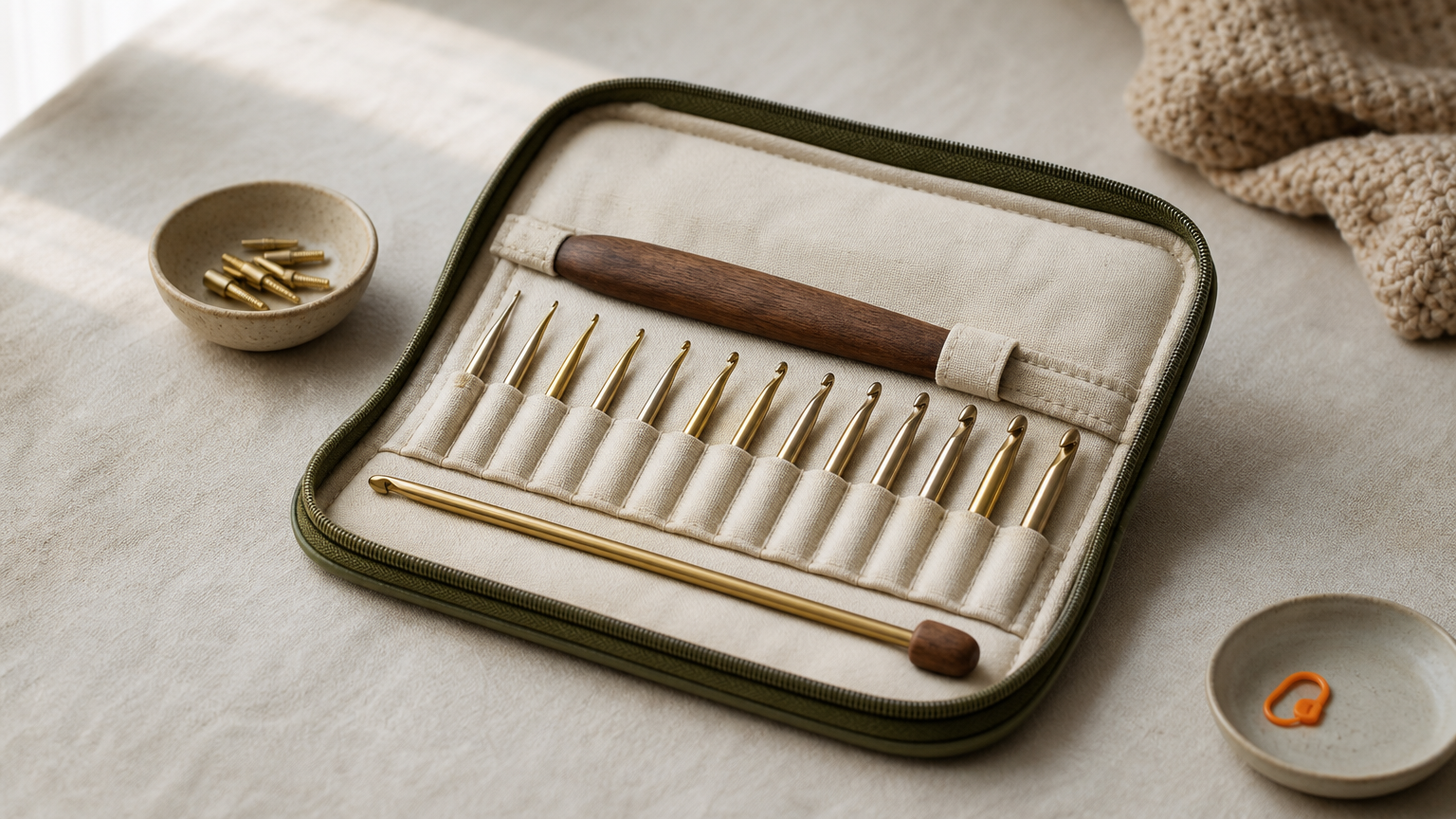
Interchangeable and Tunisian hook sets swap the fixed hook-and-handle design for hook tips that screw onto a shared handle, plus longer straight hooks for Tunisian crochet. If you already suspect you’ll want to try Tunisian crochet or afghan stitch down the road, this style lets you experiment without buying a whole separate toolkit. It’s a step up in complexity from the other options on this list, so most beginners try one of the earlier hooks first before adding this one to their collection.
Key features
Each set includes a range of screw-on hook tips in different sizes, one or two ergonomic handles, and often a set of long Tunisian hooks with a stopper on the end to hold extra loops. The interchangeable design means you only need one comfortable handle for every size, which saves money over buying a full set of fixed hooks.
One handle, many tips, means you never have to relearn your grip every time you change sizes.
Best hook size for beginners
Start with the H-8 (5.0mm) tip for regular crochet and a matching size Tunisian hook once you’re ready to try that technique.
Price range
Full interchangeable sets cost $25 to $50, depending on how many tips and handles are included.
Pros and cons
- Pro: One ergonomic handle works across multiple hook sizes
- Pro: Opens the door to Tunisian crochet without extra purchases
- Con: Screw-on tips can loosen mid-project
- Con: More expensive upfront than a basic hook set
Choosing the hook that feels right in your hand
None of these seven options is objectively “the best.” The right crochet hook for beginners is the one you’ll actually pick up again tomorrow, not the one with the fanciest reviews online. Grab an H-8 in whatever style catches your eye first, aluminum, ergonomic, or bamboo, and pair it with worsted weight yarn while you learn your basic stitches.
Once you’ve made a few rows, you’ll know if your hand wants more cushion or if plain metal suits you fine. That’s normal. Most crocheters end up owning a mix of styles for different projects and moods anyway.
Stop overthinking the aisle full of hooks and start stitching. When you’re ready for a project to practice on, browse the free step-by-step patterns at My Crochet Universe and pick something that actually excites you to finish.