
Giant Crochet Mushroom: 1 Easy Yarn-Math Hack
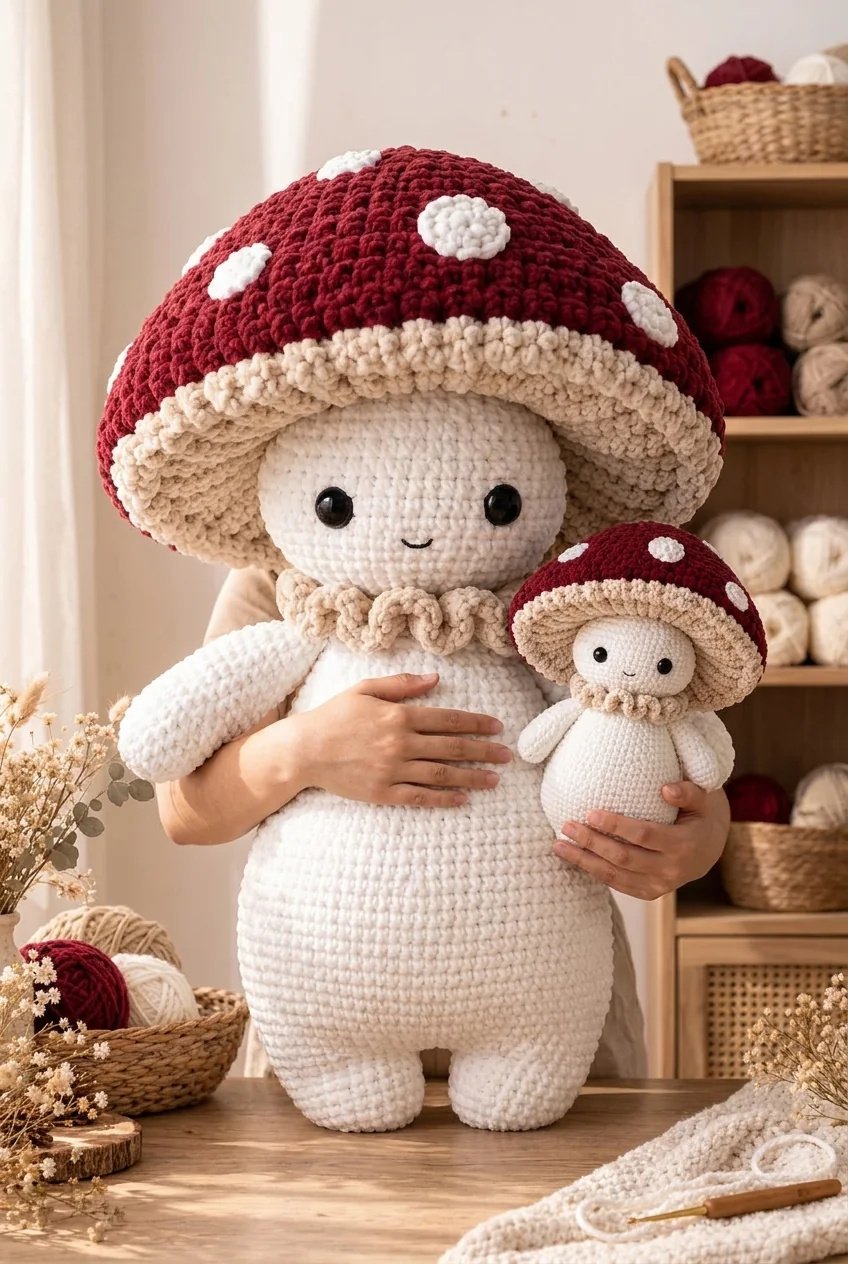
Last month I posted a photo of my hands holding a mushroom doll the size of a toddler. The saves exploded. The comments were lovely — and completely useless. “So cute!” “Adorable!” Nobody asked the only question that actually matters: how much yarn does that thing eat?
Because here’s what nobody tells you about making a giant crochet mushroom: the difference between a plushie that stands proud on your shelf and a half-stuffed puddle of chenille is not talent. It’s not a secret pattern. It’s ten minutes of math that almost nobody bothers to do.
I almost didn’t do it either. I nearly walked into the craft store, grabbed armfuls of blanket yarn on pure vibes, and walked out $60 poorer with a half-finished disaster. Instead, I did one small thing first — and my giant crochet mushroom came out exactly the size I predicted, on the first try, for about $30.
This article is that small thing.
The Trend Nobody Prices Out
Oversized amigurumi is having a genuine moment. Giant bees, giant frogs, and yes — the giant crochet mushroom that keeps showing up on your Pinterest feed. Every scroll brings another maker cradling a plushie the size of a houseplant, and every comment section fills up with the same sentence: “I need to make this.”
But scroll through those same comments and you’ll find the follow-up question that never gets answered: “Okay, but how?”
Here’s the quiet truth about the giant plushie trend: the pattern was never the barrier. Patterns scale for free. The barrier is materials — how much yarn, which weight, what hook, how much stuffing, and what it will all cost. That’s the part nobody photographs. That’s the part nobody posts.
Until now.
So let me state my entire argument in one unmistakable sentence: you do not need a special pattern, advanced skills, or a big budget to make a giant crochet mushroom — you need one 10-minute swatch and the simple yarn math that flows out of it, and by the end of this article, you’ll have both, plus the exact pattern I scaled to do it.
The 1 Easy Yarn-Math Hack Behind Every Giant Crochet Mushroom
Let’s kill the biggest myth first.
Myth: to make a giant version of an amigurumi doll, you need a giant pattern — rewritten, recalculated, probably sold separately. Reality: the pattern stays identical. Stitch for stitch, row for row. Only the materials change.
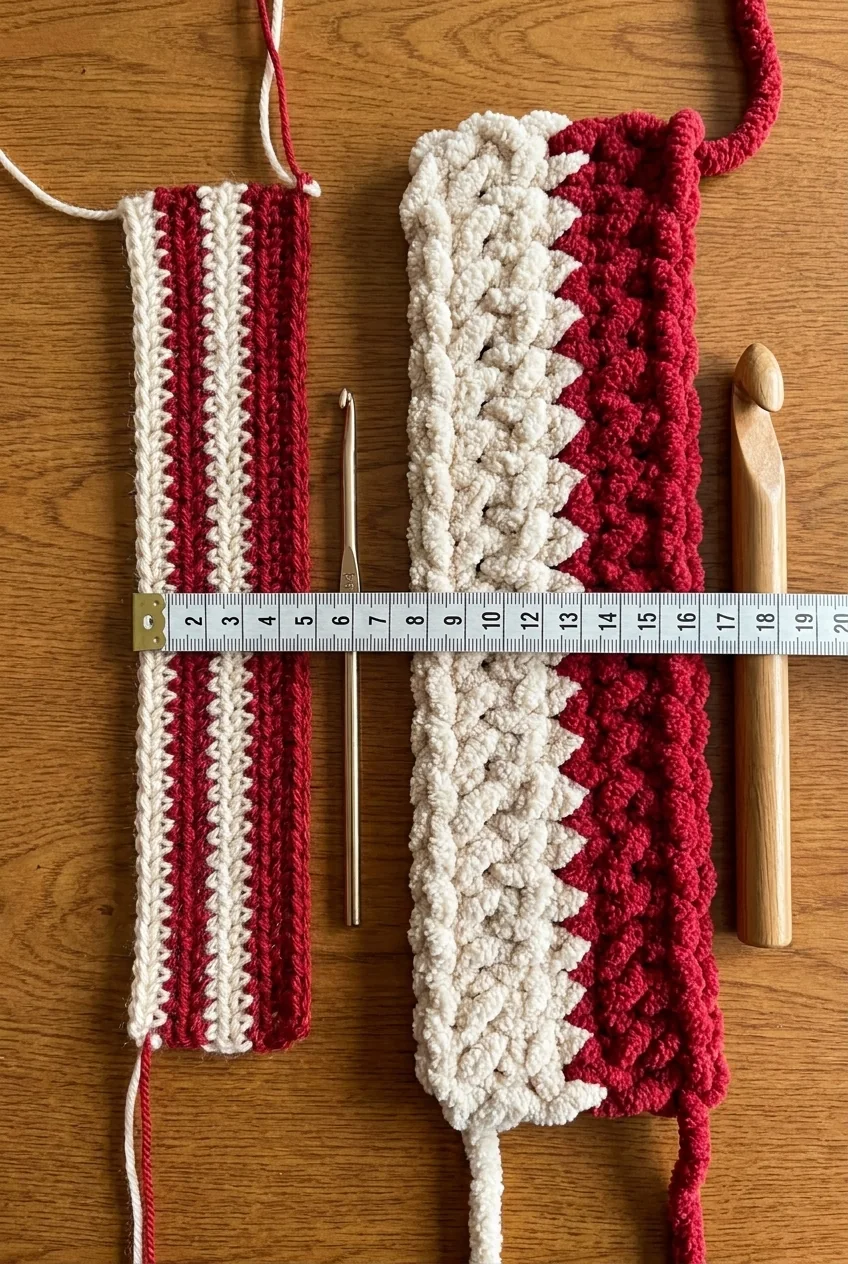
Here’s why. Amigurumi size is just stitch size multiplied by stitch count. The stitch count lives in the pattern, and that never changes. Stitch size lives in your yarn — and that scales dramatically. Move from a DK-weight yarn on a 2.5 mm hook to a super bulky blanket yarn on a 9 mm hook, and every single stitch becomes roughly four times taller and four times wider. Same pattern, same hands, same stitches — a doll four times the size. (If you want the official definitions of yarn weights, the Craft Yarn Council publishes the standard weight system every designer uses. Craft Yarn Council yarn weight standards)
So the hack — the one easy hack in the title — is this:
Swatch first. Buy second. Never the other way around.
Crochet a 10-stitch swatch in a yarn like the original pattern calls for. Then crochet the same 10 stitches in your blanket yarn. Measure both. Divide the big number by the small one. That ratio is your scale factor — and it predicts the final height of your giant crochet mushroom before you’ve spent a single dirham, dollar, or euro.
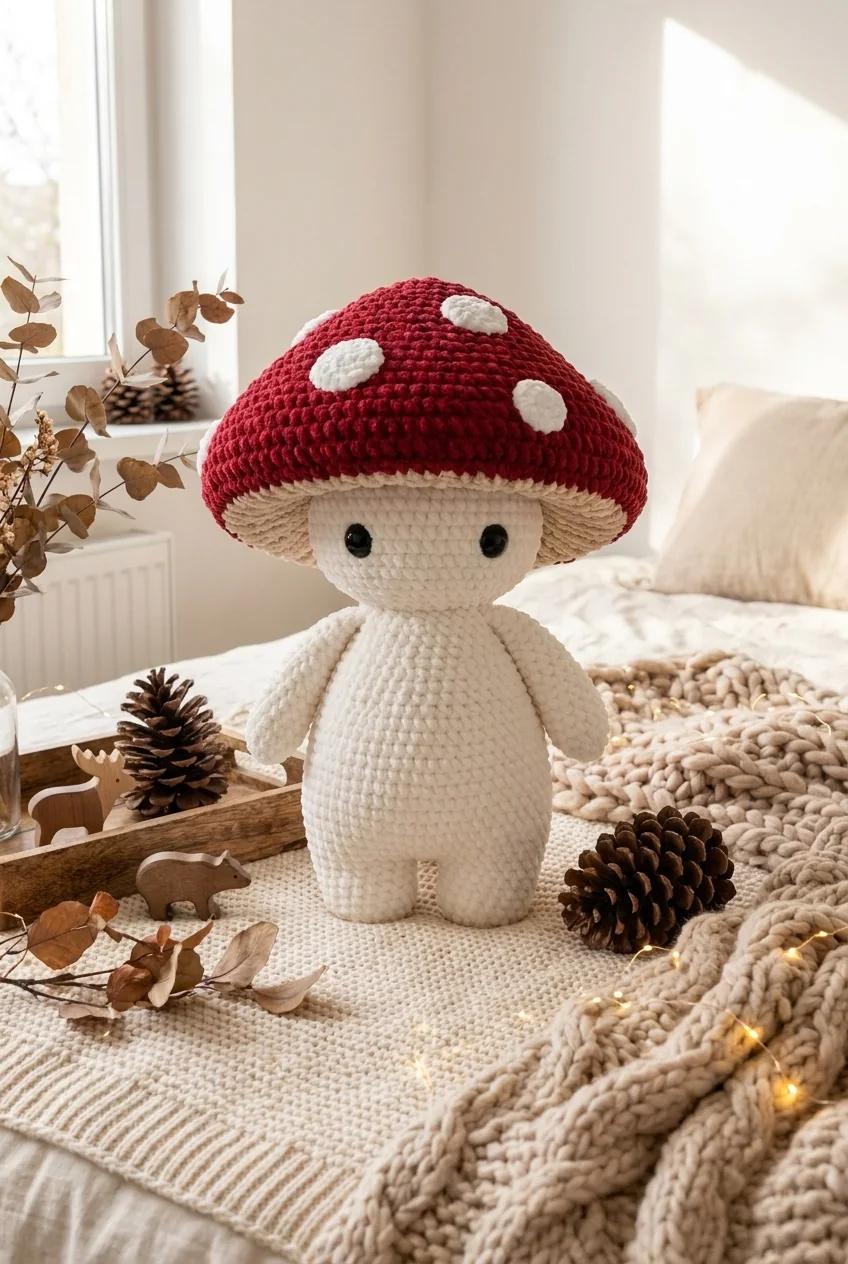
My ratio was 1:4. My original doll stands 15 cm tall. Multiply, and I knew — before buying anything — that my giant would stand about 60 cm. It stands 58. Close enough that I trust the math completely now.
What My Giant Crochet Mushroom Actually Took
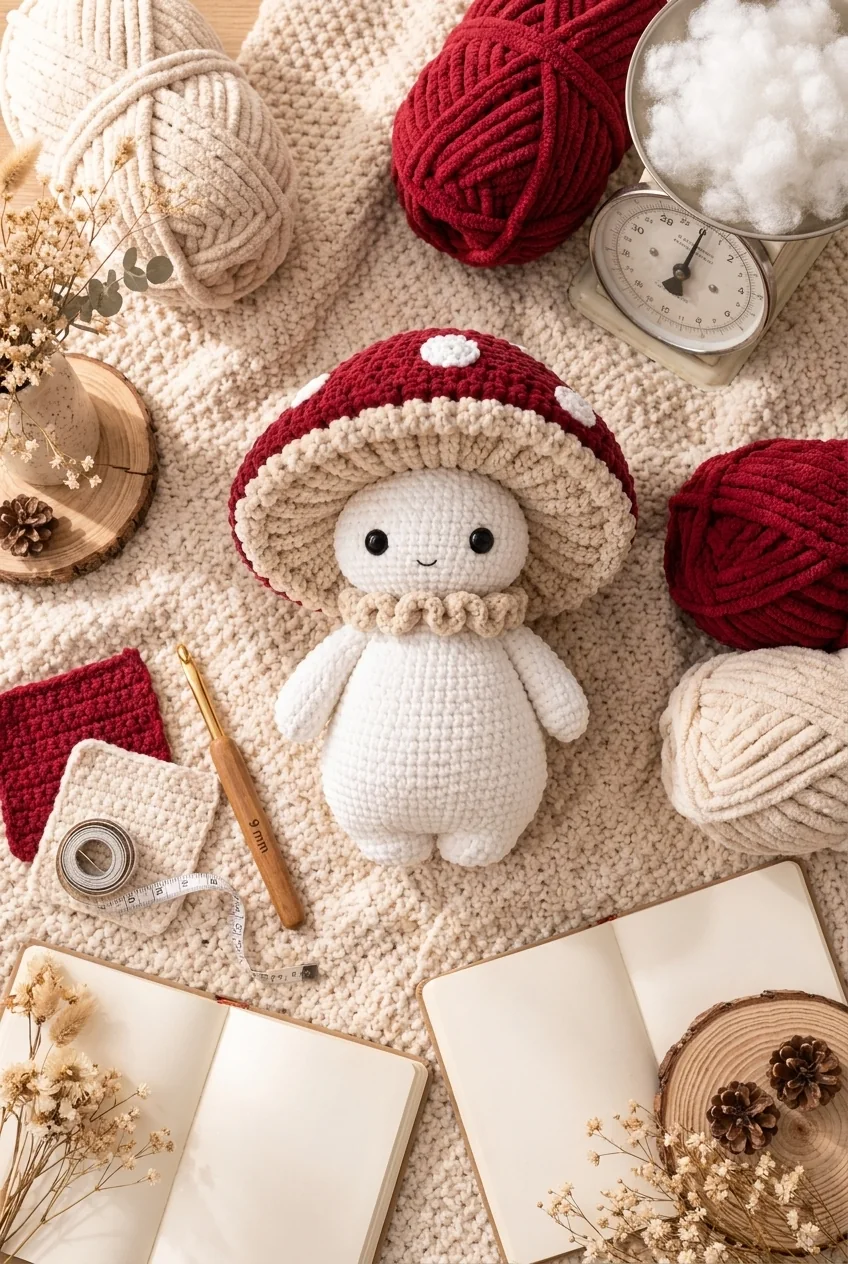
Since nobody else will show you the receipt, here’s mine. Prices are from my local craft store — yours will vary, but the proportions won’t:
| Material | Amount | Approx. cost |
|---|---|---|
| Blanket yarn (red, cream) | 3 skeins (~600 g used) | ~$18 |
| Polyester stuffing | ~1 kg | ~$9 |
| Face embroidery (black yarn) | stash | $0 |
| Total | ~$30 |
For scale: a comparable giant plush from a home-decor store runs $80 or more — and it wasn’t made by you.
Two more honest numbers from my build. First, the giant ate about six to seven times the yarn weight of the original doll. That’s my rule of thumb now: whatever the small version used, budget seven times that for the giant crochet mushroom version. Second, the whole thing took one relaxed weekend — not because I’m fast, but because big stitches grow absurdly quickly. Six rounds of a giant cap is a full afternoon of visible progress.
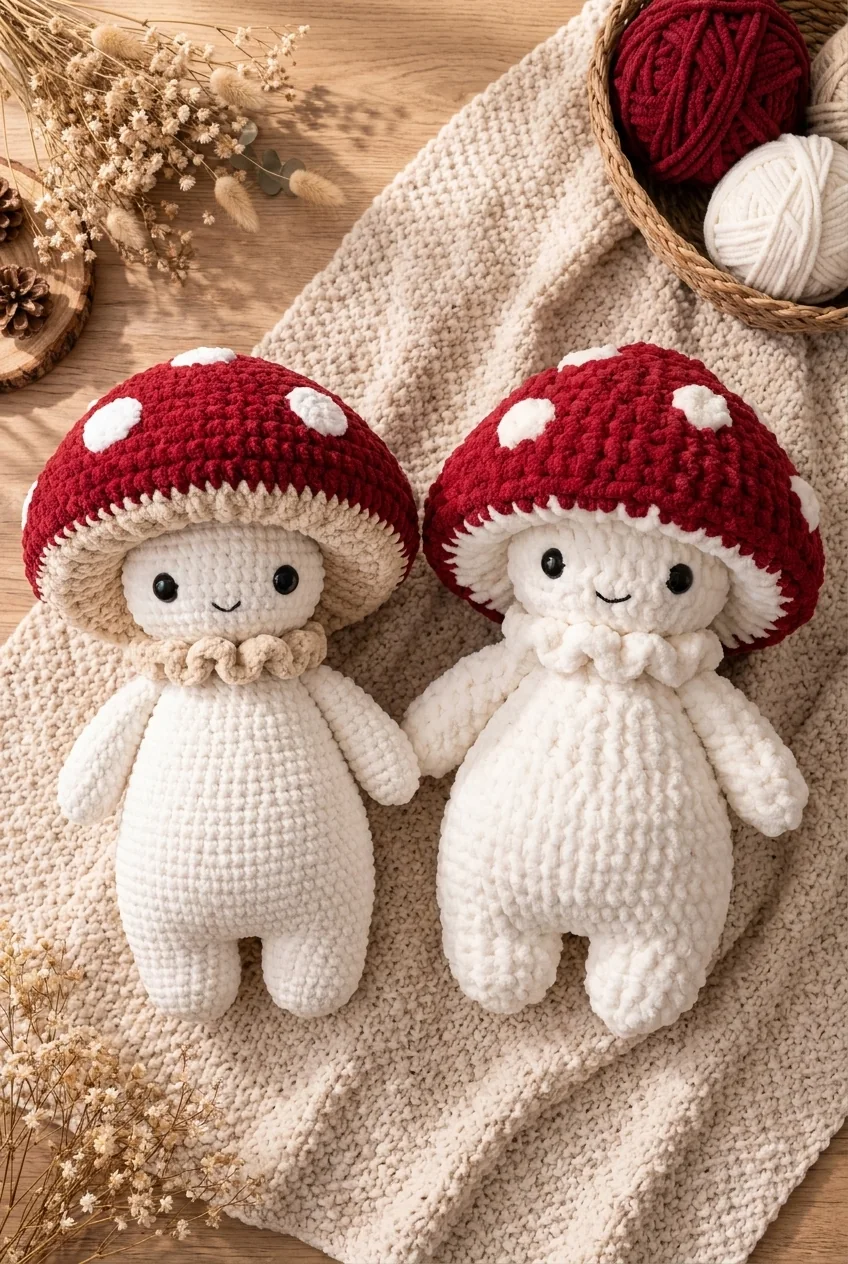
A quick story about why fiber choice matters as much as thickness. A friend of mine scaled the same pattern using a jumbo roving yarn while I used chenille blanket yarn. Identical stitch counts. Hers came out bigger — and floppier, because roving has no twist and no density. Mine stands on its own; hers leans like a sleepy sunflower. Same math, different material, completely different result. When you do your swatch, you’re not just measuring size — you’re testing personality.
The Two Objections I Hear Every Time
“Blanket yarn makes holey amigurumi. The stuffing will show.” Fair — if you use the hook size printed on the yarn label. That size is meant for drapey blankets, not dense dolls. The fix is boring and foolproof: go down one to two millimeters until your stitches form a fabric you can’t see through, and use invisible decreases. My giant crochet mushroom shows exactly zero stuffing, and my tension is nothing special. Tight fabric is a hook-size decision, not a skill level.
“Making a giant one must be expensive.” You’ve seen the receipt: about $30. But let me push back on the assumption underneath the objection. When did “handmade” start meaning “should cost less than a factory”? You’re not competing with mass production — you’re making the thing mass production can’t sell: a one-of-one giant mushroom with your color choices and your hands in it. And speaking of hands — why should only factories get to make the giant plushies?
Your Weekend Plan
This is what “doing it” actually looks like:
- Saturday morning (20 minutes): crochet your two swatches, measure them, get your scale factor — then buy yarn with a number in your head, not a guess.
- Saturday afternoon: start the cap. It’s the biggest piece and the most satisfying.
- Sunday: body, arms, ruffle collar, face, assembly. Done.
Five rules that will save you pain:
- Swatch first, buy second — this is the whole article in five words
- Size your hook down until light can’t pass through the stitches
- Stuff the base firmly and the cap lightly, so the doll stands instead of slumping
- Embroider the face before you close the head — future you will be grateful
- Weigh your yarn before and after, and write the numbers down; that’s your personal data for every giant you’ll make after this one
Why This Matters More Than a Doll
Look at your Pinterest feed honestly for a second. It’s full of giant plushies — made by other people. Saved by you. Admired by you. Not made by you.
The distance between watching a trend and owning it is not talent, money, or time. It’s one swatch and one weekend. That’s the whole gap.
And there’s something worth naming about scale itself. A 15 cm mushroom doll is charming. A giant crochet mushroom is a presence — it sits on a bed or a shelf and changes the room. People who visit ask about it. People who see the photos ask how. If you’ve ever wanted your craft to feel less like a hobby you hide and more like a thing you’re known for, this is the fastest route I’ve found. original mushroom doll pattern
The giant plushie moment is happening now. Trends don’t wait for anyone to feel ready.
Conclusion
So here’s the whole thing, fresh and simple: amigurumi size is stitch size, stitch size is yarn, and yarn is measurable in twenty minutes with a swatch. My ratio was 1:4, my total was about $30, my timeline was one weekend, and my result is a 58 cm mushroom that makes everyone who sees it ask the question I actually wanted: how?
You were never missing a special pattern or special hands. You were missing ten minutes of math — and now you have it.
The exact mushroom doll pattern I scaled — the cap, the ruffle collar, the whole shape — is the one in my Etsy shop. Start with the small version if you want to learn the construction, or go straight to blanket yarn and make the giant crochet mushroom your feed has been taunting you with. Either way, the pattern is the same. Only the size of your ambition changes.
Frequently Asked Questions
Do I need a different pattern for a giant crochet mushroom?
No. A giant crochet mushroom can use the same stitch counts as the small doll when you scale the yarn and hook together. Make a swatch first because the finished ratio depends on your exact materials and tension.
How much blanket yarn should I buy?
The article’s sample used about 600 g across red and cream, but brands and tension vary. Swatch, estimate from the scale factor, keep receipts, and buy from one dye lot when possible.
How do I stop stuffing from showing?
Choose a hook smaller than the blanket-yarn label suggests and test the fabric against light. Dense stitches and invisible decreases help contain stuffing without forcing extreme hand tension.
Can a beginner make the giant version?
Yes, if the maker is comfortable with single crochet, increases, decreases and assembly. Starting with the small doll can make the giant crochet mushroom construction easier to understand.