
My Crochet Universe · Pocket Panda series
Easy Amigurumi: 1 Perfect Panda Keychain in 2 Hours
A practical, image-rich guide for crocheters who want a polished result.
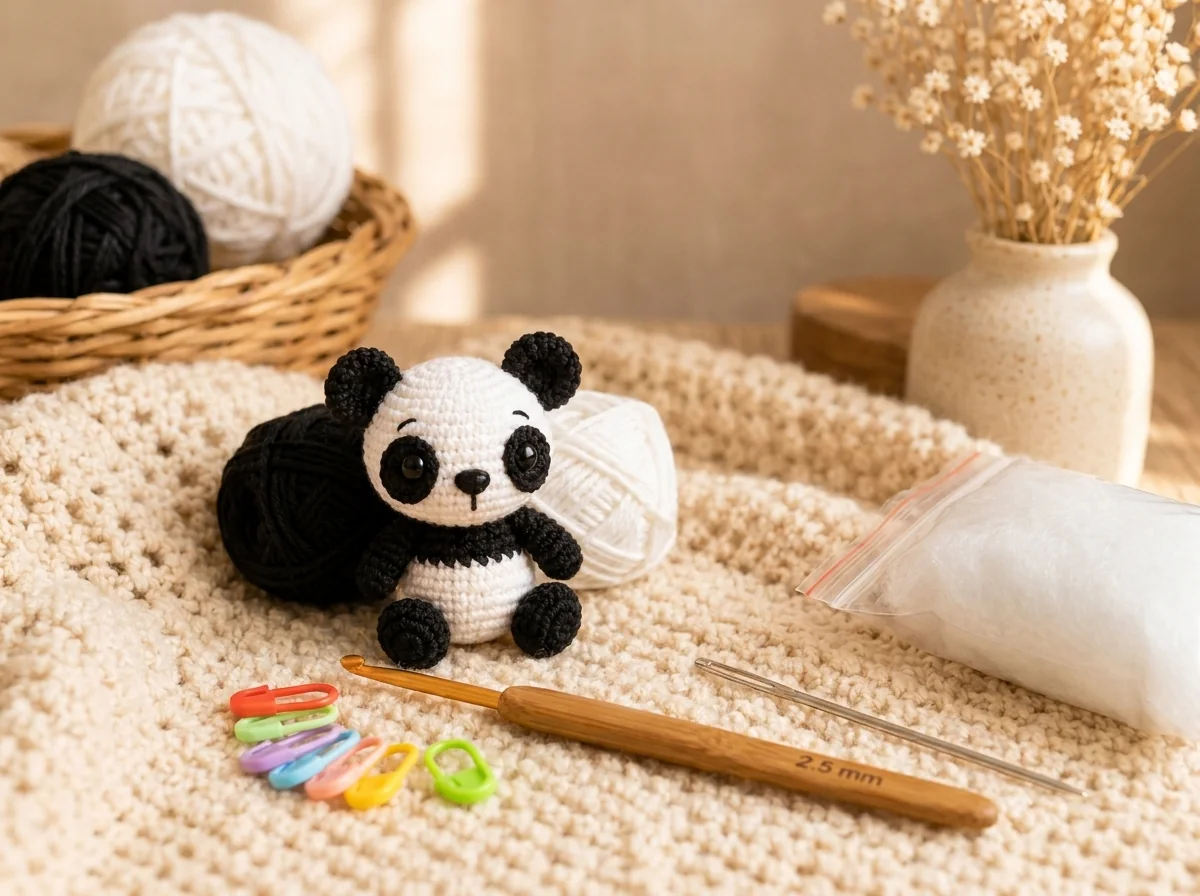
The first project should finish
An easy amigurumi project becomes manageable when each small skill is practiced in sequence.
The most encouraging amigurumi project is not necessarily the simplest-looking one. It is the one that gives a beginner a complete result before motivation disappears.
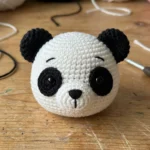
The Pocket Panda is written for an adventurous beginner and finishes at approximately 8–10 cm. It introduces continuous rounds, increases, decreases, stuffing, face placement, sewing, and hardware attachment in a compact project.
The important word is “adventurous.” This is not a promise that every first-time crocheter will finish in two hours. Your first attempt may take longer, especially if you are learning the magic ring or working with a smaller hook. The two-hour target becomes more realistic once you understand the rhythm and prepare your materials.
Why a small panda is a good learning project
Tight single crochet is the foundation of a neat easy amigurumi surface.
Large amigurumi projects can hide mistakes for a long time. You may spend several days before discovering that the shaping is wrong. A keychain gives you fast feedback. If a patch is uneven, you notice it immediately. If the stuffing is too loose, the silhouette tells you.
The panda also uses clear shapes:
- A rounded head.
- An oval body.
- Flat ears and eye patches.
- Short arms and rounded legs.
- A small muzzle and flower charm.
Each piece teaches one skill without requiring a full wardrobe of techniques.
The five skills you will practice
Markers prevent an easy amigurumi spiral from drifting at the beginning of each round.
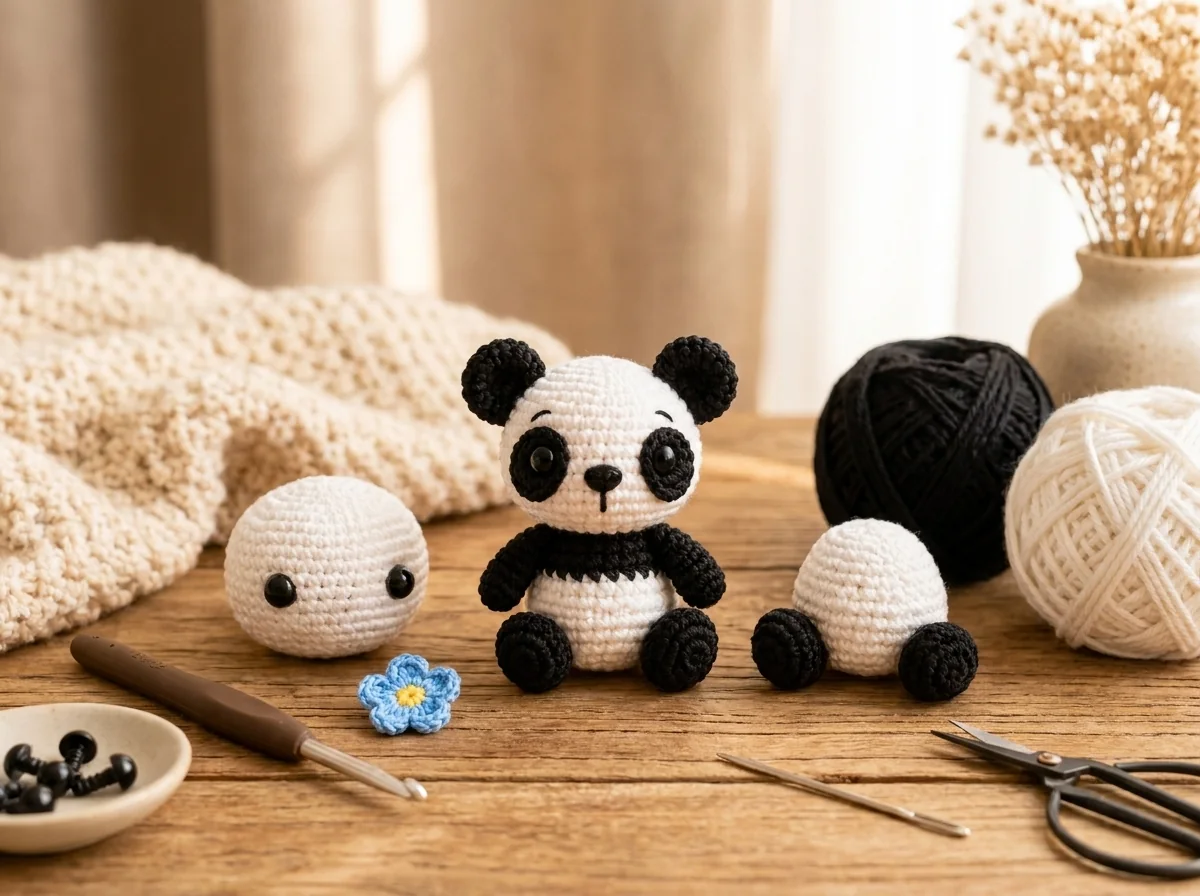
1. Continuous rounds
The head and body are worked in continuous spirals. Use a stitch marker in the first stitch and move it after every round. This prevents the beginning of the round from drifting and helps you follow the exact PDF instructions.
2. Controlled increases and decreases
The shape comes from adding stitches during the expansion rounds and removing stitches during the closing rounds. Count after each round instead of relying on the appearance alone.
3. Stuffing for shape
The body should hold its seated form. Add stuffing gradually, especially as the opening becomes smaller. A firm body and a lightly stuffed muzzle create a clean contrast.
4. Face placement
The eye patches, safety eyes, muzzle, eyebrows, and ears need symmetry. Pin or position before committing to the final stitches. A small adjustment can change the entire expression.
5. Reinforced assembly
A keychain receives more handling than a shelf amigurumi. Sew through multiple stitches, bury the ends, and test the hardware. This is an important lesson for every future wearable or portable crochet project.
The objection: “I cannot make a magic ring”
Controlled stuffing helps an easy amigurumi panda keep a balanced seated shape.
Many beginners treat the magic ring as a wall. It is better to treat it as one technique you can practice separately. Make three small rings with scrap yarn before beginning the panda. Pull them closed, count the stitches, and repeat.
If your first rings are uneven, do not continue into the full project until the center closes firmly enough. The PDF uses magic-ring starts for the major pieces, so a short practice session can save frustration later.
The objection: “Two hours sounds unrealistic”
Careful face placement gives easy amigurumi its character and expression.
It may be unrealistic for your first attempt. That is not failure. A pattern time estimate changes with experience, interruptions, tension, and sewing speed. Use the two-hour idea as a compact-project promise, not as a test of your worth.
For the first panda, divide the work into sessions:
- Session 1: head and muzzle.
- Session 2: body and stuffing.
- Session 3: ears, patches, arms, and legs.
- Session 4: face, flower, and keyring.
This structure keeps the project moving without turning the hobby into a race.
A beginner-friendly success checklist
Reinforced sewing turns easy amigurumi practice into a durable finished keychain.
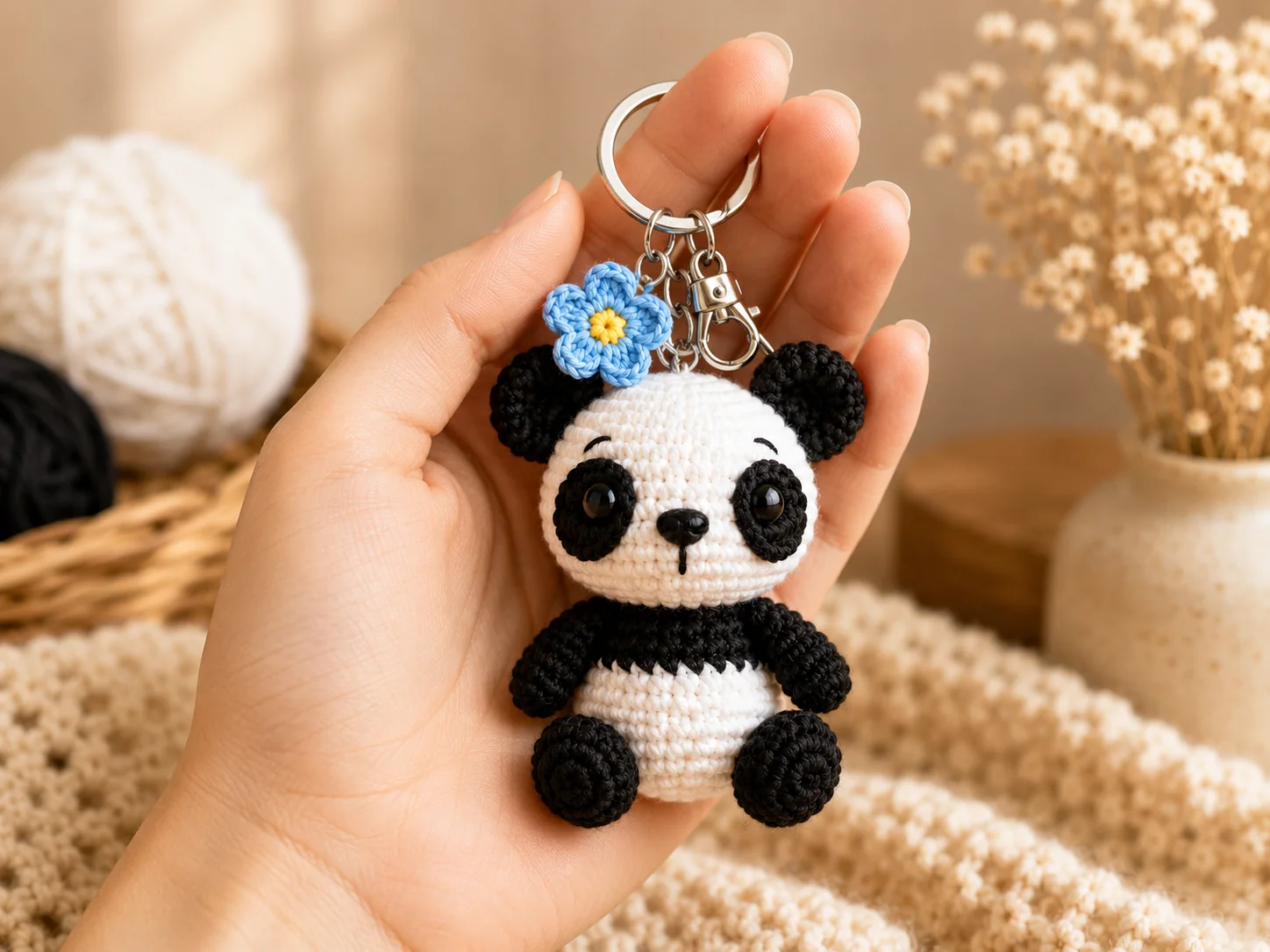
- Use the recommended 2.5 mm hook, or adjust if your fabric has visible gaps.
- Mark every continuous round.
- Count the stitches after increases and decreases.
- Place the safety eyes between the specified rounds before closing the head.
- Use embroidered eyes instead of plastic safety eyes for a version intended for a child-free decorative setting.
- Reinforce every hardware connection.
- Keep small parts away from children under three.
Conclusion
Finishing one easy amigurumi project builds confidence for the next pattern.
Easy amigurumi does not mean no learning. It means the learning is contained inside a project you can finish. The Pocket Panda introduces the essential skills in a small, expressive design that can become a keychain, bag charm, or handmade gift.
Download the complete pattern from Etsy for the exact rounds, photo references, face assembly, flower variation, hardware attachment, safety guidance, and selling terms. [Etsy pattern link — set to nofollow]
Your first finished amigurumi should be small enough to finish and cute enough to keep.
Helpful answers
Frequently asked questions
What skills does this easy amigurumi project teach?
It practices continuous rounds, increases, decreases, tight fabric, controlled stuffing, face placement, sewing, and reinforced assembly in one compact project.
What if I cannot make a magic ring?
Practice with smooth light-colored yarn first, or use an adjustable alternative your trusted crochet teacher recommends. Keep the center tight enough to contain stuffing.
Why is a 2.5 mm hook used with worsted yarn?
The smaller hook creates dense fabric. Amigurumi needs tighter stitches than many garments so polyester filling stays hidden.
Can the safety eyes be replaced?
Yes. Embroidered eyes are the safer option for a soft decorative panda, although the metal keyring still makes the finished object unsuitable for children under three.
Can a beginner really finish it in two hours?
Treat two hours as an aspirational headline, not a guarantee. Your first easy amigurumi panda may take longer while you check counting, placement, and secure joins.