
Sheep Bag Crochet Pattern: A Playful Plush Shoulder Bag
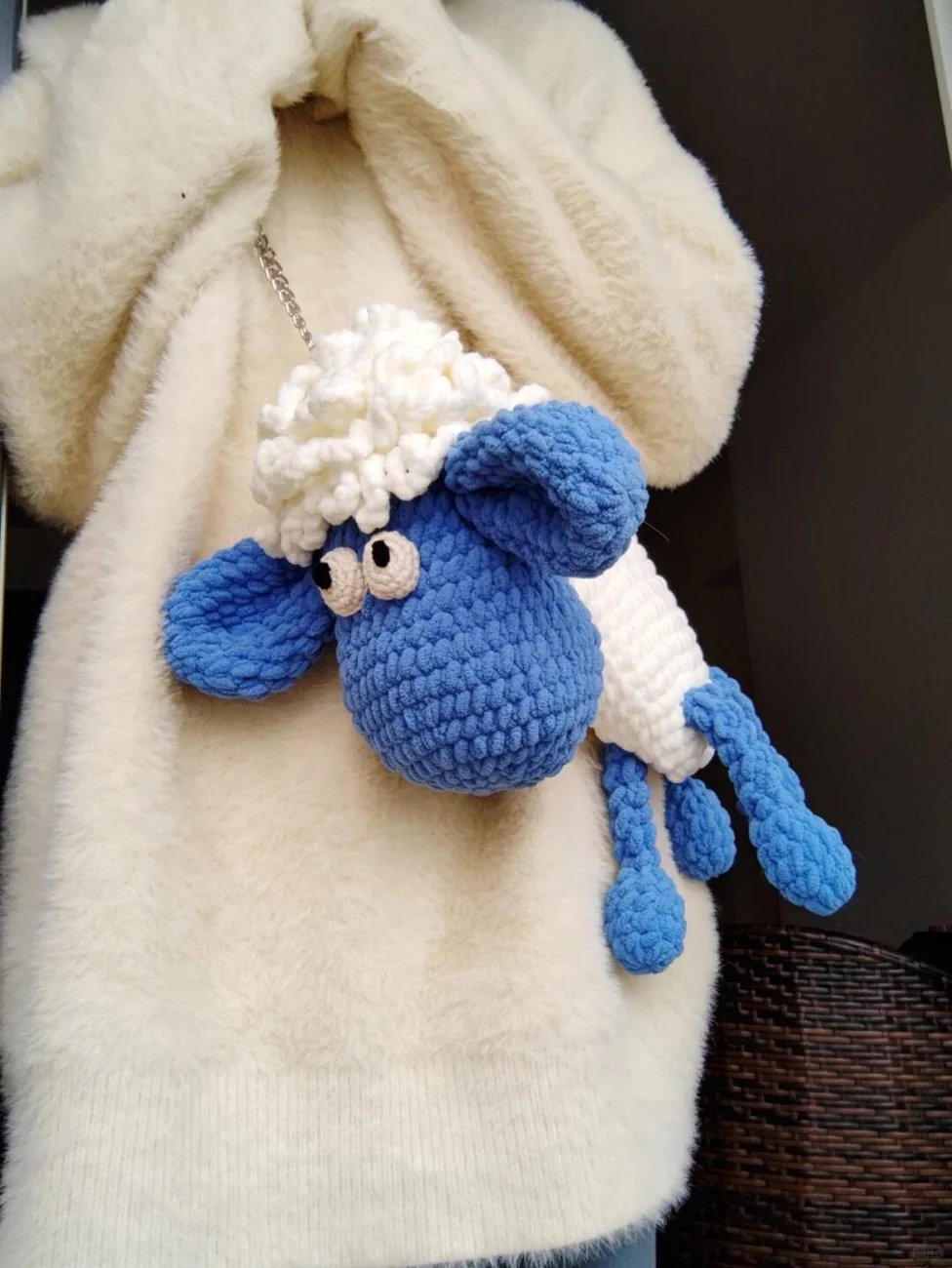
Some bags quietly finish an outfit. This one brings the personality. A sheep bag crochet pattern combines a blue, oversized face, broad floppy ears, bright white curls, and four dangling legs into an accessory that feels more like a little companion than an ordinary pouch.
The appeal is in the contrast: a soft white body against vivid blue features, rounded stitches beside loose-looking curls, and a slim chain above a generously shaped head. This guide looks at the design, useful construction checkpoints, finishing choices, and styling ideas that help the whole character feel intentional.
Sheep Bag Crochet Pattern: The Design at a Glance
The strongest feature of this sheep bag crochet pattern is its silhouette. The face projects beyond the white pouch rather than sitting flat against it. Large ears widen the head, while the narrow legs create movement below the body without adding another bulky shape.
The white curls give the character its sheep-like identity before any tiny detail is considered. They frame the forehead instead of covering the eyes. A small blue tail repeats the limb color at the opposite end of the pouch, bringing the palette back into balance.
| Design element | What gives it character |
|---|---|
| Head | Rounded blue face with small white eyes and dark pupils |
| Ears | Two broad, cupped blue ears |
| Fleece | White curled texture concentrated around the crown |
| Pouch | White body with a soft, rounded outline |
| Limbs | Four narrow blue legs with fuller ends |
| Carry detail | Silver-tone chain |
A sheep bag crochet pattern works best when those parts read as one animal. Before concentrating on individual stitches, look at the relationship between the head, pouch, and legs. The head should remain the focal point; the other details support it.
Choose Yarn for Texture and Structure
Plush yarn creates the thick, velvety surface that makes this sheep bag crochet pattern feel so distinctive. Choose blue and white yarns that work comfortably together. Very different thicknesses can make a carefully shaped head look oversized beside its pouch, or leave the ears too thin to hold their cupped form.
Make a small fabric sample before starting the bag. Look for stitches that stay close together without becoming painfully tight to work. Bend the sample, press it gently, and see whether it springs back or stays stretched; a bag needs more consideration than a decorative crochet piece.
- Keep the blue yarn consistent across the face, ears, legs, and tail.
- Compare the white body yarn with the white fleece yarn in natural light.
- Choose a hook that gives useful stitch definition with your actual yarn.
- Keep a yarn needle, removable markers, scissors, and temporary placement pins nearby.
- If adding lining, choose a fabric and sewing method compatible with the finished pouch.
For a sheep bag crochet pattern, hook choice is about the fabric you make, not a universal number. Follow the yarn’s guidance as a starting point, then assess the sample. Don’t force the smallest hook through plush fibers simply to make the surface tighter; split or damaged yarn won’t improve the finish.
Skills to Practice Before Starting
The sheep bag crochet pattern brings together several familiar techniques: oval starts, single crochet, increases, decreases, and sewing shaped pieces. Comfort with each one makes the assembly less frustrating. A small practice oval is especially useful before working on the longer pouch foundation.
Use a removable marker to identify the first stitch of a round and keep a separate tally for repeated rounds. Plush fibers can make individual stitch tops harder to see, so count before the next shaping change rather than trying to diagnose a mismatch several rounds later.
If you’re switching between written instructions and abbreviations, keep US terminology consistent. The Craft Yarn Council abbreviation guide is a helpful reference for single crochet, increases, decreases, and back-loop work. Individual pattern symbols still need their own key.
Shape the Head and Expression
An elongated, rounded head gives this sheep bag crochet pattern its gently comic expression. An oval foundation creates length without requiring a separate protruding muzzle. Keep the shaping even at both ends and compare the outline from above before the head is fully assembled.
The eye pieces are small white forms with dark pupils. Their placement matters more than adding complicated embroidery. Set both eyes in position at the same time, look straight at the face, and compare their height relative to the ears and the lower edge of the fleece.
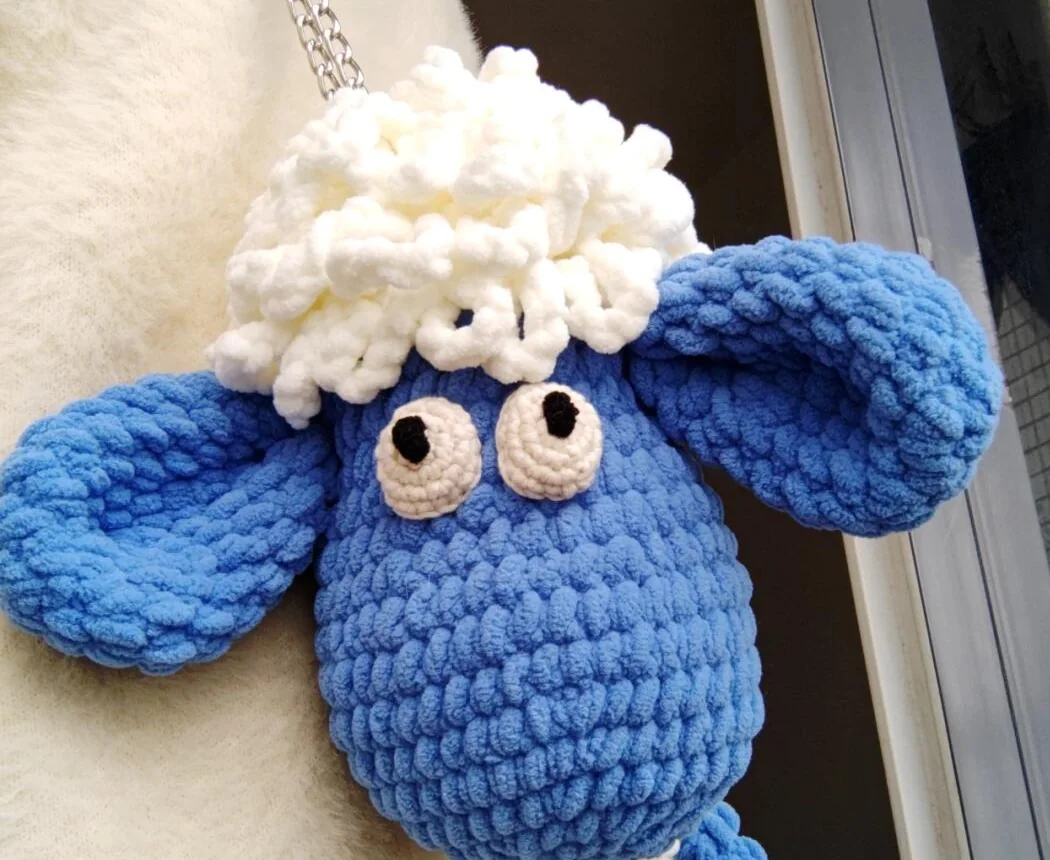
When arranging the sheep bag crochet pattern face, leave enough clear blue fabric around the eyes for the expression to remain readable. If the white curls fall too low, the eyes become crowded. If the eyes are pushed too far apart, the face can lose its centered, curious look.
A temporary placement check is easier than repairing a completed seam. Use removable guides, turn the head to each side, and make sure the eyes still look balanced when the face isn’t viewed perfectly straight on. Remove every temporary pin once sewing is complete.
Balance the White Fleece and Blue Ears
The sheep bag crochet pattern gets much of its texture from the meeting of smooth, rounded fabric and curled white fleece. Keep the fullest curls around the crown so the face has a clear boundary. A little irregularity can look woolly; a completely uncontrolled fringe can hide the character.
The blue ears are broad and slightly cupped, rather than narrow ribbons. Their curved edges help them stand out against the white head texture and white clothing. Pin both ears before securing either one, checking the attachment height as well as the outward angle.
Treat the fleece as a framing device. Arrange the lower curls around the brow, then check whether the eyes and ear openings remain visible. Resist flattening everything into a perfectly smooth cap: the contrast between curls and plush stitches is part of the design.
Build a Pouch That Holds Its Shape
The pouch gives the sheep bag crochet pattern a practical center beneath its decorative head. A long oval foundation develops into a rounded body, with the sides rising above the base. Keeping the early shaping even helps prevent one end from becoming noticeably deeper than the other.
During construction, check the pouch on a flat surface instead of judging it only while it hangs from your hook. Look for a base that sits evenly and sides that rise without an accidental twist. Moving a marker along with the work is a simple way to keep the round boundary visible.
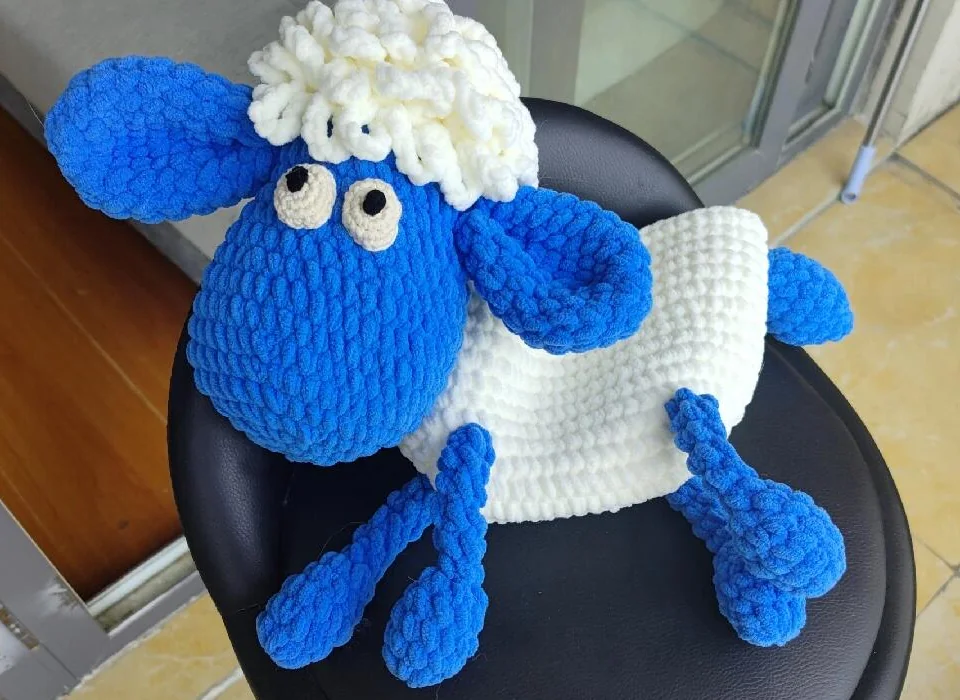
Before treating a sheep bag crochet pattern as an everyday carry, consider the pouch independently from the animal details. The opening should remain accessible, the sides should support light contents, and the decorative head shouldn’t be expected to carry the weight of the bag.
A lining can be a useful optional addition if small objects catch on the fabric or the pouch needs extra support. Fit it to the finished interior rather than choosing measurements by appearance alone. Leave enough ease that the lining and crochet can sit together without pulling the top edge out of shape.
Add the Legs and Tail
Four dangling legs give the sheep bag crochet pattern its playful movement. The fuller lower ends contrast with their narrow upper sections, so the limbs stay recognizable against the white body. Keep their lengths visually consistent and compare them in pairs before attachment.
Lay the pouch flat and test the leg positions before sewing. Check how they look when the bag is upright as well; a tidy flat arrangement can hang differently once gravity pulls the limbs downward. Make adjustments while the attachment points are still easy to move.
The small blue tail balances the head at the opposite end of the sheep bag crochet pattern. It should read as a finishing detail, not compete with the face. Keep its attachment neat and check that it doesn’t cover the opening or interfere with how the pouch rests against clothing.
Bring the Pieces Together
Dry-fitting the pieces is one of the most useful steps in a sheep bag crochet pattern. Bring the head and pouch together before tightening the final seams. The head needs enough presence to carry the expression without causing the whole bag to lean awkwardly forward.
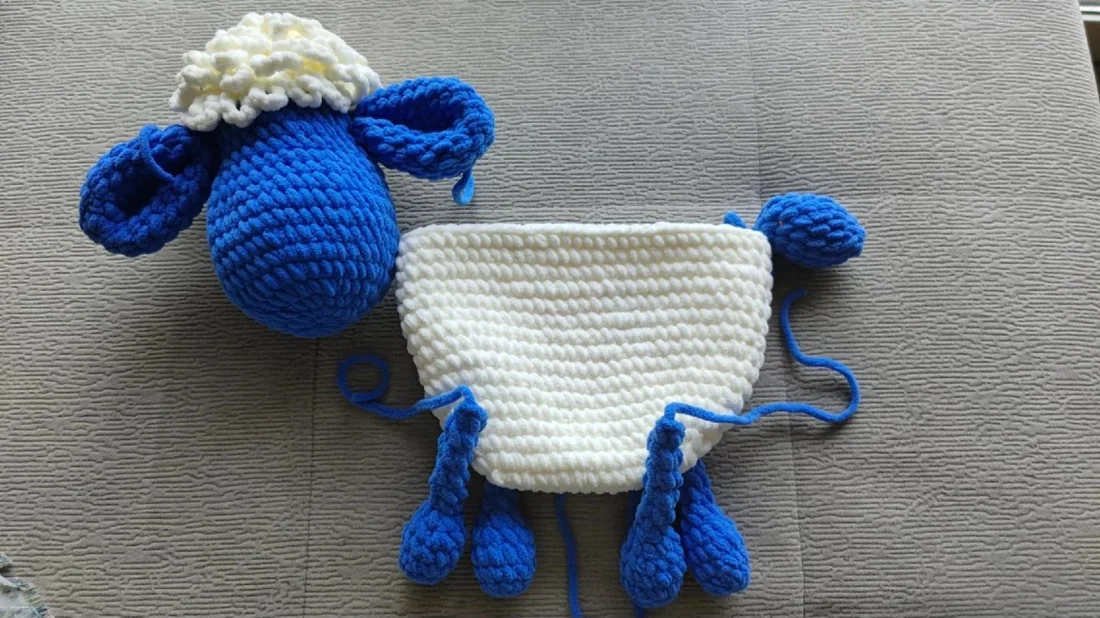
- Check the head position against the opening of the pouch.
- Match the ears by attachment height, then compare their angle.
- Arrange the legs in pairs and assess the hanging silhouette.
- Place the tail where it balances the design without obstructing access.
- Secure sewing tails through the fabric rather than relying on a single surface knot.
Work around a seam in small, controlled sections. Pulling one long stretch tight can create a dent in plush crochet, especially where a stuffed head meets a softer pouch. Pause, smooth the fabric, and compare both sides before securing the next section.
Finish the sheep bag crochet pattern from more than one viewpoint. The front shows expression, the side reveals how far the head projects, and the back shows whether the pouch and tail sit squarely. Small corrections at this stage make the finished design feel much more coherent.
Find your next crochet project
Love expressive animal designs and soft handmade accessories? Browse the store’s crochet pattern collection and choose your next make.
Choose the Strap and Finishing Details
A silver-tone chain creates a crisp contrast with the soft surface of the sheep bag crochet pattern. It also adds weight, so the attachment points deserve careful attention. Hardware should connect to appropriately reinforced parts of the pouch, not to decorative curls, eye pieces, or loose surface strands.
Choose hardware for the intended use and test the finished construction with light contents first. Watch for distortion around the top edge and joins. If the fabric visibly pulls out of shape, stop and improve the support rather than assuming extra stuffing will solve the problem.
A fabric strap is another possible styling choice, but it changes how the sheep bag crochet pattern hangs. Check both the strap’s comfort and the reinforcement at the joins. Treat any new strap, closure, or lining as a design modification that needs its own practical check.
Keep the opening easy to use. A decorative head can be generous without blocking access, and a closure should not snag the plush fibers each time the bag is opened. Avoid describing the finished bag as heavy-duty unless its construction has been tested for that purpose.
Style Your Sheep Shoulder Bag
The vivid blue and white palette makes the sheep bag crochet pattern especially effective against cream, beige, or simple denim. Those quieter backgrounds let the face and ears remain the first thing you notice. Too many competing textures can make the bag’s outline harder to read.
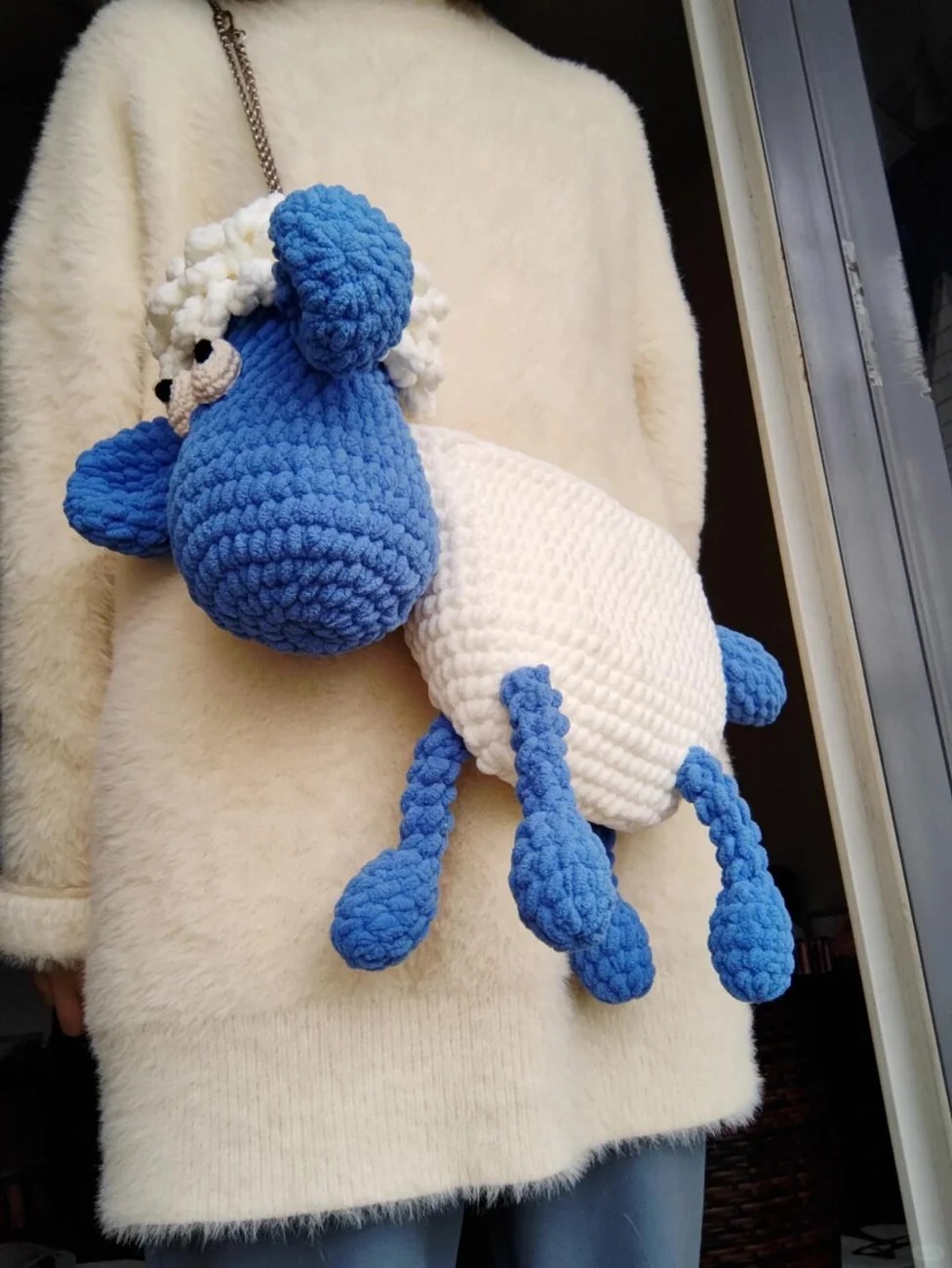
For a playful cold-weather look, pair the bag with a plain coat and keep other accessories minimal. For a lighter outfit, try a simple top and jeans so the sheep becomes the main accent. The chain provides a little structure without requiring a matching set of shiny accessories.
Color changes can give a sheep bag crochet pattern a different mood. Soft gray or muted lavender may create a gentler contrast, while blue keeps the expression lively. Test the head, eye, and fleece colors together before making all the pieces; a beautiful yarn shade on its own may not give the face enough definition.
Care for Plush Crochet
Care for the finished sheep bag crochet pattern according to the yarn, lining, and hardware you actually use. A soft appearance doesn’t establish machine washability. Check all component care instructions before choosing water temperature, detergent, or a drying method.
Remove detachable hardware before cleaning where practical, and avoid rubbing the curled fleece aggressively. Support the pouch while it dries and keep the legs from becoming tangled. Don’t hang a wet bag by its chain, because the added water weight can pull at the attachment points.
Between uses, store the bag dry with the ears and fleece resting naturally. Inspect the strap joins and seams periodically, especially if the bag is carried often. Loose stitching is easier to repair before it becomes a larger opening.
More Crochet Ideas to Explore
These guides offer more ideas for expression, texture, and presentation alongside a sheep bag crochet pattern. Use them to refine a detail rather than copying a different project’s measurements or construction.
- Crochet sheep face details — eye balance, ear angle, and keeping the expression clear.
- Mixing smooth and fluffy crochet textures — balancing tactile surfaces without crowding the face.
- Crochet bag photography ideas — showing the shape, opening, and finishing in useful close-ups.
Frequently Asked Questions
What yarn creates the plush look of this sheep bag crochet pattern?
A plush or chenille-style yarn creates the rounded, velvety appearance. Choose compatible blue and white yarns, then test the fabric with your hook before committing to the whole bag. Fiber appearance alone doesn’t determine an exact yarn weight.
Can I use a different color for the sheep?
Yes. Keep enough contrast between the face, white eyes, and fleece for the expression to stay readable. A muted face color can create a gentler look, while a vivid shade makes the character stand out.
Does the bag need a lining?
A lining is an optional practical addition. It can help keep small objects from catching and may support the pouch, but it needs to fit the finished interior without stretching the crochet or pulling at the opening.
How do I stop the chain from stretching the crochet?
Use suitable hardware and reinforced attachment points on the pouch. Begin with light contents and inspect the joins for distortion. A decorative head or tuft of fleece should never serve as the bag’s weight-bearing connection.
Where can I explore more crochet patterns?
Visit the My Crochet Universe store to browse the current pattern collection. Check each listing for its format, materials, and project details before choosing your next make.
Make the Character Your Own
A memorable sheep bag crochet pattern is more than a set of cute parts. The face needs room to read, the ears need a balanced angle, the pouch needs usable structure, and the finishing needs to support how the bag will be carried.
Take your time with those relationships and the character will stay clear without unnecessary decoration. Keep the blue and white contrast fresh, let the curls frame the eyes, and check the complete silhouette before securing the last sewing tail.
Find your next crochet project
Love expressive animal designs and soft handmade accessories? Browse the store’s crochet pattern collection and choose your next make.