
Funny Crochet Animals: 4 Expressive Amigurumi Designs
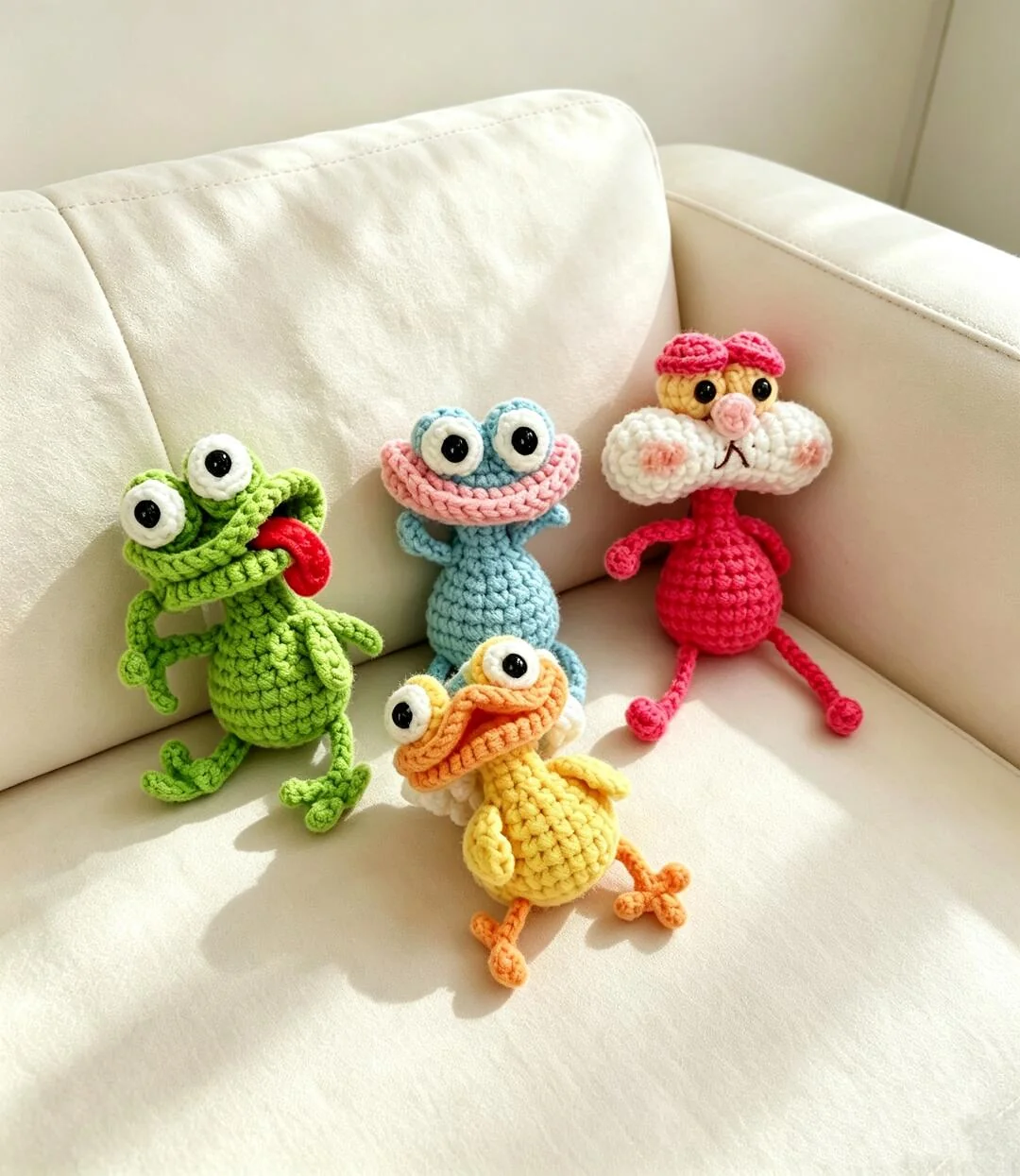
Some crochet characters win you over before you notice a single stitch. These funny crochet animals do it with oversized eyes, wonderfully wide mouths, and small rounded bodies that seem almost too little for their expressions. A green frog, yellow duck, pink feline, and blue fish each bring a different kind of silliness.
The collection works because the shapes stay simple while the facial details carry the personality. Think thick mouth edges, raised eye pieces, a tiny nose, or a bright red tongue. Here’s how to plan the pieces, keep the body shaping tidy, and bring those expressive details together without overcrowding the character.
Funny Crochet Animals: Meet the Colorful Crew
What makes funny crochet animals feel like a family? A shared body shape gives them visual unity, while the faces and colors make them distinct. Each character has a plump lower body, a narrow upper section, and slim limbs, leaving plenty of attention for the head.
| Character | Color story | Signature features |
|---|---|---|
| Yellow duck | Yellow, orange, white, black | A broad beak, small wings, and orange feet |
| Green frog | Green, white, red, black | Raised eyes, an open mouth, and a red tongue |
| Pink feline | Pink, cream-yellow, white, pale pink | Large cheeks, eyelids, and a small nose |
| Blue fish | Blue, pink, white, black | A thick pink smile and round eye pieces |
Choose one of the funny crochet animals to make first rather than starting every small component at once. Finishing a single body gives you a scale reference for the eyes and limbs. Keep matching pieces together in a small tray so similar-looking circles don’t get mixed up.
Choose Yarn and Plan the Pieces
For funny crochet animals, clear stitch definition helps the curves and facial pieces remain readable. Choose a main yarn that forms a firm but workable fabric, then compare the accent colors beside it. Similar thicknesses are easier to combine when an eye disc must sit neatly inside a colored base.
- Main-color yarn for the body and character pieces.
- White or cream yarn for eyes and muzzle details.
- Accent yarn for the beak, mouth, eyelids, nose, or tongue.
- A hook suited to the main yarn, plus a 2.5 mm hook for the small duck, frog, and blue-fish eye components.
- Stuffing, a yarn needle, scissors, removable markers, and temporary placement pins.
- Suitable eye components for a decorative piece, or securely embroidered features for an alternative finish.
The main body and the small eye pieces don’t have to use the same hook. Test each fabric rather than forcing one size to do every job. When substituting yarn for funny crochet animals, check that the eye layers still fit together before making the rest of the head.
Keep US stitch language consistent. In the tables below, sc means single crochet, inc means two single crochets in one stitch, and dec reduces two stitches to one. The Craft Yarn Council abbreviation guide is useful when checking chains, slip stitches, increases, and decreases.
Build a Rounded Body
A rounded base and a tapered top give these funny crochet animals their shared silhouette. The body grows from eight stitches to twenty-four, holds that width briefly, and then narrows in stages. Count at each shaping change so the top doesn’t drift to one side.
| Round | Body sequence | Total |
|---|---|---|
| 1 | 8 sc | 8 |
| 2 | 8 inc | 16 |
| 3 | (1 sc, inc) × 8 | 24 |
| 4–5 | 24 sc in each round | 24 |
| 6 | (1 sc, dec, 1 sc) × 6 | 18 |
| 7 | 18 sc | 18 |
| 8 | (1 sc, dec) × 6 | 12 |
| 9 | 12 sc | 12 |
| 10 | 6 dec | 6 |
| 11 | 3 dec | 3 |
Begin the circular body with an adjustable ring and use a removable marker to track the round boundary. Add stuffing gradually while the opening is accessible. At the end, draw the small remaining opening closed and secure the tail without pulling the narrow upper section out of shape.
Compare the body of your funny crochet animals from the front and side before attaching the head. A small lump near the base can tip the figure, while too much filling at the top can make the neck look rigid. Redistribute accessible stuffing before adding more.
This body sequence is only one part of the character. The broad mouth, layered eyes, and slender limbs need their own shaping and placement. Plan those parts together so a larger head doesn’t overpower a body that has already been finished.
The Yellow Duck: A Beak with Personality
The yellow duck brings a wonderfully puzzled expression to the funny crochet animals collection. White eyes rise above an orange beak, while a small yellow body and tiny wings keep the rest of the figure uncomplicated. The orange feet repeat the beak color at the base.
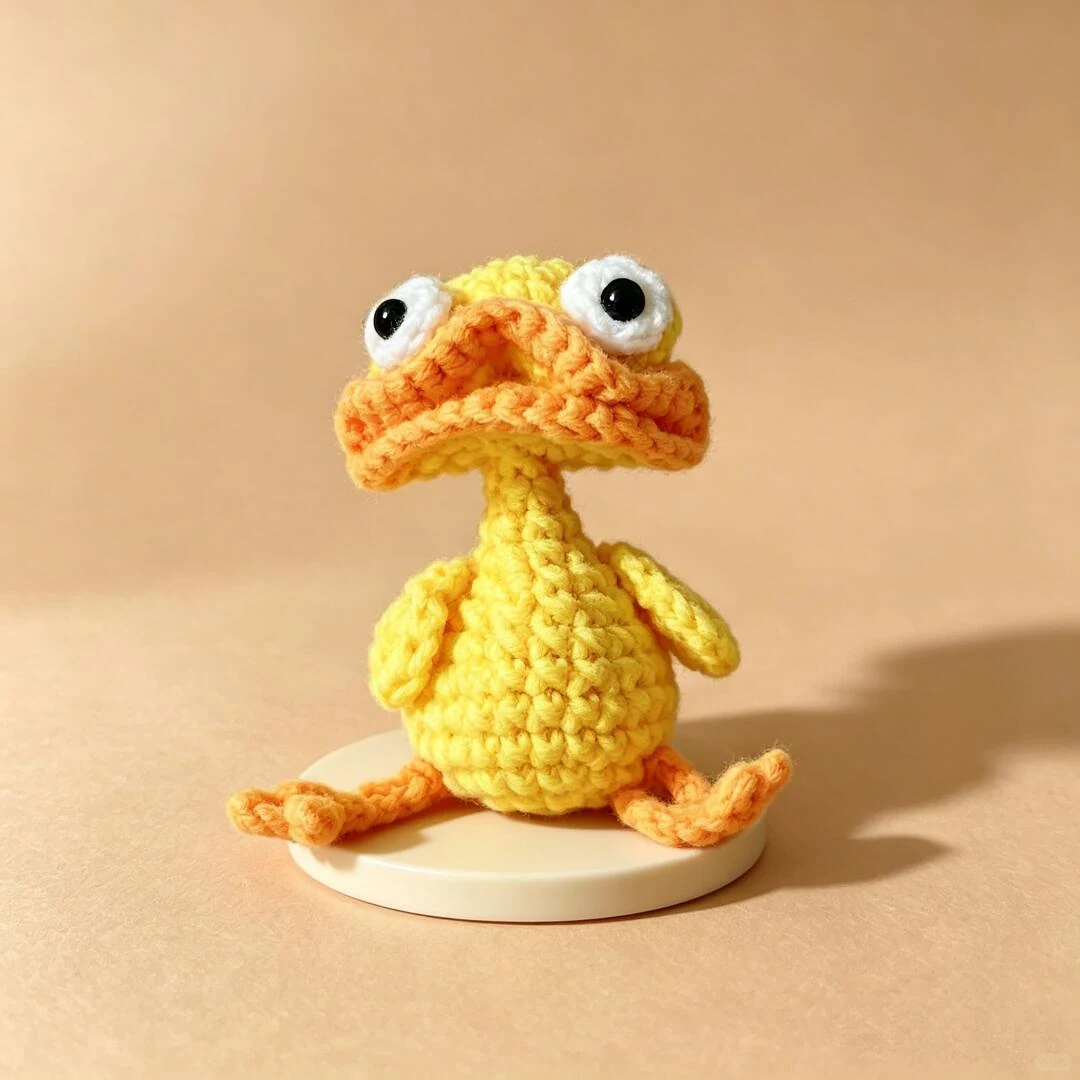
Keep the beak opening readable from the front. A mouth edge pulled too tightly can flatten the expression, while an uneven join may make one side look higher than the other. Temporarily place the eye pieces before securing them and check how they sit above the orange curve.
The duck’s small wings should support the silhouette rather than compete with the face. Compare their angle and attachment height before sewing. For funny crochet animals with a large projecting head, that front-and-side check is more useful than judging every piece separately on the table.
The Green Frog: Wide Eyes and a Cheeky Tongue
The green frog is the cheekiest of the funny crochet animals. Its raised white eyes sit above a wide green mouth, and the red tongue adds a strong accent without requiring more colors across the body. Long, branched fingers and toes make the pose feel animated.
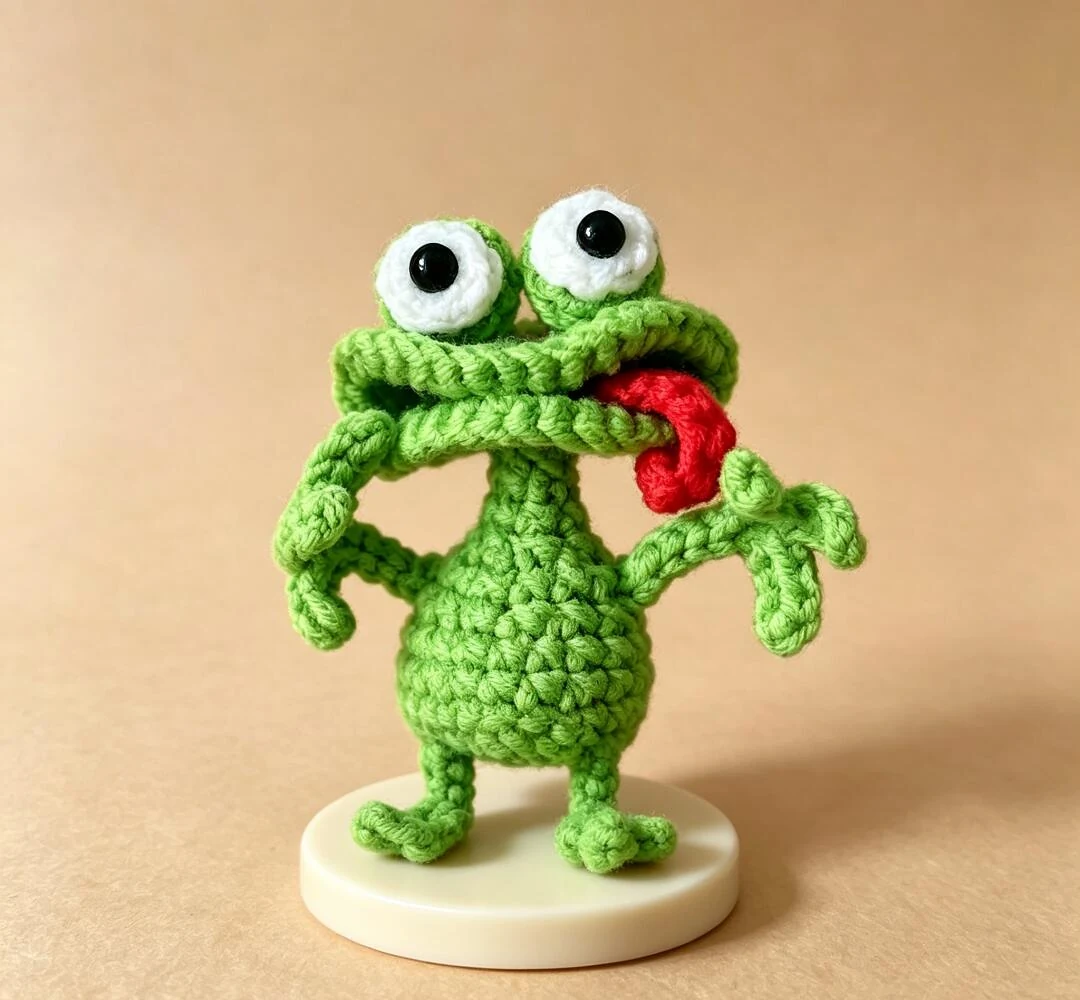
Make the white eye pieces and green bases as pairs, then compare the stacks before attachment. The layered shape needs to remain stable when viewed from the side. A little planning here helps stop one eye from leaning farther forward than the other.
Place the red tongue where it remains visible without covering the whole mouth. Its curved outline should feel like one deliberate detail, not a loose strip tangled with the lips. Keep the branched hands clear of the face so the silhouette stays readable.
When posing funny crochet animals, use the sewn attachment angle to suggest movement. Don’t assume the limbs can be repeatedly bent or pulled into new positions. A secure, relaxed pose will look more natural than arms stretched tightly across the body.
Find your next character to crochet
Enjoy playful faces and small handmade projects? Browse the My Crochet Universe pattern collection and choose your next make.
The Pink Character: Big Cheeks and Tiny Details
The pink feline changes the mood of the funny crochet animals with a broad white muzzle, pale eye cups, and pink eyelids. The small nose and simple stitched mouth sit at the center, while long slim limbs echo the narrow upper body.
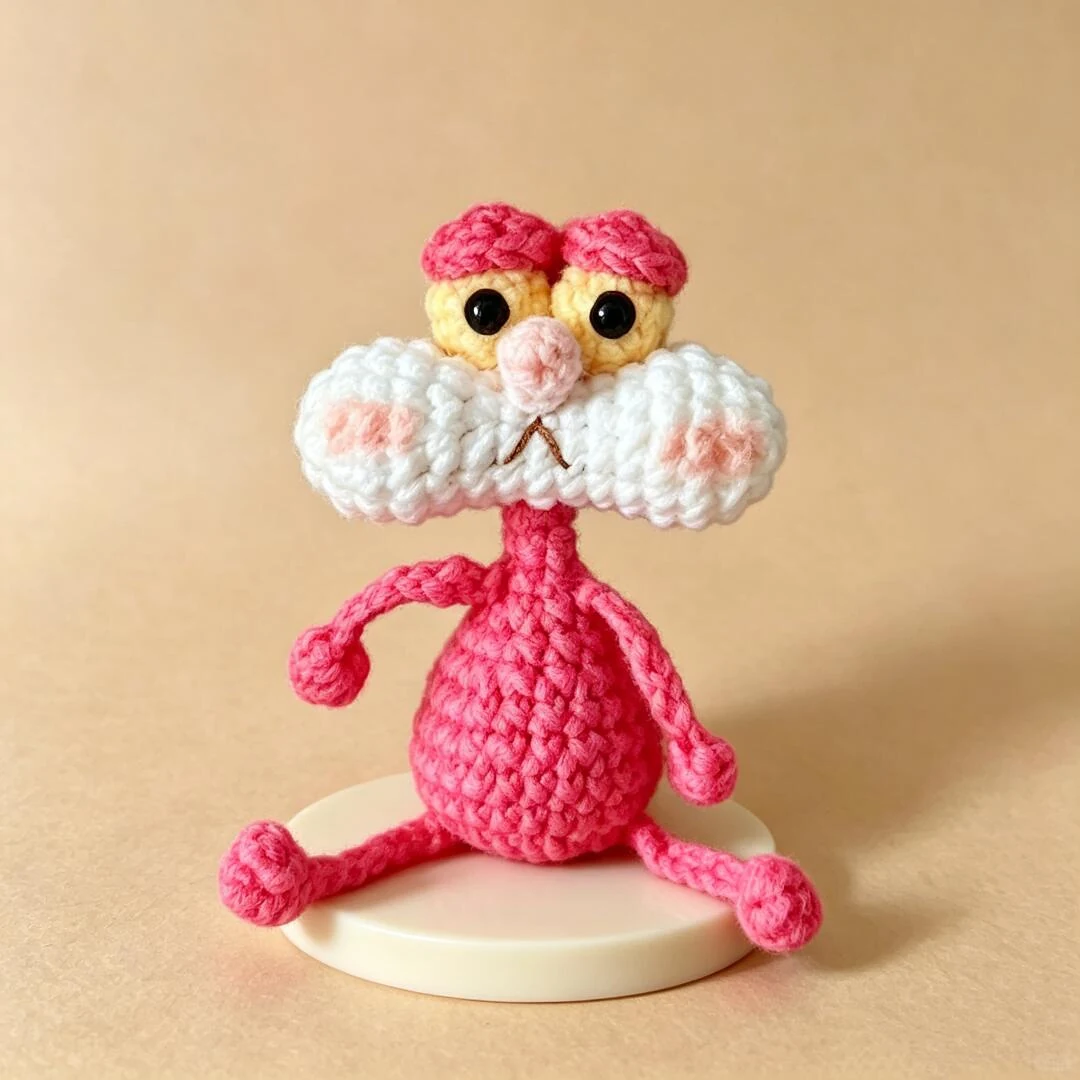
Balance the two sides of the muzzle before sewing it permanently. The broad cheek areas should feel related, with the nose between them rather than drifting toward one side. Check that the embroidered mouth remains visible after the cheek pieces are shaped.
Small eyelids can change the expression more than another decorative accessory. Test their angle above both eyes and compare the amount of cream-yellow showing below. For funny crochet animals, a tiny shift can move the mood from curious to sleepy without changing the main body at all.
The Blue Fish: A Smile That Steals the Show
The blue fish character gives the funny crochet animals a softer palette: cool blue, bright white eyes, and a broad pink mouth. Its rounded lower body and small limbs keep the attention on the generous smile. Repeating blue through the body and eye bases makes the pink accent stand out.
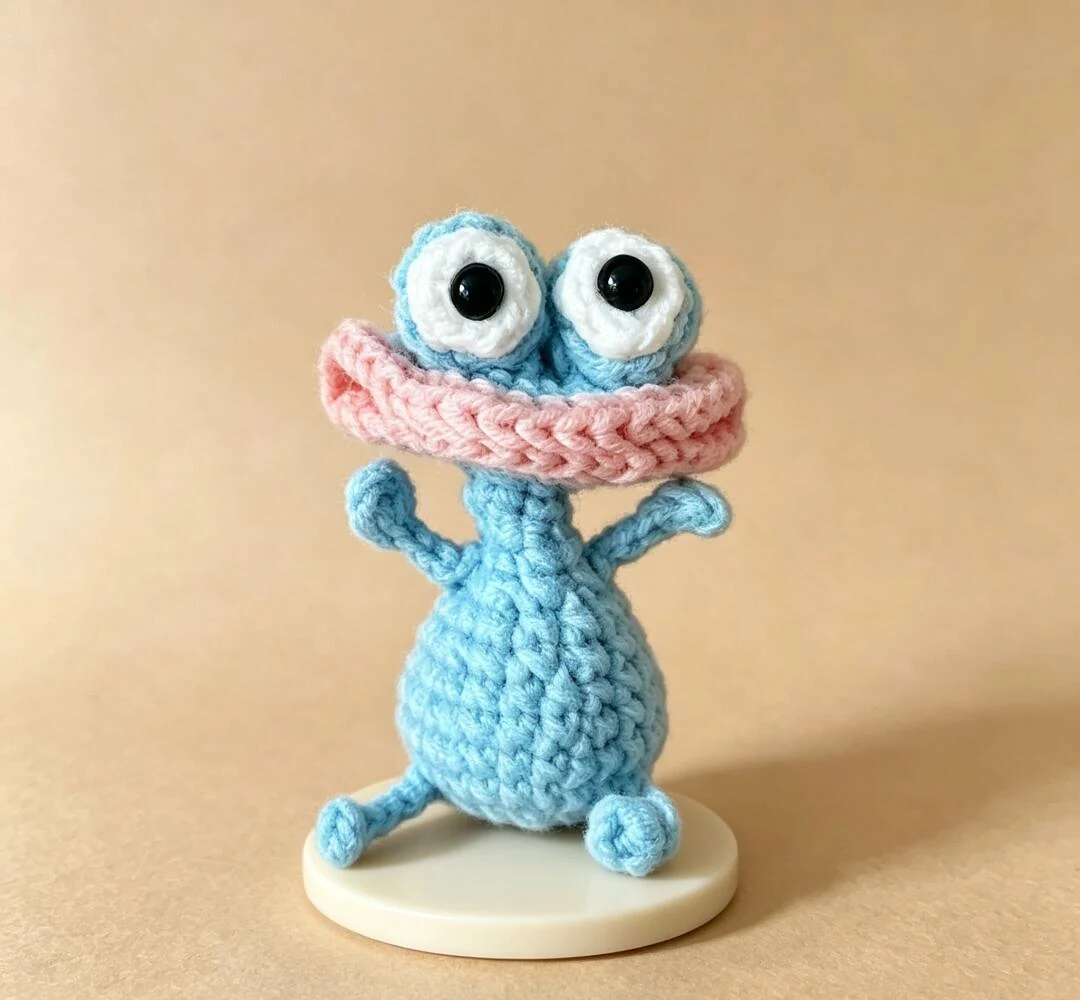
Keep both eye pieces at a comparable height above the mouth. Their large white surfaces need room to read clearly, so avoid pushing the pink edge upward until it crowds them. Check the width of the smile against the body before tightening its final join.
The small curled limb ends are enough to suggest movement without adding another large shape. Let them sit naturally beside the body. This is a useful approach for funny crochet animals: choose one exaggerated feature and let the surrounding details stay quieter.
Get the Expression Right
Expression in funny crochet animals comes from relationships: the distance between the eyes, the curve of a mouth, and the space between a nose and the muzzle. Decide which feature should lead before sewing. A wide grin needs a different balance from a small, centered nose.
- Test both eyes at the same time rather than finishing one first.
- Check the head at eye level, not only from above.
- Leave a clear boundary between the eyes and the mouth edge.
- Use short, controlled embroidery stitches for small facial marks.
- Compare the face from the front, both sides, and slightly above.
Temporary placement is especially useful when funny crochet animals have several eye layers. Lay the white disc against its colored base, then test the whole stack on the head. Correcting one layer before attachment is much easier than unpicking a completed face.
Assemble a Balanced Character
Bring funny crochet animals together in stages: body first, head and face next, then limbs and the smallest accents. Keep the sewing tails accessible until the overall placement looks balanced. That gives you room to correct a tilted head or an arm sitting too close to the mouth.
Check the silhouette before the last seam
Look for a clear body center line and a head that faces in the intended direction. Let the limbs hang or rest naturally instead of stretching them into a pose for inspection. If the figure leans, check the stuffing and attachment angle before adding a support.
Secure each detail without flattening it
Use small sewing stitches around the relevant attachment edges, distributing the tension as you go. Pulling one section hard can dent a rounded eye base or narrow the mouth opening. Pause to smooth the fabric before moving farther around the seam.
Finish funny crochet animals by weaving the ends securely and removing all pins and temporary markers. Check the tongue, eyelids, muzzle, eyes, and limb ends individually. A detail that shifts under a gentle inspection needs attention before the character is displayed or gifted.
Display, Gift, and Care for Your Make
A simple background gives funny crochet animals room to show their expressions. Warm cream, pale wood, or a plain shelf works well with the saturated green, yellow, pink, and blue. Space the characters slightly apart so their mouths and limbs don’t overlap into one busy outline.
Treat shiny eye components and small sewn pieces thoughtfully. These decorative characters are not automatically suitable for babies or young children. Choose materials and construction for the intended recipient, use securely embroidered alternatives where appropriate, and keep detachable components out of young children’s reach.
Care for funny crochet animals according to the yarn, stuffing, and eye materials actually used. Avoid pulling the mouth edges or twisting the small limbs during cleaning. Let every piece dry fully before storage, and inspect the attachments again afterward.
More Crochet Projects to Explore
These related projects complement funny crochet animals with more ideas for raised eyes, tidy construction, and expressive texture. Keep each project’s own counts and dimensions separate rather than transferring them between different designs.
- Crochet frog crossbody bag — another playful use of raised eyes and frog-shaped limbs.
- Common amigurumi mistakes and fixes — counting, stuffing, face planning, and pinned assembly.
- Balancing smooth and fluffy crochet — keeping decorative surfaces from crowding the character.
Frequently Asked Questions
Which of these funny crochet animals should I make first?
Choose the face and finishing you most enjoy. The duck and blue fish emphasize broad mouth shapes and layered eyes, the frog adds a tongue and branched limbs, and the pink feline uses several small facial pieces. Make one complete character before organizing a whole set.
What hook size should I use?
Use a hook that creates a suitable fabric with your main yarn. The small duck, frog, and blue-fish eye pieces use a 2.5 mm hook. That detail does not automatically set the hook size for every body and facial component.
Can I change the colors of funny crochet animals?
Yes. Keep enough contrast for the white eye areas, pupils, and mouth edge to remain clear. Test a small arrangement of your chosen yarns together before making every piece, especially if the mouth and body colors are similar.
Are these suitable as toys for babies?
Do not assume that a decorative amigurumi is suitable for a baby. Shiny eye components, long thin limbs, and small sewn details need age-appropriate assessment. Securely embroidered features avoid detachable eye parts, but do not by themselves establish that a finished piece is a tested toy.
Where can I browse more character patterns?
Visit the My Crochet Universe store to explore the current crochet pattern collection. Check individual listings for materials, format, and project details rather than assuming every character shown here has a separate listing.
Let the Small Details Do the Talking
The best funny crochet animals don’t need a crowded collection of decorations. A rounded body, a clearly shaped mouth, and a pair of carefully placed eyes can do most of the work. Keep the finishing controlled and let one or two oversized features create the personality.
Start with your favorite color story, build the body evenly, and take your time before securing the face. Whether the result is a cheeky green frog or a soft blue grin, those thoughtful small decisions are what make a character feel memorable.
Find your next character to crochet
Enjoy playful faces and small handmade projects? Browse the My Crochet Universe pattern collection and choose your next make.