The Best Fluffy Pancakes recipe you will fall in love with. Full of tips and tricks to help you make the best pancakes.

6 Adorable Crochet Baby Romper Ideas Inspired by Nature & Woodland Style
The Honey Bear romper already has a woodland personality: rounded ears, warm yarn and wooden buttons naturally suggest quiet forest colors. These six ideas show how to develop that feeling through palettes, props and coordinating pieces while keeping the garment comfortable and uncluttered.
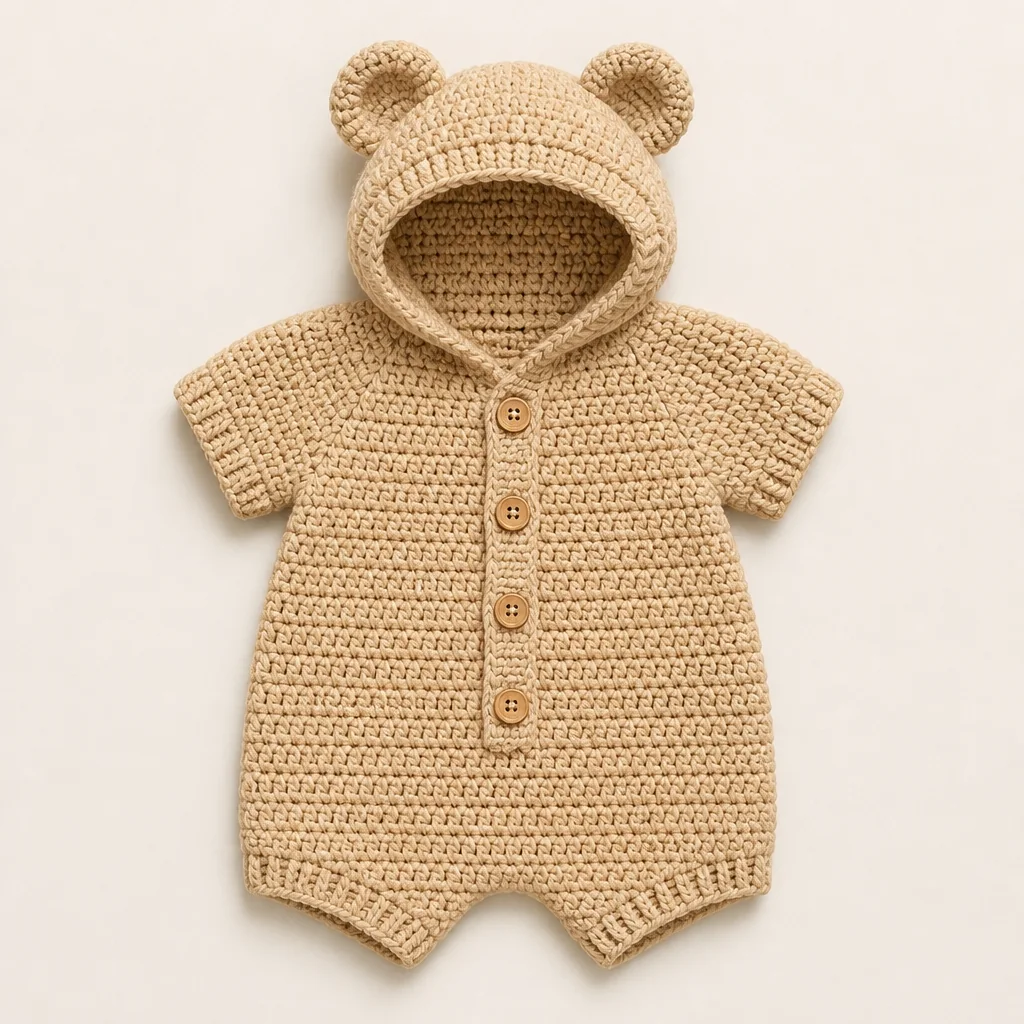
At a glance: This 3–6 month design combines a top-down raglan yoke, short sleeves, a shaped romper body, a bear-ear hood and a natural four-button front.
In this article
- Honey meadow neutrals
- Forest floor accents
- Crochet mushroom inspiration
- Acorn and oak-leaf palette
- Soft sage forest variation
- Autumn woodland warmth
Ready to crochet the Honey Bear romper? Keep the complete stitch counts, shaping sequence, finished measurements and safety notes together in the printable pattern.
1. Honey meadow neutrals
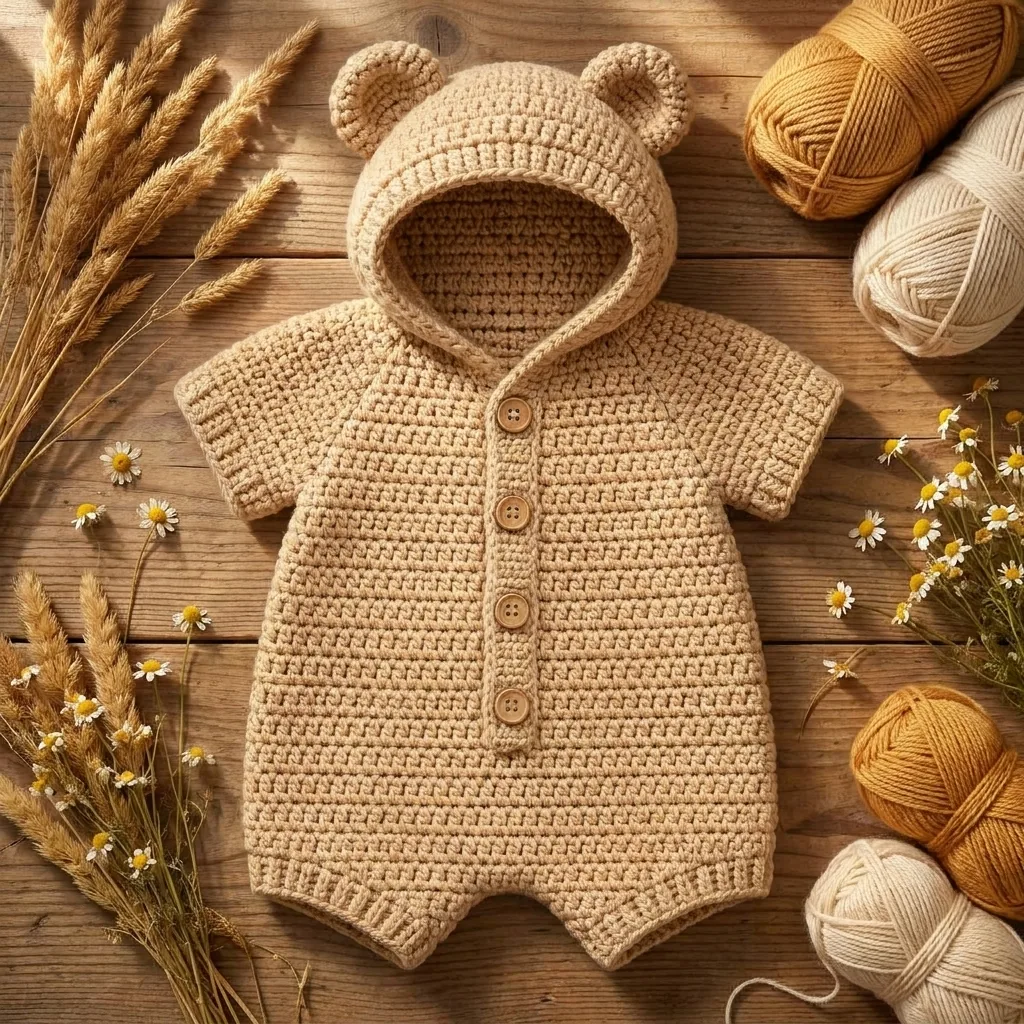
Combine warm beige with honey, oat and cream. Dried grasses and small chamomile accents echo a sunny meadow without changing the simple bear silhouette.
This palette is especially effective when the yarn has a soft matte finish. Natural wood buttons strengthen the warm handmade character.
Keep floral props away from a baby during wear; they are styling inspiration only, not garment embellishments.
2. Forest floor accents
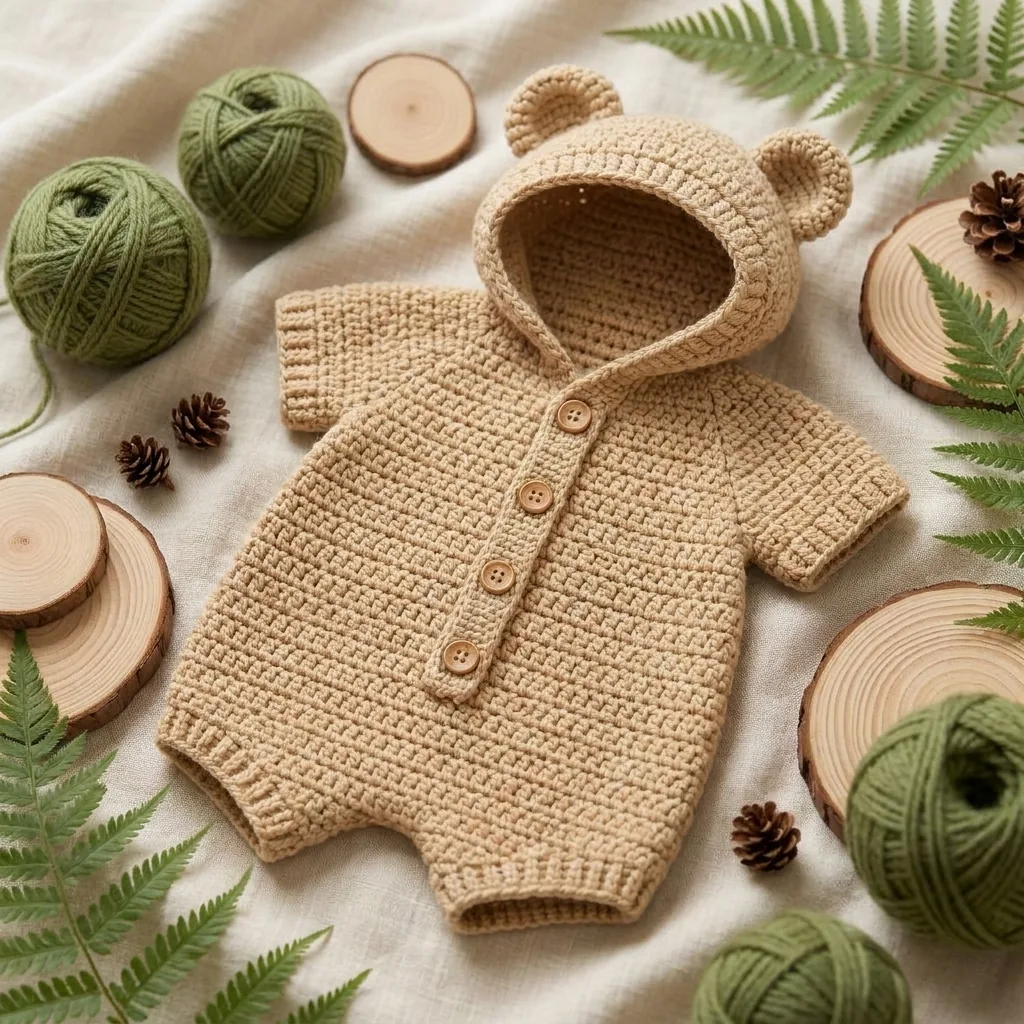
Add muted moss green through a blanket, yarn choice or simple accessory. Wood slices, tiny pinecones and fern shapes suggest the forest while the romper remains calm and wearable.
Green and beige are easy to balance because both read as natural neutrals. Use the deeper shade sparingly so the face-framing hood stays light.
For a real garment, avoid attaching loose cones, beads or botanical pieces. Let color and photography carry the woodland theme.
3. Crochet mushroom inspiration
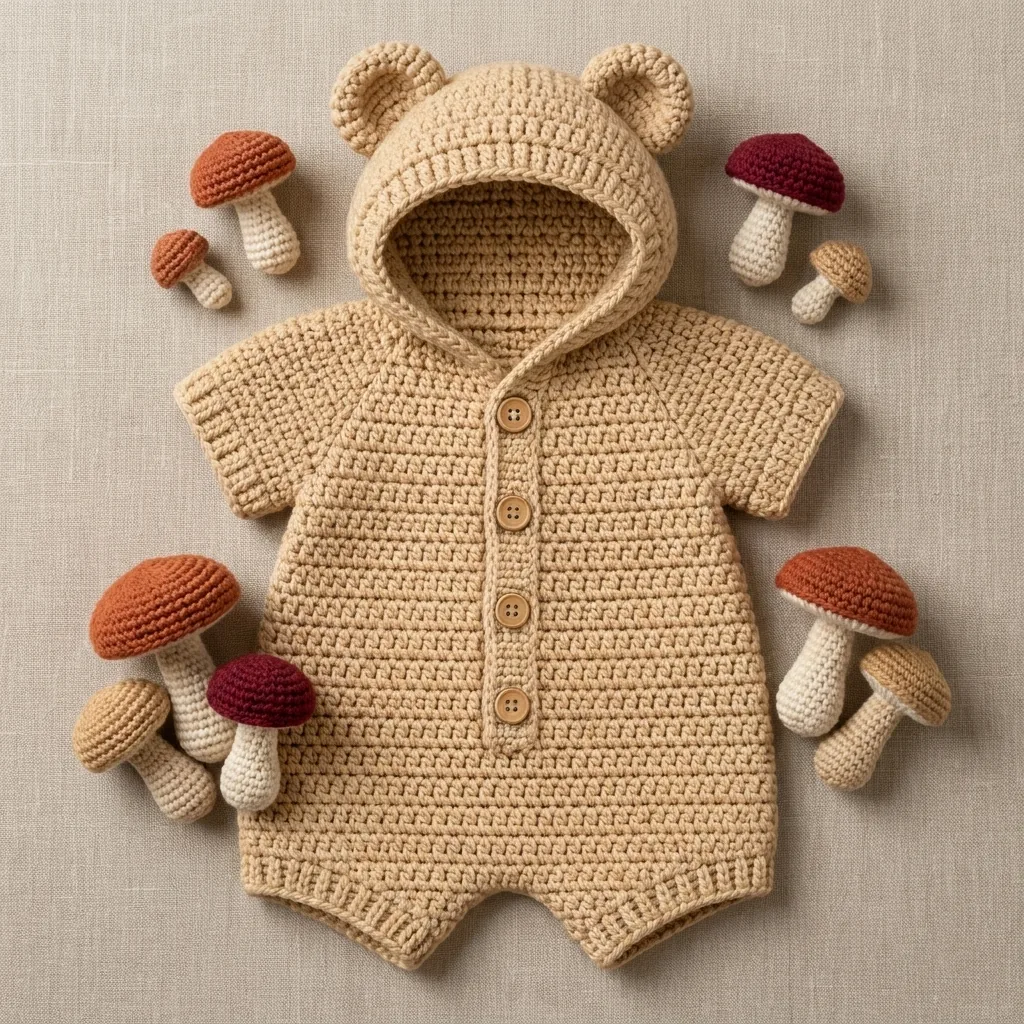
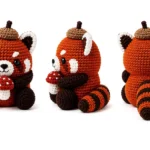
Rust, burgundy and cream crochet mushrooms make a charming editorial companion to the bear romper. Their rounded forms repeat the softness of the hood and ears.
If you want a subtle garment variation, use a mushroom-inspired rust tone for a blanket or booties rather than adding small appliqués to infant clothing.
The result feels playful and storybook-like while keeping the romper itself uncluttered and practical.
4. Acorn and oak-leaf palette
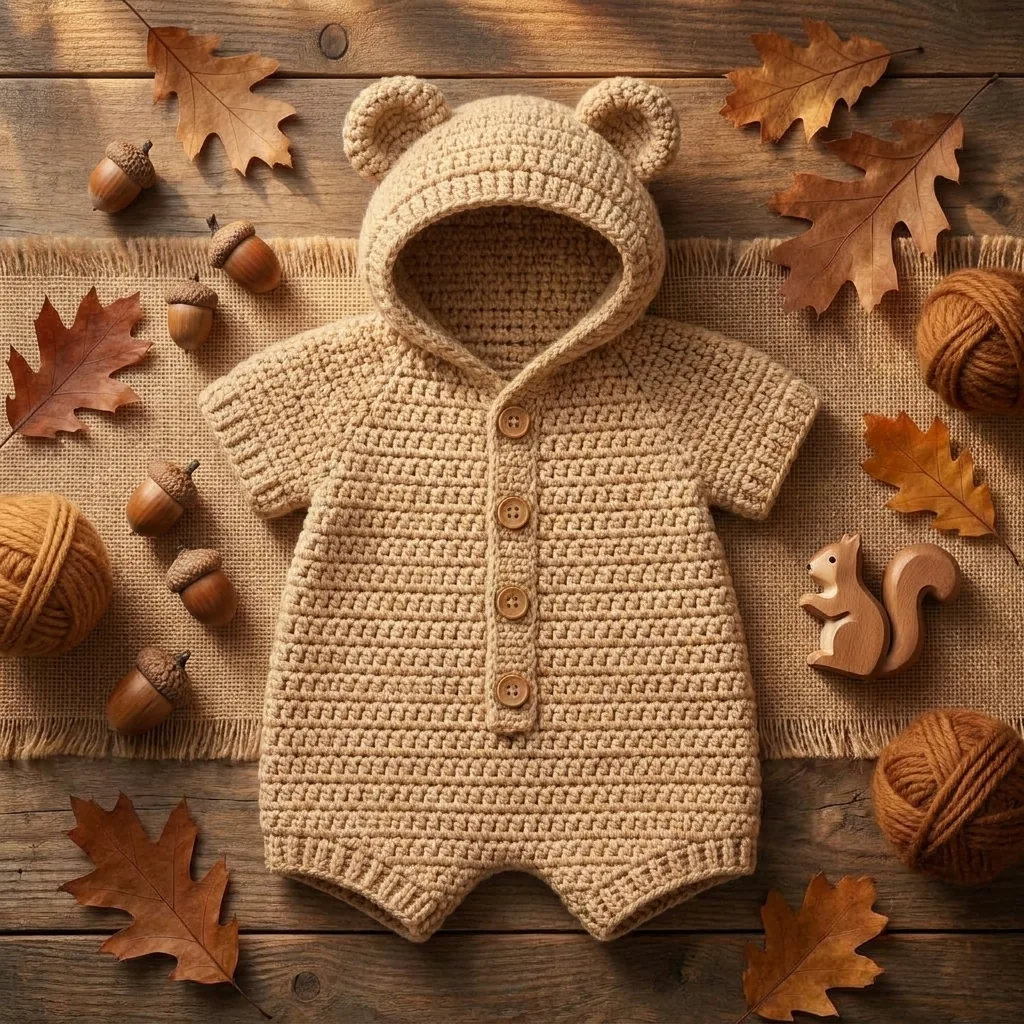
Warm brown, cinnamon and muted orange bring an autumn woodland mood. Natural buttons already resemble this palette, so only a few surrounding accents are needed.
A beige main color keeps the outfit gentle. Deeper autumn shades can appear in socks, a blanket or the background for seasonal photographs.
Choose washable, colorfast yarns if you crochet coordinating pieces, and keep every wearable accessory secure and age appropriate.
5. Soft sage forest variation
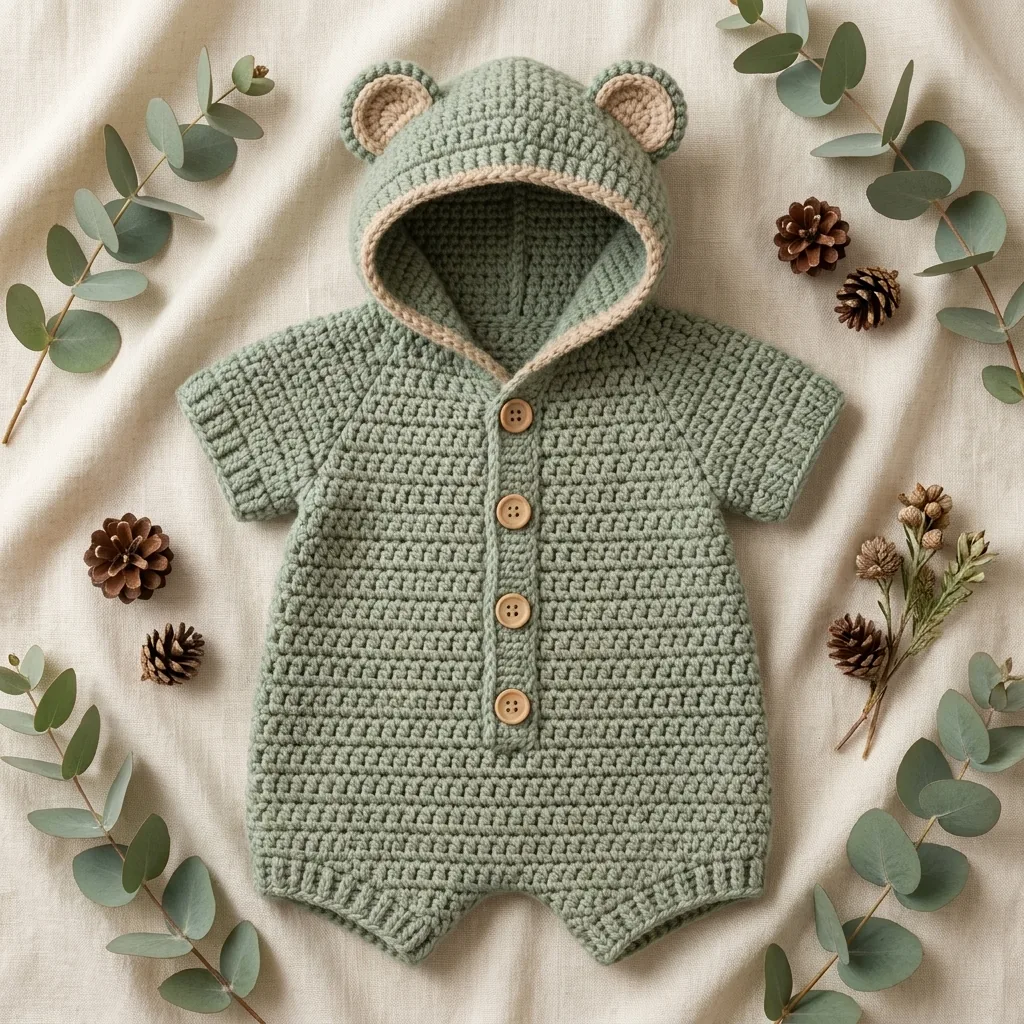
Reworking the same design in muted sage creates a fresh woodland alternative. Beige edging inside the ears and natural buttons preserve the warm bear character.
Sage works beautifully with eucalyptus, cream linen and light wood. It also remains neutral enough to coordinate with many baby basics.
Before changing yarn, make and wash a gauge swatch. Fiber and dye can affect stitch size, drape and the final measurements.
6. Autumn woodland warmth
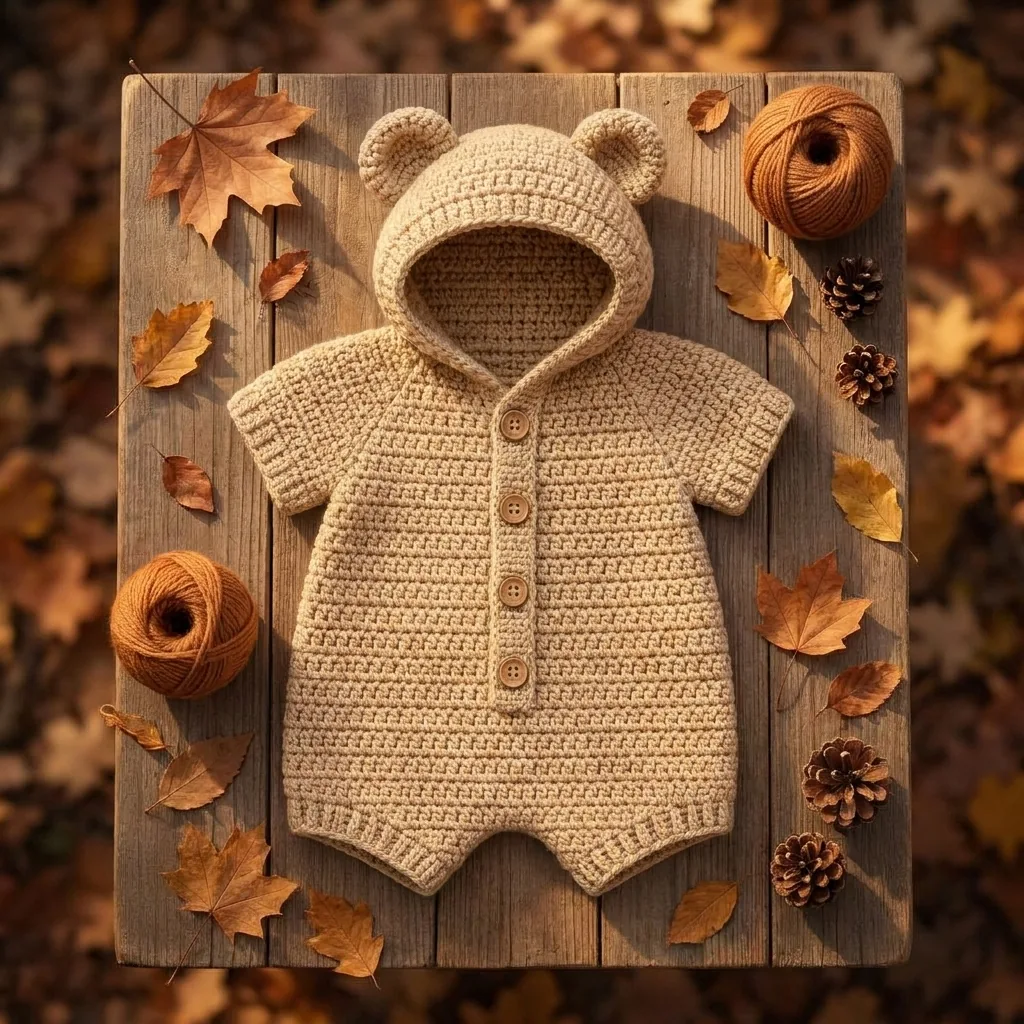
Surround the original beige romper with rust leaves, ochre yarn and tiny pinecones for a rich seasonal presentation. Golden side light makes the stitches feel especially warm.
For everyday wear, translate the look through one autumn accessory rather than many. A cinnamon blanket or warm brown booties are enough.
Natural props belong in supervised styling only. Keep dried leaves, cones and loose fibers away from a baby.
Building a cohesive woodland palette
A woodland look works best when it begins with color rather than extra decoration. Choose one main shade for the romper, one supporting neutral and one small accent color. Beige with honey, sage with cream or oatmeal with rust all feel natural without becoming visually busy. Limiting the palette also makes it easier to find matching bodysuits, socks and blankets.
Texture is the next layer. Smooth half double crochet already gives the romper a handcrafted surface, so surrounding pieces can stay simple. Linen, muslin, light wood and softly knitted accessories complement the stitches without competing with them. For photographs, natural side light brings out the yarn texture and keeps muted colors from looking flat.
Woodland props such as leaves, pinecones, mushrooms and dried flowers can help communicate a theme in an editorial image, but they are not suitable loose accessories for a baby. Keep them outside the wearing area and remove them completely after the photograph. The safest real-life interpretation uses yarn color, a printed blanket or a securely made coordinating piece.
If you decide to crochet the romper in a new woodland shade, do not assume that two worsted yarns will behave identically. Make a generous swatch, wash it as the finished garment will be washed and measure both stitch and row gauge. A small difference can change the neckline, yoke depth, rise and hood shape. Adjust the hook size before altering pattern counts.
The natural theme can continue through finishing choices. Flat wood buttons, neat reverse-crochet edging and a softly rounded hood suit the style better than shiny or oversized decoration. Sew every component with strong thread, hide yarn ends securely and check that nothing can be pulled loose.
Finally, let the bear silhouette remain the hero. One well-chosen blanket, a pair of neutral booties or a warm seasonal background is usually enough. Restraint creates a more professional result and keeps the garment versatile long after a themed photograph has been taken.
When planning a coordinated set, place the actual yarns beside one another in daylight before buying the full quantity. Screens can shift beige, sage, rust and honey tones, while a physical comparison reveals undertones immediately. A consistent warm or cool direction will make the finished wardrobe look intentional.
Photograph the completed romper on a plain surface first, then add only the natural props that support the chosen palette. This gives you a clean record of the garment and a styled version for inspiration. The simple image is also the best one for checking symmetry, button placement and finishing.
A calm palette also helps the handmade stitches remain the most memorable part of every woodland-inspired photograph.
Ready to crochet the Honey Bear romper? Keep the complete stitch counts, shaping sequence, finished measurements and safety notes together in the printable pattern.
Continue the Honey Bear romper series
Explore the complete pattern, construction details, everyday styling, woodland inspiration and baby-shower gift ideas.
- 11-Step Crochet Bear Hood Romper Pattern: A Sweet Handmade Baby Outfit
- 7 Beautiful Crochet Baby Romper Details That Make This Design Special
- 9 Cozy Ways to Style a Crochet Bear Romper for Baby’s Everyday Looks
- 5 Thoughtful Reasons a Handmade Crochet Romper Makes a Beautiful Baby Shower Gift
Final fit and safety checklist
Before use, confirm the finished measurements, flexible openings, secure yarn ends, reinforced ears and firmly attached buttons. Wash according to the yarn label, reshape flat and inspect the garment after every wash.
Buttons and trim can become choking hazards. Avoid cords, beads and loose embellishments, keep the hood loose around the neck, remove hooded garments before sleep and use only with attentive adult supervision.
Ready to crochet the Honey Bear romper? Keep the complete stitch counts, shaping sequence, finished measurements and safety notes together in the printable pattern.
Frequently asked questions
Which woodland color is most versatile?
Beige and soft sage are especially versatile because they coordinate easily with cream, brown and muted seasonal accents.
Can I attach leaves or mushrooms to the romper?
Loose decorative objects are not recommended for infant clothing. Express the theme through yarn color or supervised photography instead.
Will a new color change gauge?
Color alone may not, but a different yarn or dye can behave differently. Always wash and measure a new swatch.
How many accent colors should I use?
One main shade, one supporting neutral and one small accent usually create the most cohesive result.